


Legal disputes following mergers and acquisitions (M&A, completed) related to contractual commitments, asset valuation, intellectual property rights or corporate governance are increasing due to the complexity of cross-border deals. pressure from new regulations, and global economic uncertainty. What should businesses do to minimize the risk of disputes arising after M&A transactions in Vietnam.

To avoid falling into a costly and multi-year litigation spiral, businesses need to apply effective legal and operational strategies from the earliest stages of an M&A transaction.
KIDO and Nutifood Lessons
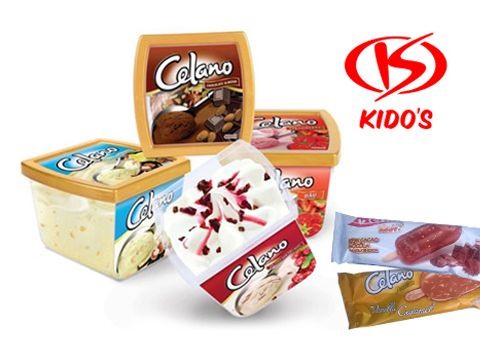
For 1,069 billion VND, Nutifood has acquired KIDO Frozen Food Company (KIDO Foods) from KIDO Group Joint Stock Company (KIDO). In September 2024, after the deal was announced, KIDO Foods - the unit that is using the Merino and Celano trademarks - along with Dat Viet Media Company was sued by KIDO for illegal use of the Merino and Celano brands.
The reason, KIDO claims that both of the aforementioned trademarks are still under their ownership. The People's Court of Ho Chi Minh City. Ho Chi Minh City, on January 6, 2025, confirmed that it had received KIDO's petition (dated December 31, 2024) to sue KIDO Foods and KIDO requested the court to force the parties to stop using, remove all infringing content, and request the application of temporary emergency measures to prohibit the promotion of the Celano brand on reality TV programs. On January 25, 2025, the Court required KIDO Foods to deposit collateral worth VND 50 billion into an account that was then blocked at the bank. After the obligation was fulfilled, the Court canceled the temporary emergency measure[1].
Previously, in 2023, KIDO transferred 24% of KIDO Foods' shares to another partner, reducing the ownership rate to 49% and no longer holding control of KIDO Foods.
It can be seen that this is a typical case of post-M&A legal disputes between businesses, causing huge and unpredictable consequences as well as seriously affecting the business activities of enterprises. This forces businesses to prepare carefully and carefully for a detailed strategy when entering into an M&A transaction with any partner is a very important thing.
Prepare well before trading
One of the main causes of post-M&A disputes is a lack of clarity in the contract or incomplete information during the due diligence process. Thorough preparation before trading is the first and most important step to avoid risks.
Draft clear contracts. M&A contracts need to specifically define important terms such as material adverse effects (MAEs) and earn-outs. For example, in a tech deal, MAE can be defined as "losing more than 15% of customers in six months" instead of being vague, helping to avoid controversy about canceling the deal. Similarly, earn-outs should clearly define how revenue or profit is calculated, along with the buyer's responsibility to help achieve the goal. This transparency minimizes the risk of post-trade disagreements.
Comprehensive appraisal. Due diligence does not stop at financial audits but needs to extend to legal, regulatory, and operational aspects. In Vietnam, where the legal system is still developing, businesses need to pay special attention to complying with regulations such as the Law on Investment 2020 or the Law on Medical Examination and Treatment (for the medical sector). For example, in Thomson Medical's (Singapore) acquisition of Far East Medical Vietnam (FEMV) – the company that owns FV Hospital – for US$381 million in 2023-2024, if Thomson Medical does not double-check its operating license or potential lawsuits from patients, it may face a dispute over breach of commitment later.
This strategy requires the business to invest time and resources initially, but in return, it creates a solid foundation, reducing the risk of costly litigation down the road. A clear contract and a thorough due diligence process are a "shield" to protect businesses from unexpected and unexpected risks that may occur after the transaction.
Source: Vietnam News
Use professional and reputable legal advice
M&A is not only a business matter, but also a complex legal process. It is recommended that businesses cooperate with a professional and experienced legal unit in M&A transactions right from the negotiation stage is an effective solution to be able to predict and minimize risks for a transaction that can last up to several years. M&A lawyers can assist in drafting protection clauses, such as limitations of liability or the right to terminate transactions, and advise on regulatory risks. In the context of 2025, with the increase in ESG regulations, sustainable development and personal data protection regulations such as GDPR in the European Union (EU) or Decree 13 on personal data protection in Vietnam, legal entities play an important role in ensuring that transactions are not entangled in administrative procedures or falling into the risk of sanctions for failing to comply with legal procedures before transactions such as: notification of economic concentration; notice of capital contribution, purchase of shares, contributed capital in Vietnamese enterprises as well as other mandatory administrative procedures before closing transactions between the parties.
Early cooperation with legal counsel is not only a preventive measure, but also a way for businesses to take advantage of practical experience from experts, especially in emerging M&A markets such as Vietnam, where legal and cultural differences can create a lot of unpredictable risks.
Use of accurate and reasonable terms of assurance and assurance
In an M&A transaction, Representations and Warranties ("R&Ws") are formal statements made by the seller about the condition of the target company at the time of signing the contract or completing the transaction. These are confirmations of the facts regarding the financial, legal, operational, and regulatory compliance of the acquired company. R&Ws clauses are a common tool for mitigating risk from post-M&A disputes. Because these clauses force the seller to compensate the buyer if it finds a breach of its post-transaction commitments, such as debts, hidden tax debts, undisclosed litigation, etc. or failing to comply with regulations. However, how to include these clauses in contracts to mitigate post-M&A disputes is often overlooked by the parties to the transaction. In order to be able to use R&Ws accurately, reasonably and effectively, businesses need to pay attention to points such as: (i) Negotiate R&Ws in detail and clearly. The buyer should ask the seller to list specific R&Ws rather than generally. These terms need to cover important aspects of the target company, avoiding missing aspects that are prone to potential risks; (ii) Use the results of the due diligence to shape the R&Ws. Ensure that potential issues are fully and detailed in the contract/agreement signed between the parties. (iii) Connect R&Ws to compensation terms in a tight, logical manner to ensure the buyer is compensated if a breach occurs. For example, the parties may specify the maximum and minimum compensation in the contract, "The seller shall compensate for any R&W breach in excess of $500,000, with a total limit of 10% of the purchase price." Or keep a portion of the purchase money (e.g., 5-10%) in an escrow account to cover post-trade R&W violations.
The use of R&Ws clauses is a very important and necessary strategy to ensure that after the transaction has been closed for many years, the business is still protected from the risks that existed before the parties executed the transaction. In Vietnam, the fact that in 2019, Mondelez International AMEA Pte., Ltd asked Kido Group Joint Stock Company to compensate nearly VND 15.4 billion because KIDO's former subsidiary, Mondelez Kinh Do, was fined by the Binh Duong Tax Department[2] for an M&A transaction between the parties completed since 2015 is a vivid demonstration of efficiency and importance the importance of the R&Ws clause in M&A.
Consider other methods of settlement outside the court
When post-M&A disputes are unavoidable, businesses should consider prioritizing alternative settlement methods such as arbitration and mediation instead of traditional litigation in court. With outstanding advantages such as high security, fast processing speed, and the ability to select qualified arbitrators, arbitration is an ideal choice for cross-border disputes, as well as large domestic transactions. Or the suitability of mediation for smaller disputes, such as disagreements over earn-outs, where mediation allows the parties to agree on a solution on their own without damaging the business relationship, this strategy is not only a contingency measure but also a proactive approach to managing disputes if they occur. to ensure that businesses maintain stability after M&A.
Post-M&A disputes such as the case between KIDO and Nutifoods not only cause financial losses but also disrupt the development strategy of the business. A vital factor and has a direct impact on the ability to do business sustainably. Therefore, by flexibly and effectively applying the above legal strategies, businesses can partly build a safe transaction roadmap to expand business activities from M&A deals. where the M&A market is showing great prospects but the legal system is still challenging, these strategies have become even more important and necessary for businesses.
Lawyer Nguyen Van Phuc
HM&P Law Firm
Read more: Tránh tranh chấp pháp lý hậu giao dịch M&A không khó
[1] https://cafef.vn/kido-foods-tam-nop-50-ty-dam-bao-boi-thuong-thiet-hai-cho-kido-toa-go-lenh-cam-dung-thuong-hieu-celano-188250210223750053.chn, accessed on 05/04/2025
[2] https://baodautu.vn/mondelez-yeu-cau-kido-thanh-toan-hon-15-ty-dong-theo-hop-dong-chuyen-nhuong-d98009.html, accessed on 05/04/2025


