


HM&P's Managing Partner Nguyen Van Phuc and Legal Associate Nguyen Nhat Duong share HM&P's insight in The Saigon Times (No. 44-2023) on November 2, 2023. Below is the English version:
The Law on Enterprises 2020, which came into force at the beginning of 2021, has introduced significant changes compared to the Law on Enterprises 2014. The new provisions have helped to regulate legal issues that arise in companies in a timely manner. However, some new points of the Law on Enterprises 2020 have been the subject of discussion for a long time. One of them is the regulation on requesting the cancellation of the resolution of the board of directors ("BOD") in joint-stock companies. In this article, we would like to provide readers with a perspective on the issue of jurisdiction in the cancellation of the BOD resolution based on a real case.
New regulations on the cancellation of the resolution of the board of directors of joint-stock companies
According to the provisions of the Law on Enterprises 2014, if the resolution of the BOD is contrary to the provisions of the law or the company charter and causes damage to the company, shareholders who have continuously held shares in the company for at least 01 years have the right to request the BOD to suspend the implementation of the above resolution. The Law on Enterprises 2014 does not mention the suspension or cancellation of BOD resolutions by the court, but in practice this problem still occurs in companies[1]. If a shareholder requests the court to suspend the resolution of the BOD, the court must still accept the resolution and cannot refuse it due to the lack of applicable regulations.
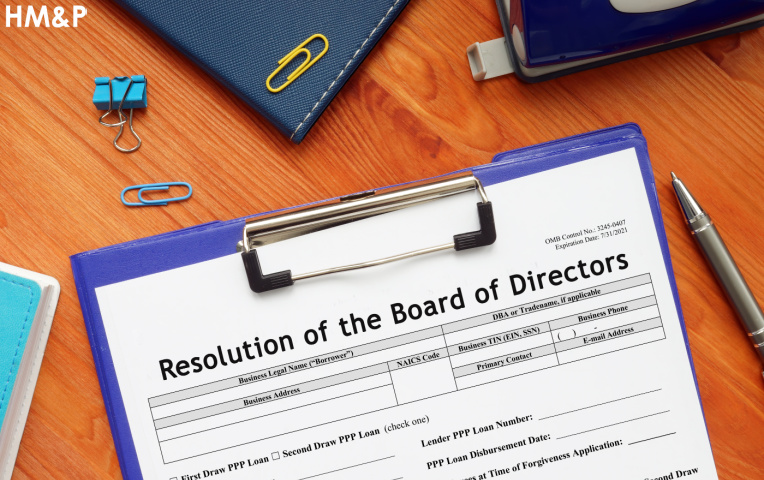
In order to provide a basis for requesting the cancellation of the BOD’s resolution, the Law on Enterprises 2020 stipulates that if the BOD’s resolution is contrary to the provisions of the law, the shareholders’ resolution and the of company charter, and causes damage to the company, the company’s shareholders have the right to request the court to suspend the implementation or cancel the above resolution.
This provision creates a remarkable convenience for the shareholders because, in addition to expressly providing the right to request the court to cancel the resolution of the BOD, this provision also expands the scope of subjects who may request the cancellation of the resolution of the BOD, including all shareholders of the company (regardless of the number of shares held and the holding period), and expands the case in which the resolution of the BOD is cancelled if it is contrary to the resolution of the general meeting of shareholders.. However, this provision only mentions the court as the authority to revoke the resolution of the BOD without mentioning the arbitration court, which is different from the provisions on the authority to revoke the resolution of the general meeting of shareholders (including courts and arbitration courts). This has raised the question of whether the Commercial Arbitration has the authority to decide on applications to cancel the resolution of the BOD.
A real case
In early 2023, one of the notable cases was a dispute that arose from upper management of Hoa Binh Construction Group Joint Stock Company ("Hoa Binh Company"). This dispute then gradually came to an end by the decisions of the Vietnam International Arbitration Center - Ho Chi Minh City branch (“VIAC”). Specifically, shareholder Huynh Bao Ngoc submitted a lawsuit to VIAC on January 03, 2023, requesting the cancellation of BOD Resolutions No. 50, 51, and 53[2]. The Arbitral Tribunal of VIAC then issued a decision deciding to apply temporary emergency measures, and at the same time request the Judgment Enforcement Agency to issue a Judgment Execution Decision, temporarily suspend the implementation of the above Resolutions until a decision or judgment of the arbitral tribunal resolves the case. Thus, in this case, VIAC has accepted to resolve shareholders’ request to cancel the BOD Resolution.
Commercial Arbitration and its authority to resolve requests to revoke BOD resolutions
In order to determine whether the request to rescind the resolution of the BOD falls within the scope of arbitrability of the Commercial Arbitration, it is necessary to determine whether or not the issuance of the resolution of the BOD, which is contrary to the provisions of the law, the resolution of the general meeting of shareholders and the articles of association of the BOD and causes damage to the company, also gives rise to a dispute, and between which entities the dispute (if any) arises.
First, if the BOD passes a resolution that is contrary to the provisions of the law, the resolution of the general meeting of shareholders, and the articles of association and causes damage to the company, it will indirectly cause damage to the shareholders because the shareholders are considered co-owners of the joint stock company. The BOD is the management body of a joint stock company and has full authority to make decisions and exercise the rights and obligations of the company on behalf of the company. However, the implementation of the rights and obligations of the BOD is carried out by the resolution of the BOD, which is issued and becomes effective based on the voting ratio of the members of the BOD. Therefore, in order to classify the responsibilities, the Law on Enterprises specifically provides that the members who agree to pass the resolutions of the BOD that violate the provisions of the law, the resolutions of the general meeting of shareholders and the company charter and cause damage to the company shall jointly bear the personal responsibility for such resolution and compensate the damage to the company. Members of the BOD who oppose the adoption of the above resolution shall be exempt from liability.
Sources: https://thesaigontimes.vn/
Thus, in connection with the adoption of resolutions by the BOD that are contrary to the provisions of the law, the resolutions of the General Meeting of Shareholders and the company charter and cause damage to the company, a dispute has arisen between the shareholders and the members of the BOD who agreed to adopt the violated resolution.
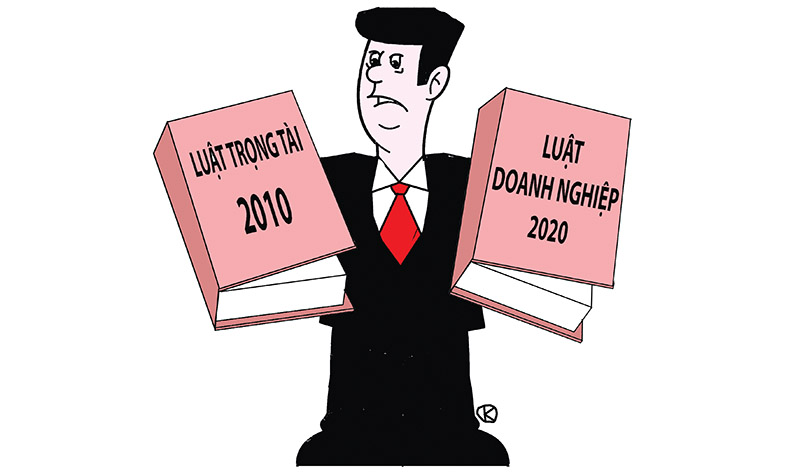
According to the Law on Commercial Arbitration 2010, commercial arbitration is a method of dispute resolution agreed upon by the parties. At the same time, commercial arbitration center is authorized to resolve disputes arising between parties where at least one of the parties is engaged in commercial activities. Thus, if a shareholder or a group of shareholders meets the conditions under the provisions of the Law on enterprises to sue a member of the BOD on behalf of the company, the Commercial Arbitration will have the authority to resolve this case. Of course, the consideration of the jurisdiction of the Commercial Arbitration also depends on many other factors as prescribed by law.
However, it should be noted that filing a lawsuit to settle the dispute is not a new provision of the Law on Enterprises 2020. It is a regulation in cases where shareholders sue for personal liability or joint liability with members of the BOD for breaching the responsibilities of company managers, as stipulated in the Law on Enterprises 2014. At the same time, the settlement of disputes between shareholders and members of the BOD does not lead to the cancelation of the resolution of the BOD, but only to a claim for the return of benefits or compensation for damages to the company.
Meanwhile, the target of the new regulations in the Law of Enterprises 2020 is the suspension/cancellation of BOD resolutions by the court, which was not thoroughly resolved in the Law of Enterprises 2014. As mentioned above, the Law of Enterprises 2014 only regulates cases where shareholders request the BOD to suspend the implementation of the resolution. However, if the BOD does not do so, the shareholders must still apply to the court to suspend the implementation of the resolution. Instead, the Law on Enterprises 2020 expressly provides that shareholders may immediately request the court to set aside the resolution of the BOD, without having to go through the stage of submitting a request to the BOD. Thus, the request to cancel the BOD resolution is not a dispute in substance and will not fall under the jurisdiction of the Commercial Arbitration Center. In other words, if a resolution of the BOD is adopted in violation of the law, the resolution of the general meeting of shareholders or the articles of association of the company and causes damage to the company, it will give rise to disputes between the shareholders and the members of the BOD who approved the resolution. This dispute may be resolved by the Arbitration Center if all conditions are met. At the same time, there may be a request to cancel the BOD resolution. This request is not a dispute; therefore, it cannot be resolved by the Commercial Arbitration Center but must be resolved by the procedures for business and commercial disputes according to the Civil Procedure Code.
In the case of Hoa Binh Company, the Commercial Arbitration Center accepted and decided the shareholders’ requests to cancel the resolutions of the BOD and, at the same time, issued decisions and requests leading to the temporary suspension of the implementation of the resolutions of the BOD. Based on the above analysis, we believe that VIAC’s acceptance and decision of the request to cancel the Board Resolution does not seem to be in compliance with the provisions of the Law on Enterprises 2020. However, it is possible that in reality, the defendant in the case - Hoa Binh Company - did not object to the jurisdiction of the Commercial Arbitration Center, which indirectly led to the fact that the jurisdiction of the Commercial Arbitration Center is not considered in this case.
Read the article at: Hủy nghị quyết hội đồng quản trị: Thẩm quyền giải quyết của ai?
[1] https://www.tinnhanhchungkhoan.vn/stt-co-dong-thang-vu-kien-huy-nghi-quyet-hoi-dong-quan-tri-post165817.html, accessed 26/10/2023.
[2] https://www.tinnhanhchungkhoan.vn/stt-co-dong-thang-vu-kien-huy-nghi-quyet-hoi-dong-quan-tri-post165817.html, accessed 26/10/2023.


