


Information disclosure activities are the core foundation to ensure transparency and fairness of the securities market. For public companies, compliance with disclosure obligations is not only a mandatory legal requirement but also a measure of the quality of corporate governance. However, violations of time and information quality are still considered a common type of violation in the Vietnamese stock market.
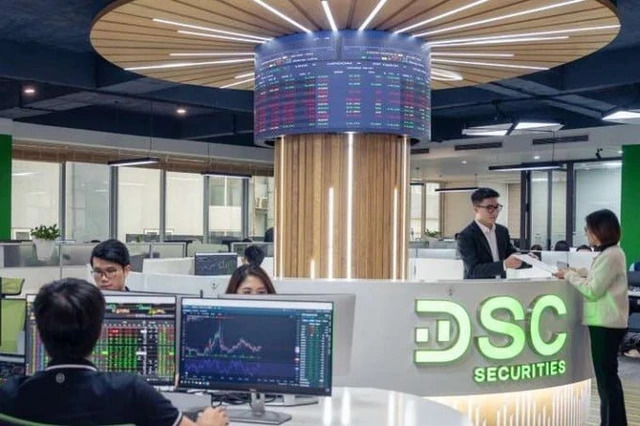
DSC Securities Company. Source: CafeF
1. Disclosure obligations of public companies
The most common mistake in disclosure activities is often related to the failure to strictly comply with legal timelines. Disclosure obligations are clearly divided according to the frequency and nature of information:
Periodic disclosures: Public companies must publish quarterly financial statements (FS) within 20 days from the end of that quarter, and semi-annual financial statements (reviewed) no later than 45 days from the end of the first six months of the fiscal year. For audited annual financial statements and Annual Reports, The compliance period is in accordance with the provisions of accounting law, usually 90 days.
Irregular and On-Demand Disclosure: This is the group of information that requires the highest timeliness. The company must disclose information within 24 hours of the occurrence of an extraordinary event such as an extraordinary decision of the General Meeting of Shareholders (AGM), freezing of bank accounts, or decisions related to dividends/treasury shares. Similarly, information at the request of the State Securities Commission (SSC) or the Stock Exchange must also be disclosed within 24 hours from the receipt of the written request.
To have an overview of the disclosure deadline, we summarize the basic information disclosure deadline regulations as follows:
|
Type of Information |
Frequency |
Publication Deadline |
Legal basis |
|
Quarterly Financial Statements |
Quarterly |
Within 20 days of the end of the quarter |
Circular 96/2020/TT-BTC |
|
Semi-annual financial statements (reviewed) |
Half a year |
No later than 45 days from the end of the first 6 months of the year |
Circular 96/2020/TT-BTC |
|
Annual Financial Statements (Audited) |
Annually |
According to the law on accounting (usually 90 days) |
Decree 155/2020/ND-CP |
|
Unusual information |
When an event arises |
Within 24 hours of the event |
Circular 96/2020/TT-BTC |
|
Information on request |
At the request of the SSC/SE |
Within 24 hours of receiving the request |
Circular 96/2020/TT-BTC |
2. Common groups of errors
Disclosure is a common type of violation by public companies and securities trading organizations in Vietnam. These errors can be classified into three main groups, ranging from administrative errors in time to serious errors in content quality and system administration.
Group of errors in the announcement deadline
Deadline violations are the most common group of errors and are easily detected and sanctioned by regulatory agencies.
Late submission of periodic financial statements and annual reports
Many companies are sanctioned by the SSC for delaying or failing to publish important documents according to periodic regulations. These documents include the annual audited financial statements, semi-annual reviewed financial statements, and quarterly financial statements. Recently, many companies have been sanctioned for this late disclosure such as Simco Song Da Joint Stock Company was fined VND 85 million for failing to disclose or delaying the announcement of the semi-annual financial statements for 2023 and 2024, the financial statements for the third quarter of 2023, the audited consolidated financial statements for 2024, and the Annual Report 2023, 2024[1]. Similarly, Ben Tre Building Materials Joint Stock Company (VXB) and H.A.I Agropharmaceutical Joint Stock Company (HAI) were both fined for a long list of reports that were delayed or omitted over many periods, including the audited financial statements for 2022, 2023 and the quarterly/semi-annual financial statements of 2023 and 2024.[2]
This prolonged delay is not only an administrative error but also severely undermines investor confidence, resulting in the company's securities often being put under control or restricted from trading. The fact that companies regularly violate deadlines for many years in a row shows that administrative fines alone are not enough deterrent, or that businesses accept fines as an acceptable cost of compliance. This shows the need for stronger non-monetary measures to change the basic governance behavior of Vietnamese public companies.
Delay in publishing management reports and internal documents
In addition to financial statements, many companies are also slow or miss the publication of documents related to corporate governance and important decisions. QP Green Investment Joint Stock Company was fined VND 60 million for delaying the publication of documents of the 2025 Annual General Meeting of Shareholders, the 2024 audited financial statements, the amended and supplemented Charter, and the announcement of changes in chief accountants[3]. This delay hinders shareholders' right to access information, making it difficult to make investment decisions and monitor the company's governance activities.
Errors in the accuracy of the disclosure report
This is the group of violations with the highest destruction of market confidence because it is directly related to the truthfulness of basic financial information, which seriously affects the investment activities of individuals and organizations.
Misrepresentation of material financial information
A prominent case is Simco Song Da Joint Stock Company[4], which was fined 150 million VND for seriously misrepresenting the after-tax profit target. Specifically, profit after tax in 2023 has been recorded from a loss of more than VND 29 billion to a profit of more than VND 7 billion; and in the first 6 months of 2024, from a profit of more than VND 4.3 billion to a loss of more than VND 6.5 billion. The big difference between self-disclosure and audited data reflects the deliberate behavior of creating operational efficiencies in order to avoid warning or attract capital from investors.
In this case, the SSC has applied a strict remedial sanction of forcible cancellation of information or correction of information for the act of disclosing false information. This is necessary but cannot compensate for the damage to investors who have traded based on false information before.
Lack of transparency in transactions with stakeholders
The lack of transparency in dealings with stakeholders is also a serious form of content error. Hung Thinh Incons Joint Stock Company was fined a total of VND 470 million by the SSC for being "ambiguous" in transactions and information disclosure[5]. This shows that although the company may comply with the listing of transactions in form, they deliberately conceal the nature, conditions or fairness of such transactions. This lack of clarity makes it very difficult for minority investors to assess the risks, conflicts of interest, and fairness of the business decisions that businesses are making.
Governance and compliance errors
Governance errors are the root cause of time and content violations. Violation of information disclosure is not only the fault of any department but perhaps the product of a Board of Directors and the Board of Directors who lack interest in the internal control mechanism.
Some public companies do not establish sufficient personnel structures to comply with regulations. The case of Ben Tre Building Materials Joint Stock Company being fined an additional 15 million VND for not appointing a person in charge of corporate governance is a typical example. The person in charge of administration has the role of supervising and coordinating disclosure. This lack of position results in no primary point of contact for compliance, which can cause omissions and delays in periodic and irregular reporting.
In addition, some enterprises "forgot" to develop and adopt internal regulations on corporate governance, operating regulations of the Board of Directors and the Supervisory Board[6] have been sanctioned by the SSC for laxity in corporate governance activities as required.
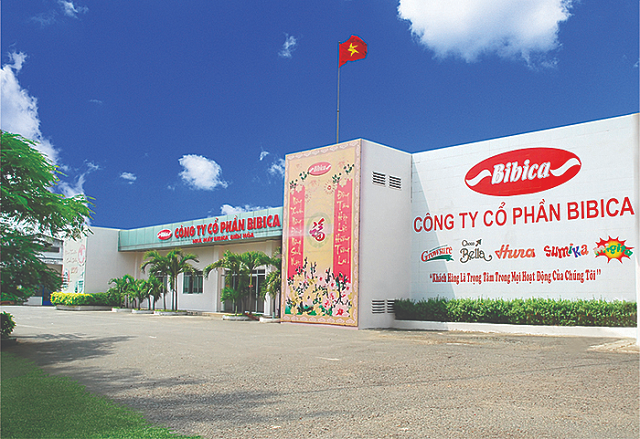
Bibica Joint Stock Company was fined VND 145 million for violations in information disclosure. Source: VietnamIndex
3. Causes of errors in disclosure of public companies
Common errors in disclosure activities not only stem from shortcomings in the internal processes of enterprises but are also affected by systemic and legal limitations.
Restrictions from the legal framework
Although the legal framework has been significantly improved in recent years, there are still challenges in implementation.
First, the compliance burden on large corporations with complex operations is significant. The fact that many companies request the SSC to extend the disclosure of consolidated financial statements shows that time pressure for some types of complex reports may not be feasible in the context of problematic audit and data aggregation activities.
Second, Vietnam still lacks an overall and quantitative indicator of information transparency. Currently, disclosure is mainly compliant with legal checklists. Unlike developed markets such as the United States, Singapore or Taiwan, which have transparency ranking indices such as Transparency and Disclosure (T&D), Governance and Transparency Index (GTI), or Information Disclosure and Transparency Ranking System (IDTRS). Vietnam's stock market does not have a tool to encourage competition in terms of information quality, but only focuses on fining minimal violations. The lack of this quantitative mechanism reduces the motivation for public companies to overcome the mandatory compliance level, towards improving the quality of information disclosure.
The internal management capacity of the enterprise is not high
The weakness of the internal team plays a decisive role in disclosure violations.
First, many businesses operate with a culture of passive compliance, only reacting when a request is made or when a deadline is approaching, rather than establishing a proactive process for internal audits of deadlines and data quality. This lack of initiative explains why time violations recur.
Secondly, the substandard accounting and internal control capacity is the direct cause of the large discrepancy in the unaudited financial statements compared to the audited financial statements. When the internal accounting department is incompetent or applies inconsistent accounting policies, the result is that information released to the public is easily rejected by an independent auditing agency, forcing the company to make corrections, causing serious damage to its reputation.
4. What are the solutions to limit the current disclosure situation?
In order to thoroughly solve common errors in information disclosure activities, it is necessary to coordinate macro solutions to improve institutions and micro measures to optimize internal governance.
Completing the legal framework for effective monitoring
The regulator needs to study international experience to build a comprehensive set of information transparency indicators. The goal is to transform the monitoring mechanism from a model based solely on fines for violations to a model based on quality incentives and creating competitive pressure on information transparency of enterprises. The ranking of units with good information transparency will help investors be more aware of risks and contribute to increasing business value through market trust.
In addition, Vietnam's securities regulator needs to invest heavily in technological infrastructure, modernize the information disclosure system into a centralized and modern Data Center. This will ensure that the information is stored in full history, the ability to trace it quickly, and at the same time support the supervision of the management agency more effectively. And it also helps businesses connect and make reports easily with management agencies in compliance with information disclosure activities.
In addition to increasing the fine level, the State needs to strengthen the application of other appropriate remedial measures. For serious violations of content, sanctions for forced cancellation of information or correction of information must be applied consistently. For recurrent time violations, The strict application of restrictive measures or prolonged suspension of trading will be necessary to create a stronger deterrent, forcing the management of public companies to change their core governance behavior.
Businesses need to build a modern and effective compliance and governance system
Public companies need to proactively establish tight internal processes to minimize compliance risks. The Company must ensure that there is a Person in charge of corporate governance or the Compliance Department who is qualified and has primary responsibility for establishing, supervising and implementing the internal disclosure process. This process must include an early warning mechanism and timely confirmation of events requiring disclosure within 24 hours. In addition, to prevent large discrepancies between independent reports and audit reports, enterprises should apply an independent quality control process to quarterly and semi-annual financial statements. This process should be overseen by the Supervisory Board or a subcommittee of the Board of Directors such as the Audit Committee before the information is officially released to the public.
In general, errors in information disclosure activities of public companies in Vietnam mainly revolve around three core issues: non-compliance with statutory deadlines, serious disclosure content, and weakness in internal governance structures. To improve the transparency and compliance of businesses, public companies must first raise their awareness of compliance, design and train appropriate personnel. In addition, in addition to sanctioning, management agencies need to improve the connectivity and efficiency of the information disclosure system as well as support training and guidance for businesses to comply well with this activity in practice.
[1] https://www.tinnhanhchungkhoan.vn/simco-song-da-sda-va-dich-vu-ky-thuat-vien-thong-tst-bi-phat-nang-do-vi-pham-quy-dinh-cong-bo-thong-tin-post375036.html, accessed on 15/11/2025.
[2] https://thanhtra.com.vn/hoat-dong-nganh-91D9B9332/cong-ty-co-phan-vat-lieu-xay-dung-ben-tre-bi-xu-phat-tren-107-trieu-dong-b0c79becf.html, accessed on 15/11/2025.
[3] https://www.tinnhanhchungkhoan.vn/dau-tu-qp-xanh-hkt-bi-xu-phat-khi-cong-bo-thong-tin-sai-lech-post374891.html, accessed on 15/11/2025.
[4] https://tuoitre.vn/tin-tuc-sang-16-8-phat-simco-song-da-bao-cao-lo-thanh-lai-de-xuat-day-them-ngoai-ngu-tai-tp-hcm-20250815231015784.htm, accessed on 15/11/2025.


