


Vietnam's efforts to deeply integrate into the global economy, the establishment of the International Financial Center (IFC) in two strategic locations – Ho Chi Minh City and Da Nang – is considered a breakthrough step. Based on Resolution No. 222/2025/QH15 of the National Assembly, the Government has recently submitted a draft Decree of the Government on the establishment of Vietnam IFC to collect public opinions[1]. Vietnam's IFC regulations promise to create a superior financial "ecosystem", with a specific mechanism to attract investment, promote innovation and connect with the world's financial centers.
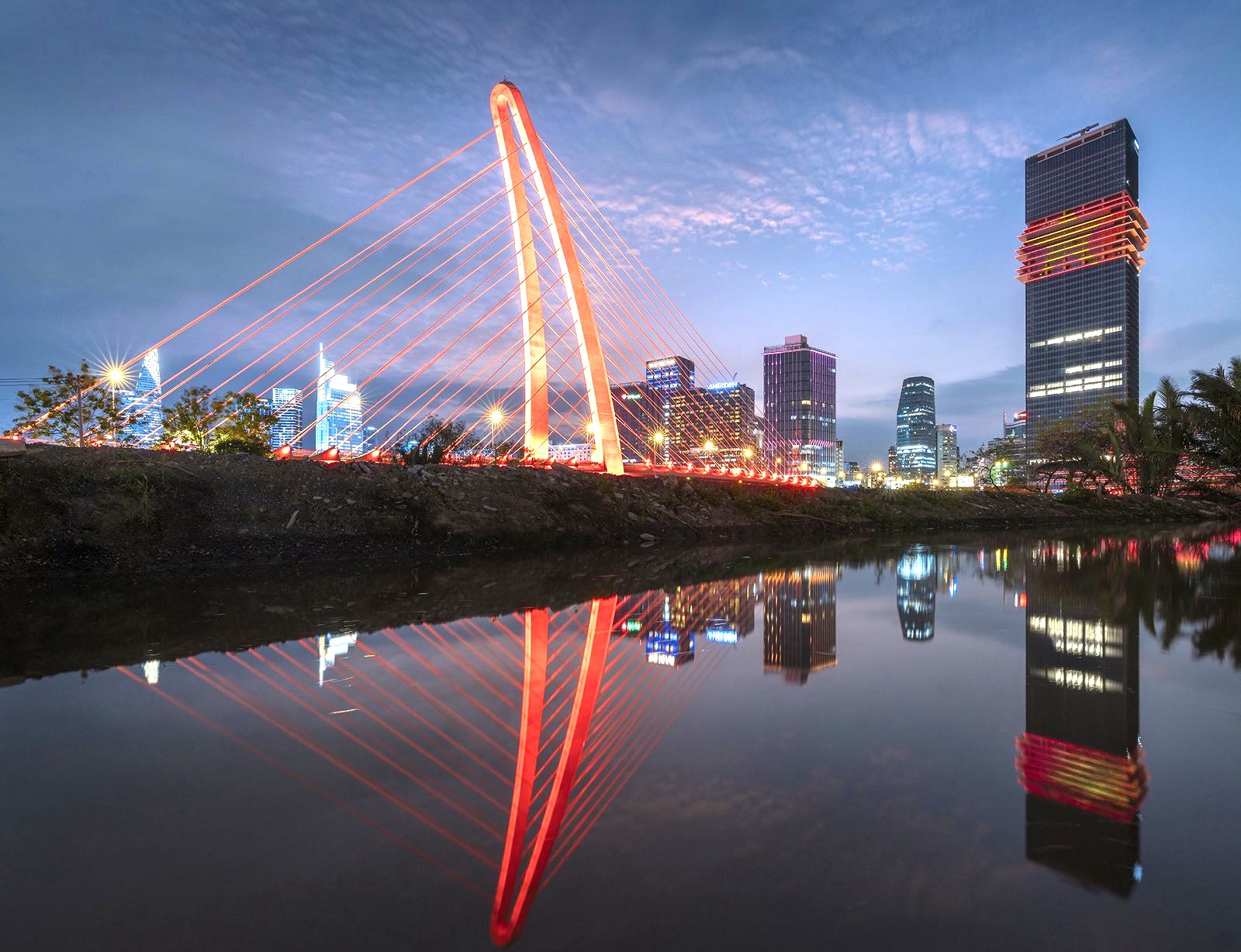
Saigon Marina IFC is the pioneering project in Vietnam to apply the Transit-Oriented Development (TOD) model, featuring direct connectivity to Ba Son Station on Metro Line No. 1. Source: Government News
IFC's legal foundations
Vietnam is not the first country to build IFC. Models such as Singapore, Dubai or Hong Kong have proven that a specialized financial center can become a driver of economic growth, attracting trillions of dollars in investment. According to the Ministry of Finance's report on the establishment of IFC, the establishment of IFC is to concretize the mechanism, ensure that IFC operates independently, streamlined and in accordance with international practices.
It can be seen that Vietnam is a "bright spot" in terms of economic growth, but the financial market is still limited, lacking global connectivity. IFCs in the world usually develop according to three models: natural formation through the selection of time such as London and New York, reform and methodical development process such as Singapore, or specialized independent formation such as Dubai. Vietnam chooses the model of immediately applying a highly open policy, with an independent management agency to monitor and operate. The draft decree on IFC clearly stipulates the scope that IFC in Ho Chi Minh City focuses on capital markets, asset management, fintech and derivatives; IFC in Da Nang is green finance, offshore, innovation and cross-border trade.
From the perspective of businesses, this is a positive signal to form a flexible financial center, in line with the development speed of Vietnam as well as the general context of the world. According to a recent survey by business associations, the majority of financial enterprises expect IFC to address current inadequacies such as complicated administrative procedures, barriers to market access and lack of technology testing mechanisms.
Groundbreaking regulations
The Draft Decree is a breakthrough in the maximum decentralization and decentralization, ensuring the independence of the CIC. Chapter I of the Draft stipulates the principles of promoting decentralization for local agencies, applying comprehensive digital technology, building an "electronic one-stop-shop" system and integrating with the international financial ecosystem. The regulations also emphasize the goal of attracting large financial institutions, developing specialized services such as capital raising, payments, derivative financial products, and sandbox testing for fintech.
A highlight in the Draft is the mechanism of members and strategic investors. Businesses can register as members through the online system, with standards of financial capacity (BB credit rating or higher), prestige and commitment to technology transfer. The procedure only takes 7 days, compared to every month in the current system. Strategic investors are entitled to special incentives under Article 26 of Resolution 222, such as land, tax and visa support. In addition, the Draft also stipulates that the membership registration system must be multilingual, integrate digital signatures and electronic payments, and connect to the national system to simplify procedures.
In terms of organization, the Executive Agency is the focal point for management, with the right to issue operating regulations, license fintech trials and establish an independent advisory board consisting of international experts. This overcomes practical inadequacies such as overlapping supervision between ministries and branches. Practice shows that in the past, financial enterprises had to work with many agencies such as the State Bank and the Securities Commission, leading to high costs and delays. Now, with the formation of the Vietnam IFC, the "one-stop" model will reduce "begging-giving" and encourage free business in the field of non-prohibited law.
In addition, the development roadmap allows the Executive Agency to decide on the priority list, handle issues arising in the Government's writing if it conflicts with current laws. The draft also stipulates the location and adjustment of boundaries, ensuring synchronous infrastructure, land funds for offices, expert housing and commercial complexes. Businesses can trust that IFC will pilot an outstanding mechanism to attract investment, overcome limitations in human resources and infrastructure, a problem that Vietnam has not been able to solve definitively for a long time.
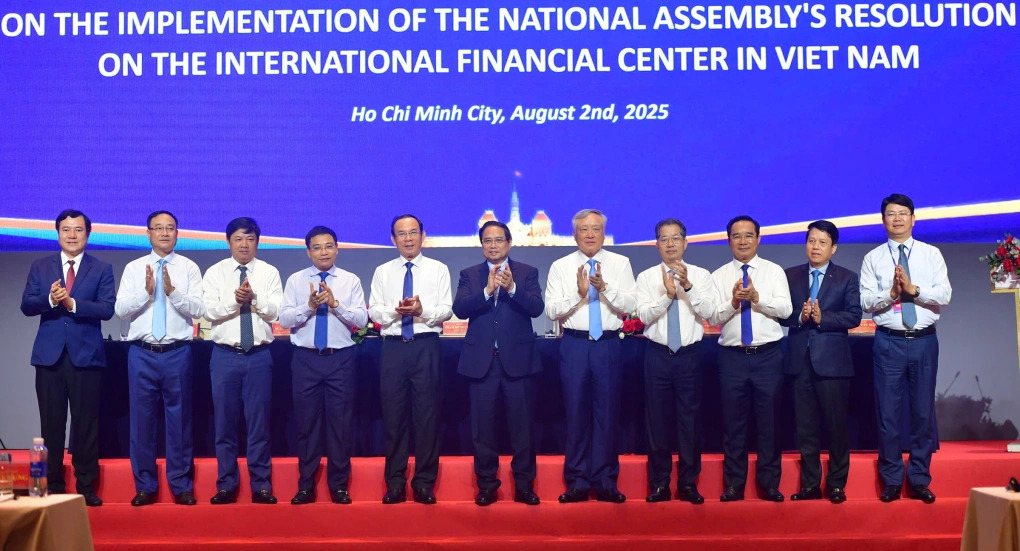
Members of the Steering Committee for the implementation of the International Financial Center in Vietnam were inaugurated on the morning of August 2 in Ho Chi Minh City. Source: VnExpress
Golden opportunity for growth for relevant businesses
Businesses, especially in the fields of finance, technology and support services, are expecting great things from these regulations.
First, the expectation of attracting investment and expanding the market.
With the orientation of IFC in Ho Chi Minh City to develop the capital and derivatives market, banks and investment funds expect global capital inflows to flow in after IFC is established and put into operation. For example, a foreign fund management business can easily set up a branch, enjoy tax incentives and connect to a commodity exchange. In Da Nang, with IFC's focus on green finance and offshore, it will attract fintech startups, remittance funds and SMEs. With IFC, Vietnam will have to compete fiercely with outstanding and traditional IFCs such as Singapore or Hong Kong, where business costs are low and procedures are fast, which forces the Government to take bold, new and different steps to be able to attract large investors to shift investment capital flows into Vietnam IFC. We believe that, with Vietnam's experience and internal resources, this must be a significant challenge that Vietnam and its direct management agencies must solve in the coming time. Hopefully, with its creativity and determination, Vietnam will put IFC into practice smoothly.
Second, innovation through the sandbox.
The draft allows for the testing of new financial services that are not regulated by current law, such as cryptocurrencies, digital payments or digital assets. This can be considered a "push" for Vietnamese fintech, which is being held back because there is no clear legal framework. Some startups in the technology sector such as Momo or Zalopay can pilot new models without worrying too much about the unformed or unclear legal framework. In addition, the application of innovative and innovative models at IFC will promote R&D, attract talent and venture capital. However, at the same time, Vietnam must promote the training of high-quality human resources to meet new development models, which are oriented towards technology and creativity.
Third, special and transparent administrative procedures
The electronic one-stop system, 7-day registration procedure, and membership termination will obviously reduce compliance costs. Foreign businesses often complain about visa procedures, land and taxes; now, IFC has formed the promise of an "open, transparent, low-cost" environment. According to the Draft, strategic investors can be supported with housing for experts, ensuring security and environment. This is especially attractive to large investment funds from the US or Europe, expecting anti-money laundering standards according to FATF standards.
Finally, sustainable development and regional connectivity
With IFC green finance in Da Nang, businesses can participate in the carbon credit and logistics market, taking advantage of the Free Trade Zone. IFC is expected to connect with global IFCs, helping Vietnamese businesses to export financial services, which were previously not Vietnam's strengths.
It can be seen that Vietnam IFC can be formed and put into operation with the aspiration of the whole nation for a prosperous Vietnam in the new era. However, the Government and even businesses must understand that Vietnam IFC cannot come into operation and become a brand in a short time. The time for Vietnam IFC to be accredited can be measured in decades. But only by starting and taking action can Vietnam catch up with the pace of development of regional and international IFCs.
IFC is not only a geographical area but a symbol of Vietnam's breakthrough in global finance. By forming and operating effectively, IFC can turn Vietnam into the "second Singapore" of Southeast Asia, attracting billions of USD and creating a driving force for the digital economy, a high-quality, advanced economy as desired by the whole nation. However, success depends on implementation, with the participation and companionship of domestic and foreign businesses and financial institutions.
[1] https://chinhphu.vn/du-thao-vbqppl/du-thao-nghi-dinh-ve-thanh-lap-trung-tam-tai-chinh-quoc-te-7599, accessed on 19/08/2025.


