


In the context of Vietnam's economy being increasingly deeply integrated into the global value chain, economic concentration activities such as mergers, acquisitions, consolidations, or joint ventures between enterprises have become a prominent trend. These transactions not only reflect the dynamics of the market, but also pose a major challenge in ensuring healthy competition and protecting consumer rights. The 2024 Annual Report of the National Competition Commission (NAC), under the Ministry of Industry and Trade released on July 15, 2025, has provided a fairly comprehensive picture of e-commerce activities in Vietnam in the past year, and at the same time clarified the role of regulators in supervising and controlling these transactions in practice.

1. Overview of economic concentration in Vietnam in 2024
Economic concentration, according to the Competition Law 2018, is defined as acts such as mergers, consolidations, acquisitions, or joint ventures between businesses, which lead to changes in market structure and potentially affect the level of competition. These activities are often aimed at expanding market share, optimizing resources, or enhancing competitiveness in the international market. However, if not strictly controlled, e-commerce can lead to monopolies, restrict competition, or cause disadvantage to consumers.
According to the 2024 Annual Report of the National People's Committee[1], in 2024, the agency has received 197 cases of notification of economic concentration, a significant number, reflecting the vibrancy of mergers and acquisitions in Vietnam. Of these, only 3 cases required official appraisal and were approved with specific conditions, showing that the National People's Commission has performed a good screening role, focusing on high-risk transactions that restrict competition.
Fields of implementation of major economic concentration procedures
The report indicates that the sectors with the highest number of financial center notices in 2024 include areas such as:
Energy and minerals: This is the leading sector in terms of transaction volume, in line with the trend of strong investment in renewable energy (solar power, wind power) and resource exploitation in Vietnam. Businesses in this industry often carry out mergers or acquisitions to strengthen supply chains and increase production capacity.
Real estate: With the recovery of the real estate market after a difficult period, real estate transactions in this sector focus on restructuring, project acquisition, or consolidation of real estate development companies to optimize resources and scale.
Industrial production: Merger activities in the industrial manufacturing industry, from electronics to heavy industrial products, reflect the need to improve production capacity and compete in the international market.
In addition to the above three areas, the report mentions another sector such as finance, retail, or e-commerce, which have also attracted a lot of e-commerce activities in recent years. Compared to previous years, these sectors continue to maintain their leading positions, showing stability in investment and merger trends in Vietnam.
2. Typical economic concentration case Bunge acquires CJ Selecta
One of the highlights in the 2024 Annual Report is the case related to the transaction of the market between Bunge Alimentos SA (Brazil) and CJ Selecta S.A. in the oil palm kernel and soy protein market in Vietnam[2]. This is one of three cases requiring formal due diligence, demonstrating the complexity and importance of international transactions.
Details of the case are as follows:
Stakeholders
- Bunge Alimentos SA (Buyer): A large Brazilian conglomerate, operating in the agricultural, food and processing sectors, with a global network.
- CJ Selecta S.A. (Target Company): A company engaged in the production and supply of oil palm seeds and soy protein, owned by
- STIC CJ Global Investment Corporate Partnership Private Equity Fund and CJ CheilJedang Corporation (Target Company Owner)
Related Markets
The oil palm kernel and soy protein market in Vietnam, which plays an important role in the food and animal feed industry.
Trading Content
Bunge Alimentos SA has filed a financial notice regarding the acquisition of shares of CJ Selecta S.A. This transaction is considered to have the potential to affect the market structure, especially in the agricultural industry, where raw materials such as oil palm kernels and soy protein are important inputs for many supply chains. Because in this case, both the Buyer and the Target Company have contracts for the purchase and sale of concentrated soybean oil and protein with Vietnamese enterprises.
Appraisal results
On August 29, 2024, the National People's Committee issued Decision No. 236/QD-CT on conditional economic concentration. The National People's Committee has approved this transaction with specific conditions to minimize the risk of restricting competition such as:
- Prohibition of increasing product prices: Businesses participating in the e-commerce market are not allowed to increase the selling price of oil palm nut products in Vietnam, ensuring stable prices for consumers and businesses using these products.
- Maintain existing contracts: Contracts between enterprises participating in the e-commerce market and customers who buy oil palm seeds and soy protein in Vietnam must be maintained, avoiding supply chain disruptions.
- Commitment to Quality and Efficiency: Businesses must maintain the production, import, and distribution of oil palm and soy protein products, and improve productivity, quality, and business efficiency to reduce costs, improve product quality, and serve the interests of consumers and the community.
Responsibilities of the parties during and after the transaction
- Enterprises must be responsible for the accuracy of the dossier of notification of the financial center.
- Report the results of trading and compliance with the specified conditions.
- Fully comply with other relevant legal provisions.
The Bunge-CJ Selecta transaction shows that Vietnam is becoming an attractive destination for international investors in the agricultural and food sectors. However, it also poses a challenge for the National Commission to assess the impact of cross-border transactions. If left unchecked, this merger could lead to an excessive concentration in the oil palm and soy protein markets, increasing input prices for food and animal feed manufacturing businesses, thereby affecting consumers.
The case also highlights the role of the National Competition Commission in coordinating with international competition regulators, such as the Australian Competition and Consumer Commission (ACCC) or the Korea Fair Trade Commission, to share information and ensure transparency in the due diligence process.
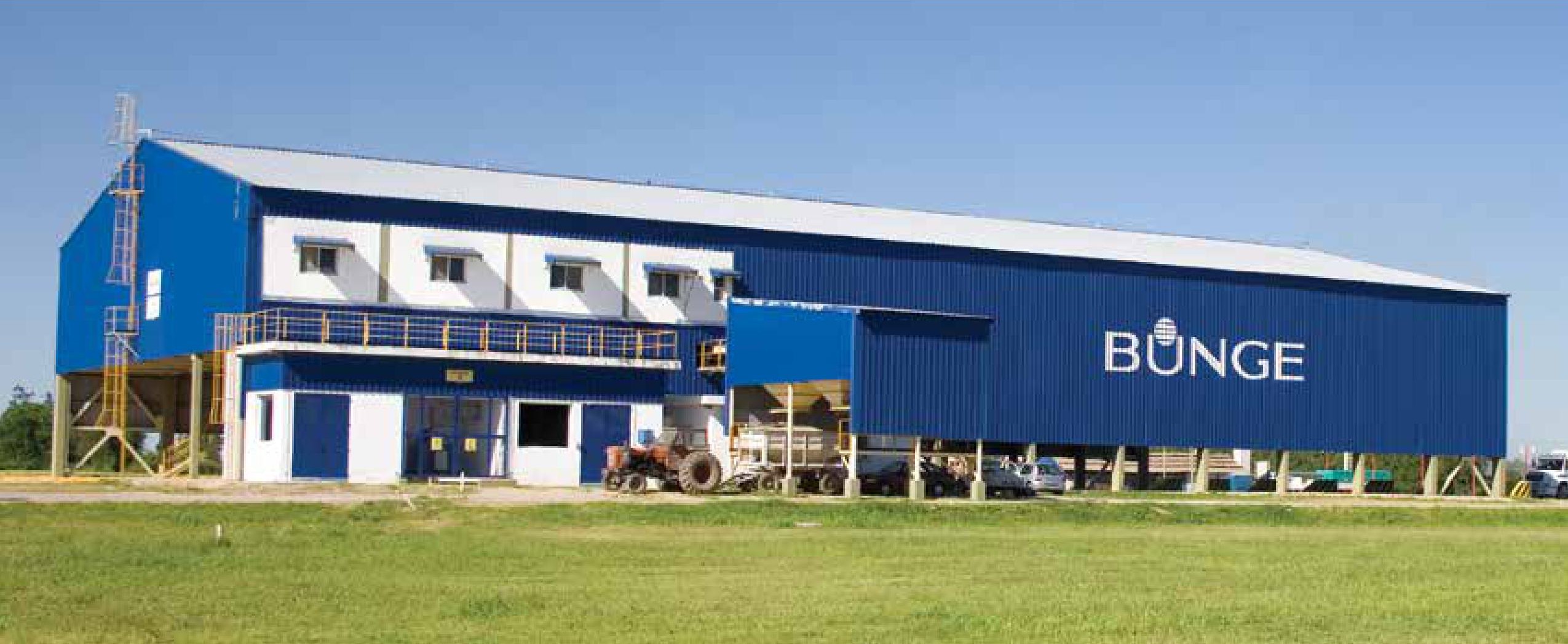
Bunge Vietnam. Source: Bunge.com
3. The process of controlling economic concentration of the National People's Committee has made a lot of progress
The National People's Committee controls the competition market according to a strict process, specified in the Competition Law 2018 and its guiding documents. This process includes the main steps:
Receipt of notification: Businesses must submit a financial center notification dossier if the transaction meets the prescribed threshold, for example, the combined market share is over 20% or the total assets/revenue reaches a certain level.
Preliminary due diligence: The National People's Committee conducts a preliminary assessment to determine whether the transaction needs formal due diligence. Of the 197 cases in 2024, only 3 cases require formal due diligence, showing that the majority of transactions do not pose a major risk to competition.
Official appraisal: For transactions that are at risk of restricting competition, the National People's Committee conducts a detailed analysis, including:
- Evaluate market share and market concentration (usually using the HHI - Herfindahl-Hirschman Index).
- Consider the possibility of restricting competition, such as creating a dominant position, raising prices, or reducing choices for consumers.
- Offer approval conditions, such as a divestment request, restriction of certain business activities, or a commitment to remain competitive.
Issue a Final Decision: Approval, conditional approval, or prohibition of trading.
The report shows that the National People's Committee has processed the dossier on time or earlier than the prescribed deadline, demonstrating effective management capacity. This is especially important in the context that new legal documents, such as the Law on Protection of Consumer Rights 2023 and the Law on Real Estate Business 2023, which take effect from July 1, 2024, set higher requirements for legal compliance.
4. Handling of violations due to failure to notify economic concentration
In 2024, the National Competition Commission has investigated, handled and settled complaints about the decision to handle competition cases for 01 single case of violating regulations on economic concentration in the field of chemicals as prescribed in Article 44 of the Competition Law 2018.
On May 13, 2024, the Agency for Investigation of Competition Cases of the National People's Committee issued Decision No. 14/QD-CT on the investigation of the competition case No. 24-KX-TKT-01 related to the violation of regulations on economic concentration for Duc Giang Lao Cai Chemical Co., Ltd., a subsidiary of Duc Giang Chemical Group Joint Stock Company (a company listed on the stock exchange). The investigation results show that the enterprises have not implemented the notification of economic concentration for the transaction of Duc Giang Lao Cai Chemical Co., Ltd. to acquire 100% of the shares/charter capital of Pho Pho 6[3] Joint Stock Company (now Pho 6 Co., Ltd.) in accordance with the provisions of the Competition Law. violating the provisions of Clause 1, Article 44 of the Competition Law.
Pursuant to the provisions of the law on competition and other relevant legal provisions, the National People's Committee has issued a decision to sanction administrative violations in the field of competition against Duc Giang Lao Cai Chemical Co., Ltd. with a fine of VND 1,323,982,880 and Pho Pho 6 Co., Ltd. with a fine of VND 100,000,000. It can be seen that this is one of the cases of serious violations of Vietnam's competition law and has been severely sanctioned by the National Competition Commission with a large sum of money, almost disciplined.
Economic concentration activities in Vietnam in 2024, reflected in the Annual Report of the National People's Committee, show the vibrancy of the market and the important role of regulators in ensuring healthy competition in Vietnam. With 197 cases received and 3 official appraisal cases, the National People's Committee has demonstrated effective management capacity, especially in the energy, real estate, and industrial production industries. The Bunge-CJ Selecta case is a prime example, illustrating the complexity of international transactions and the importance of tightly controlling corporate M&A activities that can affect the healthy growth environment of the business.
[1] https://vcc.gov.vn/default.aspx?page=document, accessed on 2025/07/17.
[2] https://vcc.gov.vn/data/ec84ff2e-887c-4a2f-8c60-c919696e3f1d/userfiles/files/QD236%20-%20bunge%20Alimentos.pdf, accessed on 2025/07/17.
[3] https://cafef1.mediacdn.vn/download/310724/dgc-nghi-quyet-h-qt-ve-viec-thong-qua-phuong-an-sap-nhap-pp6-va-dlc-0.pdf, accessed on 2025/07/17.


