


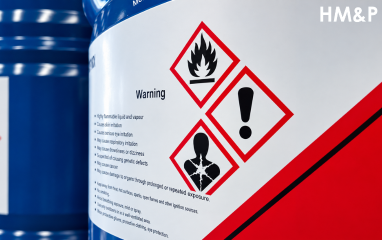
Why does the Ministry of Industry and Trade propose to amend three new decrees guiding the Law on Chemicals 2025?
Just a few months after three important Decrees guiding the Law on Chemicals 2025 were issued, the Ministry of Industry and Trade proposed to amend all three documents simultaneously. The very short implementation period easily creates a sense of unstable policy. However, the Draft documents show that the main goal is not to change the management orientation established by the Law on Chemicals and these documents, but to handle unclear, overlapping and inappropriate points that arise when the new regulatory system begins to come into operation.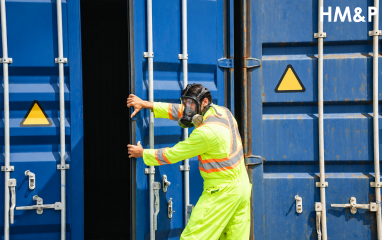
Procedures for importing chemicals subject to special control of group 1 according to the Law on Chemicals 2025
From January 1, 2026, the Law on Chemicals No. 69/2025/QH15 replaces the Law on Chemicals 2007 and establishes a new management mechanism for chemicals requiring special control. This list is divided into group 1 and group 2, with different management requirements.
It is necessary to determine the correct procedures when enterprises import and export special chemicals into and out of export processing zones
This seemingly small difference is becoming a noteworthy problem for businesses operating in the chemical sector, especially in localities with many industrial parks and export processing zones such as Ho Chi Minh City, Dong Nai or Long An. The reason lies in the fact that the same transaction can be simultaneously governed by the law on chemicals, trade, foreign trade management and customs. If you only look at the concept of "export and import" without determining the correct point of departure, destination and legal regime of goods, it is very easy for businesses to carry out excess procedures or, more dangerously, miss mandatory procedures.
Risks that may arise when new administrative sanctions in the chemical sector are enforced
In chemical management, the biggest risk to a business sometimes does not start with a chemical incident, but from the gap between what the business is operating and what the legal records represent. A restockpile, a line that has been adjusted, chemical inventory has increased, a chemical safety sheet has not been updated or the declaration data no longer matches reality are all risks to the business of the business.
Management of mixed chemicals: Do businesses have to apply for permission for each single substance?
A batch of chemicals seized at the border gate has revealed a significant gap in the understanding and application of chemical law in Vietnam: when importing chemical products made up of many single substances, do enterprises have to apply for separate licenses for each component? The answer not only affects one business, but also the entire chemical supply chain in Vietnam.
Problems in chemical labeling: Balancing compliance and protecting trade secrets
In the chemical industry, product formulations are often the core factor that creates a business's competitive advantage. For many products such as cosmetic chemicals, detergents, food additives or specialized industrial preparations, the commercial value lies not only in the brand but also in the mixing ratio, additive ingredients, technical processes or technological know-how invested and researched by enterprises for a long time.
Risk management strategy for chemical enterprises under the new legal framework
The change of the chemical legal system in Vietnam from the beginning of 2026 marks a new era in safety, security governance and chemical industrial development. With the National Assembly's passage of the Chemical Law No. 69/2025/QH15 and the simultaneous introduction of guiding Decrees such as Decree 24/2026/ND-CP, Decree 25/2026/ND-CP, and Decree 26/2026/ND-CP, chemical businesses are facing stricter and more comprehensive compliance requirements than ever before. In this article, we will analyze and clarify common legal risks under the new regulations and long-term risk management strategies to help businesses minimize legal risks and optimize operational efficiency in the context of the digitalization of the state's chemical management.
Draft amendments to the Law on Food Safety: Changing the way national food safety is managed in the new context
Current practice shows certain limitations in the current food safety management and supervision mechanism, especially the control from production, processing to circulation in the market. Recent incidents of contaminated food have raised big questions about the responsibility and management efficiency of state management agencies in controlling and supervising food safety.
To minimize legal risks in food ingredient labeling
In the practice of food businesses, stating the ingredients of ingredients always has many potential legal risks, although in terms of form, many brands are designed "in accordance with the law". The problem does not lie in whether the business records the composition or not, but in the way it is recorded, the level of detail and especially the ability to maintain the accuracy of the information when it is actually checked. The following are two cases of common legal risks arising in the way of recording ingredients and food labels of Vietnamese enterprises today and the direction of handling.
The special position of intellectual property rights in the global pharmaceutical industry
Intellectual property (IP) rights, especially patents, hold a unique and irreplaceable position in the global pharmaceutical and life sciences industries. This importance stems not only from the legality but also deeply ingrained in the industry's core business model, where huge research and development (R&D) costs come with a high risk of failure.
Latest chemical business regulations: Frequently asked questions
In the context that chemical business activities play an increasingly important role in many industries in Vietnam and are governed by a complex system of specialized legal regulations that are regularly updated, grasping and complying with legal requirements is a key issue for businesses. Stemming from practical needs and common problems in the process of advising clients, HM&P Law Firm ("HM&P") has compiled and developed the publication "Q&A: Law on Chemical trading in Vietnam" to clarify the current legal regulations on chemical trading. on the basis of the Law on Chemicals 2025 and the Draft Decrees guiding the implementation are expected to be issued, thereby supporting businesses to systematically approach regulations and limit legal risks in the process of operation.


