


The year 2025 will witness a period of the most exciting legislative activity in the country's history. Old regulations are adjusted and amended, legal frameworks that never existed are built to manage new problems that arise. Among the 28 laws that will take effect from January 1, 2026, we would like to take a look at and highlight the new highlights of important laws that affect the business activities of enterprises.
1. Personal Data Protection Law 2025
On June 26, 2025, at the 9th Session, the National Assembly officially approved the Law on Personal Data Protection (Law No. 91/2025/QH15) ("Law on PDP"). This is the first law in Vietnam to comprehensively regulate the collection, storage, processing and protection of citizens' personal data. The Law takes effect from January 1, 2026, marking a great step forward in the legal corridor to protect personal data privacy in Vietnam, especially in the context of data becoming increasingly important and facing many challenges and risks of theft, infringement, etc especially in the digital environment.

Source: National Political Publishing House – Truth
The Law on PDP 2025 consists of 05 Chapters with 39 Articles that are developed in the direction of streamlining, easy to understand, easy to implement in practice, and compatible with international standards.
Some notable provisions such as this Law include: (1) 7 prohibited acts with large penalties[1] such as prohibition of trading of personal data, prohibition of illegal processing of personal data, prohibition of obstruction of PDP activities,...; (2) The enterprise must delete the employee's personal data after the termination of the contract; (3) Social networks are not required to provide images and videos containing content about identity documents as authentication factors; (4) Credit institutions and banks do not use the credit information of the personal data subject for scoring, credit rating, credit information evaluation, credit credit assessment of the personal data subject without the consent of the personal data subject; With these violations, the Law has stipulated corresponding forms of handling violations, which are a strong deterrent, especially for acts of illegally buying, selling, transferring or processing personal data. Accordingly, the act of illegally buying and selling personal data can be fined up to 10 times the illegal profit. For violations of regulations on cross-border personal data transfer for organizations, the maximum fine is 5% of the organization's revenue of the preceding year.
In addition, the Law has set out separate regulations on personal data protection for vulnerable subjects such as children, people who have lost or limited their civil act capacity, and people with difficulties in cognition and behavior control[2].
Thus, the introduction of the Law on PDP has concretized the policies and laws of the Party and State on human rights, privacy rights, cyber security, information technology and the fourth industrial revolution. In order to implement the Law on PDP in a timely, synchronous and uniform manner, the Prime Minister promulgates the Plan for the implementation of the Law on PDP in Decision No. 2623/QD-TTg 29/11/2025. One of the contents of the Plan is that in 2026 - 2027, the Ministry of Public Security will build a national portal on personal data protection to provide information on propaganda of the Party's guidelines, guidelines and policies, and the State's law on PDP; supporting guidance, raising awareness and skills of PDP for agencies, organizations and individuals; receive and handle feedback and proposals from relevant agencies, organizations and individuals; perform other activities in accordance with the law on PDP[3].
2. Law amending and supplementing a number of articles of the Law on Advertising
After more than 12 years of implementation, the Advertising Law No. 16/2012/QH13 was promulgated by the National Assembly on June 21, 2012, amended in 2018, which has created a legal basis for the development of the advertising industry in the direction of publicity and transparency, especially in the context of Vietnam's deep integration in the international economy. However, in the face of very rapid changes in advertising activities in Vietnam as well as in the world, it is more urgent than ever to improve the legal system on advertising. On June 16, 2025, the National Assembly passed Law No. 75/2025/QH15 amending and supplementing a number of articles of the Law on Advertising (the "Amending Law"). The amended Law takes effect from January 1, 2026.
The amended Law has standardized many new regulations in accordance with practical needs, in addition to closely contributing to the management of advertising activities and approaching international standards on consumer rights protection.
The amendments and supplements of the amended Law mainly focus on clarifying the connotation of the concepts of "advertising", clearly defining the rights and obligations of "advertisement publishers" and "carriers of advertising products", especially in the context of online advertising activities and cross-border advertising that are becoming very popular today. In addition to amending and supplementing a number of articles of the Law on Advertising 2012, the amended Law also repeals Section 2, Chapter IV of the Commercial Law No. 36/2005/QH11, on commercial advertising (including Articles 102 to 116).
Some notable new points in this amended Law are the first time that influencers when carrying out advertising activities have been clearly defined legal responsibilities. Accordingly, the amended Law tightens the regulations on the person who conveys advertising products as influential persons in the direction that only people with expertise related to the product can convey advertising products Currently, in the market mechanism, the participation in advertising activities of celebrities, Influencers are commercial activities with positive meanings, contributing to promoting production, business, economic development, and encouraging innovation. Accordingly, when participating in advertising, influencers must: (i) Verify the credibility of advertisers; check documents related to advertised products, goods and services; in case they have not used or understood products, goods or services well, they are not allowed to introduce products, etc goods and services; (ii) Notification of the advertisement immediately before and during the performance of the advertising activity[4].
In addition, in order to promptly reflect changes in advertising activities, the amended Law has added the concept of "Online advertising activities" (including advertisements on electronic newspapers, websites, social networks, online applications, digital platforms with Internet connection). Accordingly, from January 1, 2026, online advertising activities will have to comply with a series of new regulations in this law. In particular, the requirements for identifying advertising content, controlling infringement paths and warning users are particularly important contents.
In addition to other prohibited acts specified in the Law on Advertising 2012, the amended Law also clearly stipulates that advertising compares one's products, goods and services with products, goods and services of the same type of other organizations and individuals without legal documents proving that it is a prohibited act in advertising activities[5].
3. Chemical Law
The Law on Chemicals 2025, which was approved by the National Assembly on June 14, 2025 and officially takes effect on January 1, 2026, marks an important turning point in the process of perfecting the legal framework regulating the chemical industry in Vietnam.
The Law on Chemicals 2025 has added prohibited acts. While the current law only stipulates 4 prohibited acts, according to the new regulations, the number of prohibited acts has been increased to 7 acts, and at the same time is more clearly and detailed, including: (i) Appropriation of chemicals; production and trading, illegally transporting, storing, using, buying, selling, exchanging, donating, sending, borrowing, lending, renting, leasing or pledging chemicals; (ii) Appropriate, buy, sell, exchange, donate, borrow, lend, lease, lease, pledge, forge, modify, erase chemical licenses, certificates or certificates; (iii) Failing to provide or intentionally providing incomplete, untimely or false information about the hazardous properties of chemicals; products and goods containing hazardous chemicals; the loss and loss of hazardous chemicals; chemical incidents; (iv) Using chemicals of unknown origin, chemicals not used for the production, trading and preservation of food, drugs, medicinal ingredients, cosmetics, animal feed, aquatic feed, veterinary drugs, plant protection drugs, fertilizers, consumer chemical products; (v) Producing or importing products and goods containing hazardous chemicals that fail to comply with the provisions of this Law, seriously affecting people, facilities, property and the environment; (vi) Abusing their positions, powers and professions to commit acts of violating the law on chemical management; (vii) Production, trading and use of chemicals that seriously affect people, facilities, property and the environment; infringing upon national security, chemical security, social order and safety; legitimate rights and interests of agencies, organizations and individuals[6].
In addition, in order to enhance the effectiveness and efficiency of state management, the Law on Chemicals 2025 also stipulates the classification of chemicals according to specific categories, including prohibited chemicals, chemicals requiring special control, and chemicals subject to conditional control and are managed with corresponding strictness.
A noteworthy point of the Law on Chemicals 2025 is the introduction of the term chemicals requiring special control. This is an alternative concept to "chemicals that restrict production and trading", and at the same time expand the scope of management objects. Enterprises using chemicals that require special control are required to declare the type of chemical and the purpose of use on the system before using it for the first time or changing the purpose of use.
In addition, the Law on Chemicals 2025 has changed the approach in the management of conditions for chemical activities by clearly separating production and business activities. Accordingly, enterprises producing conditional chemicals and chemicals requiring special control must meet the conditions and apply for separate licenses for production activities; at the same time, enterprises trading in these chemicals must also have independent licenses corresponding to business activities[7].

More than 280 million comments and opinions were submitted on the amendments and supplements to several articles of the 2013 Constitution via the VNeID application. Source: National Assembly.
4. Law on Digital Technology Industry
The Law on Digital Technology Industry was approved by the 15th National Assembly on June 14, 2025 and takes effect from January 1, 2026 (some articles from July 1, 2025) ("Law on Digital Technology"), which is a historical milestone, marking a strategic step, gradually making Vietnam a global digital technology center. In particular, Vietnam is the first country in the world to promulgate its own law on the digital technology industry.
In order to promote the development of artificial intelligence (AI) in a sustainable, safe and responsible way, contributing to improving national competitiveness, the Law on Industrial Science and Technology has for the first time introduced general framework policies and assigned the Government to provide detailed regulations. The law sets out human-centric principles, ensuring transparency, safety, and non-discrimination, with the requirement that AI systems maintain human control. AI is classified into high-risk, high-impact and non-high-risk groups, with high-risk systems subject to strict technical requirements and close supervision...
One of the notable provisions in the Law on Industrial Technology is to focus on developing digital technology human resources with policies to support training, grant scholarships, preferential credit to learners and build an online teaching platform. High-quality digital technology industry workers are exempt from personal income tax for 5 years, granted 5-year visas to foreign experts, and a competitive salary and bonus mechanism. Digital technology talents are supported with a working environment, finance for R&D and honor, reward, facilitate the attraction and employment of domestic and foreign talents[8].
In addition, the Law on Industrial Engineering devotes the entire Chapter III to regulating the semiconductor industry, thereby affirming that this is one of the key industries that Vietnam needs to develop, in which, focusing on building specific strategies and mechanisms and policies to promote the development of this industry in each period.
The Law on Industrial Technology is not only a specialized law but also a strong institutional lever to promote digital transformation and develop the digital economy. This is a golden opportunity for Vietnam to create a competitive advantage, support digital technology enterprises to develop sustainably, integrate internationally and affirm its position as a global digital technology center[9].
Along with the new Law on Artificial Intelligence promulgated on December 10, 2025 and effective from March 1, 2026, the Law on CNCS will be expected to be a "duo" of a solid legal framework for Vietnam's digital technology development in the coming time to catch up and approach global digital technology.
5. Law on Excise Tax
The Law on Excise Tax 2025 was approved by the National Assembly at the 9th session, XV session on June 14, 2025 and takes effect from January 1, 2026 with the aim of overcoming obstacles arising in the process of implementing the Excise Tax Law over the past time and removing inadequacies overlapping, ensuring consistency and synchronization with relevant laws.
Accordingly, the Excise Tax Law consists of 4 chapters, 11 articles with fundamental new points such as: adjusting taxable and non-taxable objects; supplementing the bases and methods of calculating absolute tax; increase the tax rate on wine and beer according to the roadmap; supplementing tax rates for beverages; adjustment of cases eligible for tax refund or tax deduction.
The SCT Law is a strong step forward to regulate the consumption of harmful items such as cigarettes, beer, alcohol, sugary drinks, voodoos, cards,... in order to navigate and protect people's health and a healthy and civilized living environment.
Accordingly, the SCT Law has added beverages according to the National Standard with a sugar content of over 5g/100 ml to specific taxable subjects that will be subject to a tax of 8% from January 1, 2027 and increase to 10% from the beginning of 2028. Also in the beverage group, the special consumption tax on wine and beer will increase according to the roadmap. Specifically, alcohol from 20 degrees or more is subject to a 65% tax from January 1, 2026, increasing by 5% per year in the period 2027 - 2030 and reaching a tax rate of 90% from the beginning of 2031.
In addition, cigarettes are still subject to 75% excise tax. From 2027, tobacco products (cigarettes, cigars, tobacco, etc.) will be subject to the absolute rate, instead of the tax rate. Specifically, the absolute tax on cigarettes from January 1, 2027 is 2,000 VND per pack, gradually increasing to 10,000 VND in 2031.
The Excise Tax Law inherits the old regulation on the selling price of producers and importers. In addition, the Excise Tax Law has amended and supplemented regulations on taxable prices for a number of services subject to excise tax (golf and casino business services, etc.) and supplemented regulations on taxable prices for goods and services used for sales promotion as the excise tax calculation prices of goods services of the same type or equivalent at the time these activities arise.
Regarding tax refund and deduction, [10]amending and supplementing regulations on excise taxrefund shall not be applied to the case of enterprise ownership conversion, enterprise transformation, merger, consolidation, division, separation or termination of operation.
Supplementing regulations on tax refund for the undeducted excise taxamount of raw mineral gasoline used for the production and preparation of biogasoline. In addition, the Law on Excise Tax supplements 01 Article regulating the time of determination of excise tax[11] and a number of other contents to avoid problems in implementation and ensure consistency and synchronization with relevant laws.
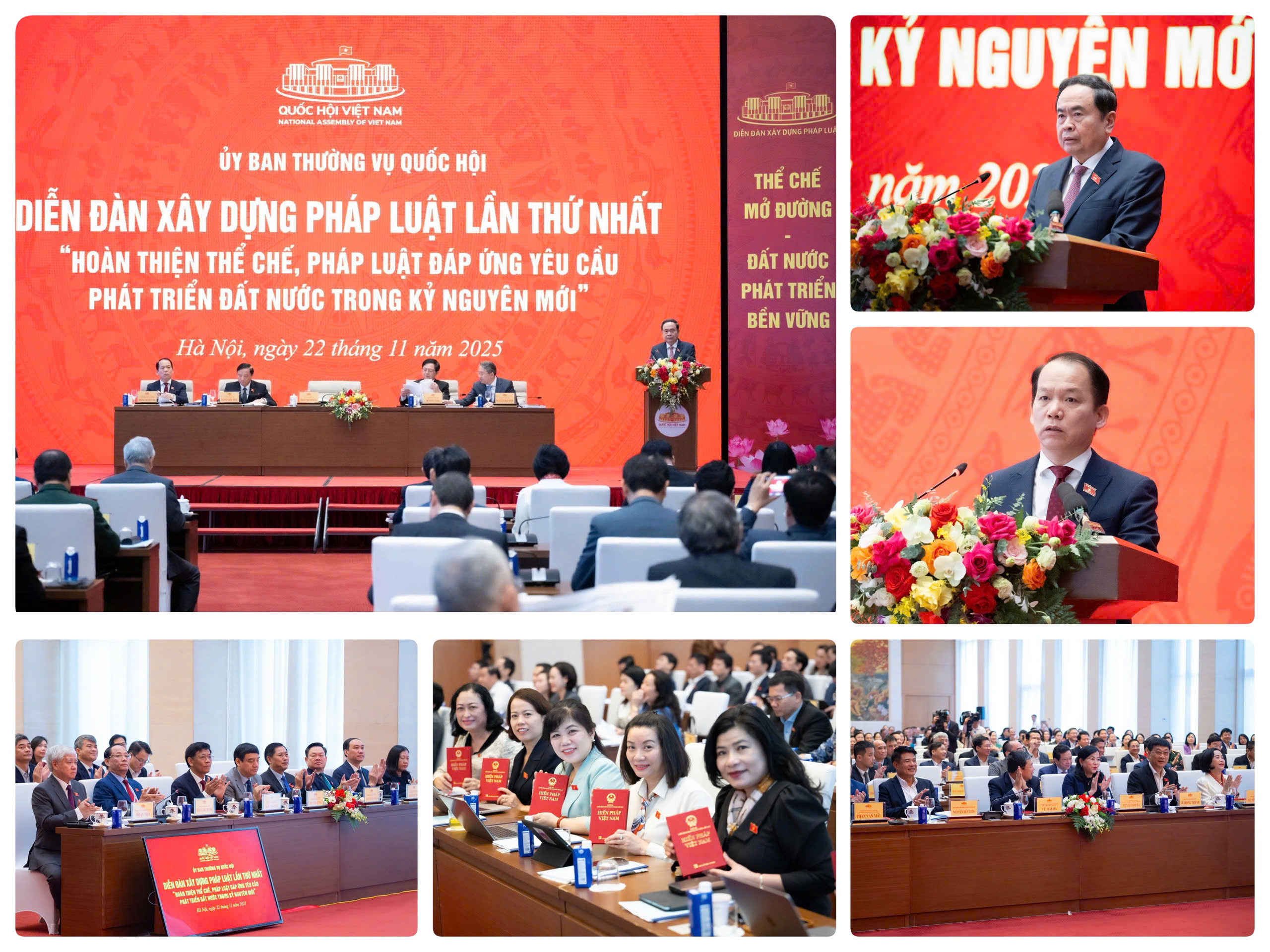
Politburo Member and Chairman of the National Assembly Trần Thanh Mẫn chaired and delivered the opening remarks at the First Lawmaking Forum, themed “Improving institutions and laws to meet the requirements of national development in the new era.” Hoàng Thanh Tùng, Chairman of the Committee on Legal and Judicial Affairs, presented the Forum’s keynote report. Source: National Assembly.
6. Employment Law
The Employment Law 2025 consists of 08 Chapters, 55 Articles and takes effect from January 1, 2026. This law was approved by the National Assembly at the 9th Session, June 16, 2025.
This Employment Law 2025 has focused on amending major and key contents, including 4 important policies with many benefits for employees including flexible, effective, modern, sustainable and integrated labor market management; perfecting the unemployment insurance policy as a tool for labor market management; developing vocational skills, improve the quality of resources; promote job creation in a sustainable direction[12].
Accordingly, the policy to support job creation is regulated in a framework direction, promoting job creation in a sustainable direction. Article 3 of the 2025 Employment Law sets out the principle that employment must ensure the right to work, freedom to choose jobs and workplaces; equality in employment opportunities, wages and income; ensure working in conditions of occupational safety and hygiene. Accordingly, labor registration procedures will be simple, convenient, timely, accurate, public, transparent and must ensure the legitimate rights and interests of employers and employees when registering labor[13].
Unemployment insurance policies are a tool for labor market management. Specifically, expanding participants, flexibly paying rates, simplifying procedural conditions, etc. The Employment Law 2025 clearly states the principles, subjects and regimes of unemployment insurance (Chapter VII). Accordingly, Article 29 of the Employment Law 2025 sets out the principles of unemployment insurance in order to: (i) Ensure risk sharing among unemployment insurance participants; (ii) The unemployment insurance premium is calculated on the basis of the employee's monthly salary; (iii) The level of unemployment insurance entitlement is calculated on the basis of the unemployment insurance payment rate and time of payment of unemployment insurance; (iv) The implementation of unemployment insurance must be simple, easy, convenient, timely and fully ensure the interests of participants; (v) The unemployment insurance fund is managed centrally, uniformly, publicly and transparently; used for the right purpose; ensuring safety, growth and protection by the State.
In addition, the Employment Law 2025 supplements regulations on the content and support for vocational skill development. To develop the institutional system of employment services in the public sector, and at the same time create favorable conditions for the private sector to establish and operate, and strengthen the coordination of activities between the 2 regions.
In addition, the Employment Law also provides for labor registration, labor market information system, vocational skills development, employment services, job counseling, job introduction, support for employees to participate in training, improve professional qualifications and skills; unemployment benefits; support employers in training, fostering and improving vocational skills to maintain jobs for employees participating in unemployment insurance...
It can be seen that Vietnam's legal framework is changing extremely strongly and rapidly to meet the new development context of science and technology. With the desire to make the country and people rich, develop prosperously, and keep up with the developed and civilized country in the next 20 years, this is the busiest period of the Vietnamese legislature – the National Assembly to promptly adjust the relations and business environment to become different and new. And this is also the period when businesses need to learn and adapt to Vietnam's volatile legal framework so that their business activities become convenient and effective.
Lawyer Nguyen Van Phuc - Hoang Le Thien Thao
HM&P Law Firm
Read more: Những luật quan trọng có hiệu lực từ 01/01/2026
[1] Articles 7 and 8 of the Law on Personal Data Protection 2025
[2] Article 24 of the Law on Personal Data Protection 2025
[3] https://lsvn.vn/ke-hoach-trien-khai-thi-hanh-luat-bao-ve-du-lieu-ca-nhan-a166559.html, accessed on 30/12/2025
[4] Clause 1, Article 15a is supplemented by Clause 9, Article 1 of the Law on Advertising amended 2025
[5] Point b, Clause 1, Article 1 of the Law on Advertising amended 2025
[6] Article 3 of the Law on Chemicals 2025
[7] Article 10 of the Law on Chemicals 2025
[8] https://www.qdnd.vn/giao-duc-khoa-hoc/cac-van-de/luat-cong-nghiep-cong-nghe-so-buoc-dot-pha-de-viet-nam-vuon-tam-trong-ky-nguyen-so-834691, accessed 30/12/2025
[9] https://www.qdnd.vn/giao-duc-khoa-hoc/cac-van-de/luat-cong-nghiep-cong-nghe-so-buoc-dot-pha-de-viet-nam-vuon-tam-trong-ky-nguyen-so-834691, accessed 30/12/2025
[10] Article 9 of the Law on Excise Tax
[11] Article 7 of the Law on Excise Tax
[12] https://thanhnien.vn/luat-viec-lam-2025-them-nhieu-diem-co-loi-cho-nguoi-lao-dong-la-gi-185250927153213375.htm, accessed 2025-12-31
[13] Article 16 of the Employment Law 2025


