


As personal data protection gradually becomes a requirement of corporate governance, the question is no longer whether businesses need a Data Protection Officer (DPO) or not. What businesses are interested in now is how to organize this function: building an internal DPO, outsourcing or a combination of both.
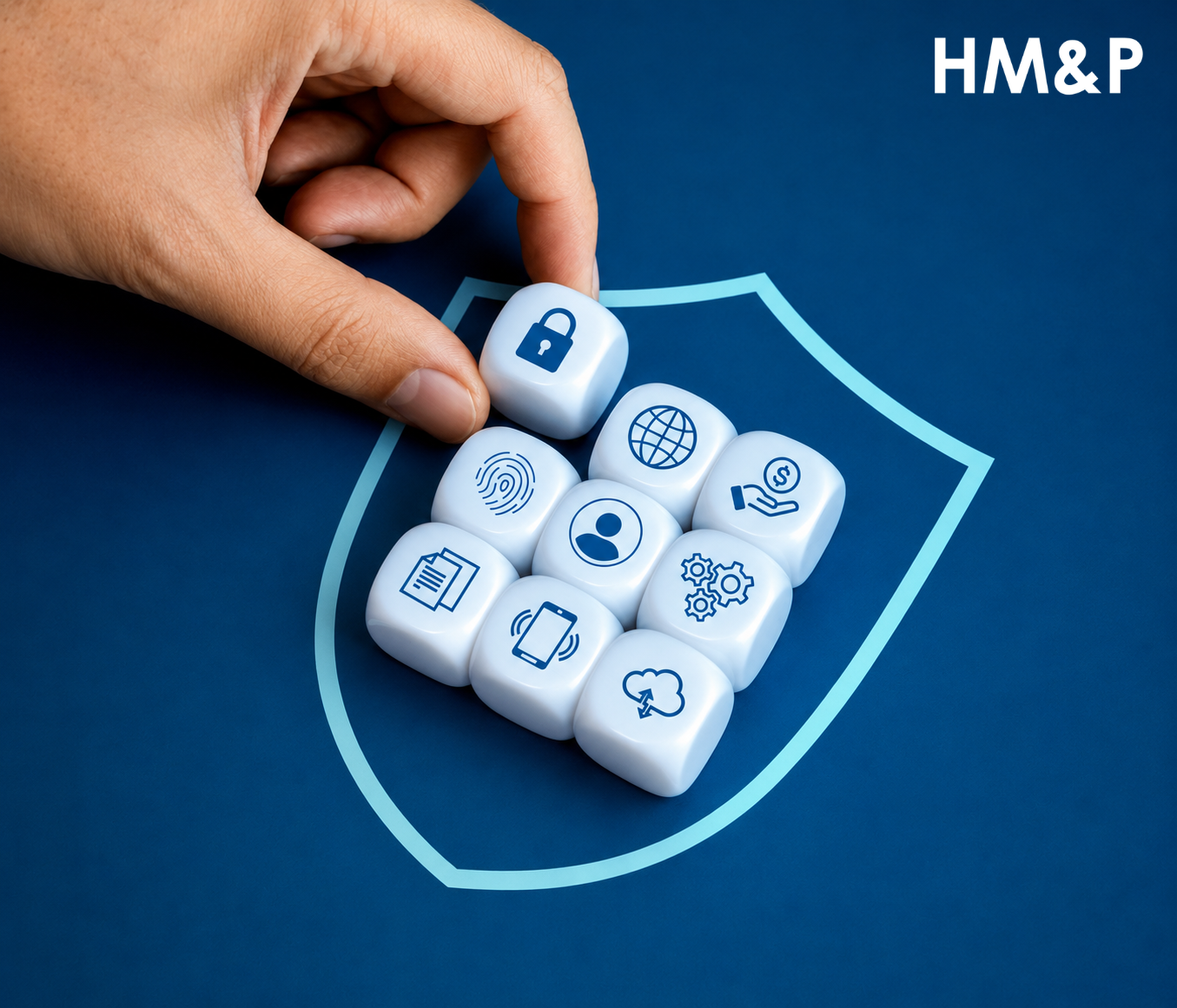
The fact that Vietnamese law allows businesses to use organizations that provide personal data protection services opens up another option in organizing the DPO function.
From a cost perspective, businesses consider between hiring a full-time person and hiring an organization to provide services. This approach is not wrong, but it does not touch the essence of the problem. What businesses are really deciding is not choosing a staffing model, but designing a mechanism capable of identifying, assessing, and controlling data risks before they become legal violations, cybersecurity incidents, or reputational crises.
Choosing to start from the risk of the business
The fact that Vietnamese law allows businesses to use organizations that provide personal data protection services opens up another option in organizing the DPO function. However, the diversity of models also makes many businesses focus on the question of which model is more cost-effective, rather than which model controls risks better.
The right starting point should be the data risk profile of the business. What type of data the business is processing, whether the data is sensitive or not, how quickly processing activities change, how many third parties are involved in data processing, whether the data is transferred abroad, and what the consequences will be if the data is compromised. It is these factors, not the size of capital or the number of employees, that determine the extent to which a business needs a DPO function.
In fact, the size of the business is not always directly proportional to data risk. A startup with a few dozen employees but operating a digital platform for millions of users may face much higher risks than a business that produces thousands of workers but mainly processes data in-house. Therefore, choosing a DPO model must go after the data risk assessment process, not ahead.
Internal DPO: The value lies in the ability to participate before risk arises
Many businesses argue that the biggest advantage of an in-house DPO is being present full-time. In fact, the more important advantage lies in the ability to participate in the decision-making process before data processing takes place.
Data risks rarely start in the legal department. They often arise when a business launches a new marketing campaign, changes a technology system, develops a new product, or selects a vendor with access to data. If a DPO is only engaged when a contract is signed or the system is operational, the business almost misses the most effective time to control risk.
That is the biggest advantage of an internal DPO. They understand how the business operates, know the goals of each project, and are able to participate right from the design stage. As a result, the DPO not only answers the question "can it be done or not", but can also propose ways to implement it to both meet business goals and control data risks. However, it is the proximity to business activities that also creates the biggest challenge of this model: indetermination.
A DPO who is also in charge of legal, information technology or compliance may have difficulty evaluating the decisions they are involved in. Therefore, the problem is not only who the business can recruit as the DPO but also where the DPO is located in the governance structure, has full access to information, is involved from the early stages, and can report directly to the competent management.
The biggest weakness of an internal DPO may therefore not be a lack of expertise but a lack of independence in the monitoring process.
Outsourced DPO: expertise and independence but low understanding of the business
If an in-house DPO has the advantage of understanding business operations, outsourced DPO stands out in depth of expertise.
An organization that specializes in providing DPO services typically gains experience from a wide range of businesses, industries, and a variety of data processing scenarios. For small and medium-sized businesses or businesses that have just built a data protection program, this is often an effective approach to quickly access professional resources without having to maintain a full-time position.
However, the biggest weakness of this model lies not in geographical distance, but in the distance of information. The majority of data risk does not appear in contracts or legal records, but arises from very small changes in day-to-day operations. A new technology platform deployed, a vendor granted access to data, or an adjusted business process can all dramatically change the level of risk. If these changes are not shared in a timely manner, the outsourced DPO will only see the risk when the business has made a decision.
Therefore, the most important question for the outsourcing model is not whether the supplier is qualified or not, but whether the business is willing to include DPO in its information flow and decision-making process.
This is also a point to distinguish between an outsourced DPO and a legal consulting unit. A consulting unit usually reacts when a business asks a question. In contrast, an effective DPO must be involved before a question arises. The value of a DPO does not lie in handling the consequences, but in helping businesses avoid decisions that can create risks in the first place.
Therefore, a DPO organization that is very good at expertise may not create much value if it is only invited to review the contract or participate when the project is completed. At that time, the problem no longer lies in the capacity of the DPO but in the way the business designs the governance mechanism and shares information.
More importantly, businesses also need to be aware that outsourcing DPO is not the same as outsourcing responsibilities. Businesses can outsource expertise and resources, but they cannot transfer data governance responsibilities to a service provider. The decision on data collection, use, and risk acceptance is always up to the business.
Therefore, the effectiveness of the outsourcing model is not determined by the service contract but by the level of the enterprise's willingness to integrate DPO into its management system and decision-making process.
Hybrid: Not exactly the best model, but the most difficult to operate
If the internal DPO is strong in its ability to understand the business and the outsourced DPO stands out in terms of expertise, the hybrid model is expected to reconcile the advantages of both. This is also an increasingly popular trend in multinational corporations and enterprises with complex data processing activities.
However, hybrid is not by default the optimal model. The biggest challenge of this model is not cost or resources, but responsible management.
In fact, many data incidents become serious not because the business lacks expertise, but because no one is responsible for making the final decision. The internal department assumes that the problem is within the scope of the service provider; the provider waits for the business to evaluate and decide. When responsibilities are not clearly defined, delays in coordination can create a greater risk than a lack of resources.
Therefore, hybrid should not be understood as "two DPOs doing the same thing". The value of this model only appears when the business clearly identifies who detects risks, who evaluates, who decides, and who monitors implementation. If it does not solve that problem, hybrid will only add one layer of management and will not necessarily improve management capacity.
DPO doesn't create compliance, DPO creates the right decision
A common notion is that businesses are more "safe" after appointing a DPO or signing a contract with a DPO service provider. This view easily leads to viewing the DPO as a "compliance certification" mechanism, while the role of the DPO is completely different.
Appointing a DPO does not automatically create compliance, just as the appointment of an internal auditor does not automatically create an effective internal control system.
The core value of a DPO is to incorporate data risk into the decision-making process before the business takes action. A new technology project, a marketing campaign, a data processing vendor, or an artificial intelligence product should all be considered from the perspective of data protection from the design stage. When a DPO only appears after a decision has been made, the preventive function is almost meaningless.
It also shows that the effectiveness of a DPO does not depend entirely on the individual or organization taking on this role. A very good DPO is still difficult to create value if the business does not have an information sharing mechanism, does not integrate the DPO into the decision-making process, or is not willing to implement the recommendations made.

Choosing a DPO model is not a fixed decision.
There is no best model, only the most suitable model
After all, businesses must balance four requirements when designing a DPO function: understanding business operations, having the right expertise, being independent enough to issue alerts, and having the ability to turn alerts into action.
No model automatically meets all four of those requirements simultaneously.
An in-house DPO has the advantage of cohesion with the business but may be challenged by independence or in-depth expertise. An outsourced DPO is strong in terms of experience and objective perspective but depends on access to information and the level of coordination from the business. Hybrid can reconcile the two models but is only effective if the responsibilities and coordination mechanisms are clearly designed.
Therefore, the question that businesses should ask is not "which model is the best?" but "what capacity is our data management system lacking?". When that gap is correctly identified, the choice between an in-house, outsourced or combined DPO will become a consequence of the management strategy, rather than a pure HR decision.
The DPO model must also change with businesses
Choosing a DPO model is not a fixed decision. As with the corporate governance system, the DPO function needs to evolve along with the scale, level of digitalization, and data risk profile of the enterprise.
In the early stages, outsourcing can be an effective solution to quickly build a data governance platform. As data processing becomes more complex, businesses can form internal teams and gradually move to a hybrid model. As the system matures, the role of an external unit can focus on independent assessments or in-depth consultation on high-risk projects and situations.
The important thing is not which model the business chooses, but whether it regularly re-evaluates that model when business activities change.
Conclusion
Data is increasingly becoming a strategic asset, but data risk is not controlled by a title. It is controlled by a governance mechanism that is capable of seeing risk before the business acts.
In-house, outsourced, or hybrid DPOs are just three different ways to organize resources to achieve that goal. No one model is naturally better than the other; only one that is suitable for the maturity of the data management system and the operational characteristics of each business.


