


On June 10, 2025, in Notice 3591 of the Department of Industry and Trade of Ho Chi Minh City on the termination of the operation of representative offices of foreign traders in Ho Chi Minh City, it is shown that as of June 10, there are 243 representative offices that have ceased to operate in fact but have not yet carried out administrative procedures to terminate[1] the operation of representative offices . In case of delay or failure to carry out administrative procedures as requested, what are the legal liabilities of the representative office or foreign trader or unit directly operating the representative office in Vietnam? In this article, HM&P will point out the risks that representative offices, even foreign traders, face if they do not complete this procedure.

Legal framework regulating the operation of ROs
The Representative Office (RO) of Foreign Traders in Vietnam was established for the purpose of representing EARN and trade promotion, which is non-profit in nature. Legally, the RO is considered a dependent unit and does not have independent legal status.
However, the key principle in Vietnamese law is that the State Representative Office, as the established legal entity, bears final and unlimited responsibility for all obligations, risks and liabilities arising from the RO's activities. This means that, if the RO terminates its operations without fulfilling its financial, tax, or civil obligations, the liability will shift to the IT.
The termination of the operation of the RO must strictly comply with the Commercial Law and the Government's Decree 07/2016/ND-CP regulating the establishment and operation of the RO of the STATE in Vietnam. Cases of legal termination of operation include: (1) The RO expires the operation term under the License but the State State Agency does not request an extension, (2) The License is revoked, (3) When the State State Representative terminates its operation in the country of establishment.
When the RO ceases to operate, the State State Representative must complete a comprehensive liquidation process, including the following important obligations:
Fulfillment of financial obligations: Tax finalization, invalidation of the tax identification number of the RO and personal income tax identification number of the employee.
Labor settlement: Full payment of legal benefits to employees and settlement of social insurance (social insurance).
Contracts and Assets: Execution of outstanding contracts and liquidation of assets.
Carry out administrative procedures and disclose information: Submit an application for official termination at the Licensing Agency and publicly post the termination of operation at the head office.
Legal liabilities when failing to carry out procedures for termination of office operations
Firstly, being sanctioned for administrative violations
Although it does not have legal status, the RO is still considered an organization and is subject to administrative sanctions for violations committed by it. Therefore, in case the RO fails to carry out administrative procedures to terminate the operation of the representative office, it may be administratively sanctioned with a maximum fine of VND 200,000,000 for organizations in the field of commerce[2]. Specifically, the fines for violations are as follows:
|
STT |
Legal requirements |
Violations |
Penalties |
|
1. |
Publicly posting the termination of operation |
Do not perform Public Listings. When the RO terminates its operation, public listing is a mandatory obligation to ensure the interests and notify the relevant parties. The act of failing to carry out the public listing as prescribed when terminating the operation of the RO will be sanctioned. |
A fine ranging from VND 5,000,000 to VND 10,000,000 shall be imposed |
|
2. |
Periodic Reports |
Do not perform Periodic Reports. If the RO has in fact ceased operation but has not completed the administrative procedures, it still exists on the record. Failure to make periodic reports or dishonest reports on the operation of the RO to the competent state management agency will be sanctioned. Types of periodic reports of the representative office such as annual operation reports, personnel situation reports.
|
A fine ranging from VND 10,000,000 to VND 20,000,000 shall be imposed |
In addition, the RO may also face the highest sanction when the RO is considered to continue to operate on paper after the legal conditions for existence have ended. This act represents a deliberate evasion of responsibilities and procedures.
Acts considered as continuing illegal activities include:
- Continue to operate after the License to establish a RO expires but has not been renewed.
- Continue to operate after the competent authority revokes the license to establish the RO.
- Continue to operate after the State Auditor (parent company) has terminated its operation (dissolution or bankruptcy).
For these acts, the applicable fine is from 30,000,000 VND to 50,000,000 VND[3].
The concept of "continuity of operations" is considered not only the execution of a commercial transaction, but also the maintenance of administrative and financial registrations. If the State Representative does not carry out the procedures for terminating the license and tax identification number, legally, the RO is still "existing", and this existence is the basis for applying the highest penalty when the License has expired by the competent authority.
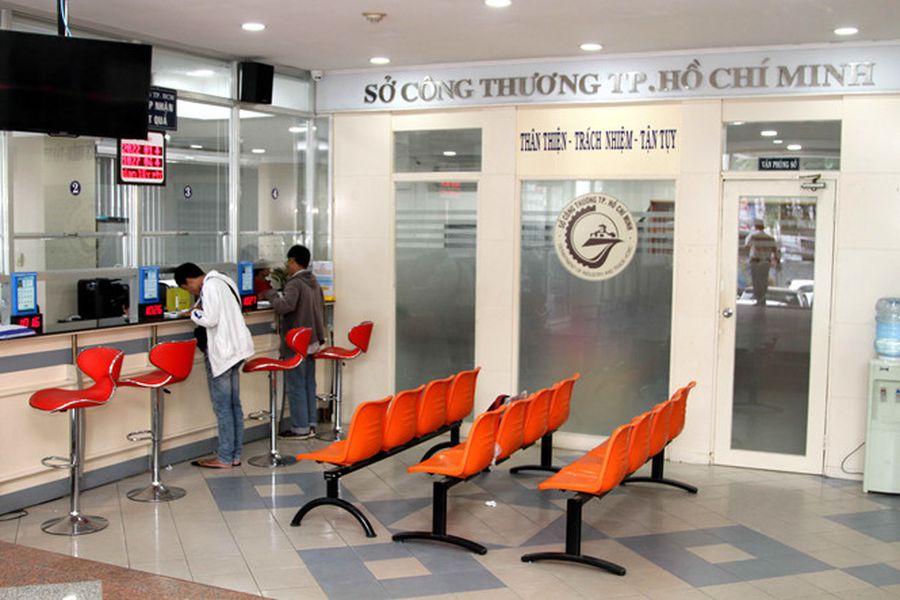
Ho Chi Minh City Department of Industry and Trade. Source: Industry and Trade Magazine.
Second, financial responsibility and tax enforcement
The most important obligation upon termination of operation is to fulfill the obligation to make tax finalization and receive a confirmation of the invalidation of the tax identification number. If the RO ceases to operate but does not complete the tax finalization procedures, the tax identification number still exists, leading to financial consequences that are still calculated in fact from late payment interest to tax administrative sanctions.
Late payment interest: Debts of taxes, fees and charges continue to arise. If the RO is late in paying tax, the penalty is 0.05% per day calculated on the late payment tax amount.[4]
Tax administrative penalties: ROs may be administratively penalized for failing to submit or late submission of periodic tax reports. If there is an act of making a false declaration leading to a shortfall in the payable tax amount, the IT will be fined 10% of the shortfall tax amount.
Because the RO is infinitely liable for the tax debt of the RO, if the RO owes tax for more than 90 days or shows signs of fleeing/dispersing assets, the tax authority has the right to apply strong coercive measures such as deducting money from the RO's bank account and distraining, auction of existing assets of SAIT in Vietnam.
The biggest risk to the state is the transformation of the organization's financial risk into personal risk for the manager. The tax authority has the right to apply the measure of temporary postponement of exit to taxpayers who owe overdue tax. In the case of the RO, this measure will target the legal representative of the RO or the head of the RO, especially if they are foreigners who intend to leave Vietnam.
The fact that the RO deliberately ignores the tax finalization procedure has provided a legal basis for the tax authority to apply the exit ban. The fact that a senior leader was suspended from leaving the country due to a prolonged tax debt was a blow to the reputation and operation of the STATE, forcing them to quickly pay their financial obligations to lift the ban. This shows that the risk of being detained in Vietnam has become the most effective legal leverage tool of the state to force the state to fulfill its financial responsibility.
Thirdly, civil and labor liabilities to related parties
The RO performs civil transactions in the name of STATE. Therefore, when the RO ceases to operate without liquidation, the State Representative Office is still responsible for the implementation and payment of outstanding debts, including ground rent, supplier debts and other contractual obligations.
The failure to carry out legal termination procedures will create conditions for creditors to initiate a CIT lawsuit in the Vietnamese Court. The State Department will face the risk of compensation for damages and high legal costs arising from civil/commercial litigation.
The State Department must settle all legal benefits for employees, including salaries, severance allowances and compensations according to the Labor Code 2019. If the RO does not carry out the procedures for finalizing social insurance and closing the unit code, the employee will have difficulties in closing the book, leading to labor disputes and complaints at the labor management agency. In addition, the social insurance agency may also apply administrative sanctions to CIT for violating regulations on social insurance.
It can be seen that all administrative violations, tax debts, and disputes that have not been resolved will be recorded in the operation history of the RO. When the State Auditor wants to establish a new commercial presence in Vietnam in the form of another enterprise or RO, the history of non-compliance with the termination process will be a negative factor affecting the due diligence and licensing process of Vietnamese regulators. This may hinder the ability of SAVs to return to the Vietnamese market. Therefore, STATEs need to consider the procedure for termination of operation as a mandatory process, which cannot be ignored to complete the termination of operation in Vietnam of the RO.
[1] https://congthuong.hochiminhcity.gov.vn/documents/10190/10401168/VB%203951%20-%20TH%C3%94NG%20B%C3%81O%20CH%E1%BA%A4M%20D%E1%BB%A8T%20V%C4%82N%20PH%C3%92NG%20%C4%90%E1%BA%A0I%20DI%E1%BB%86N.pdf, last accessed on 01/12/2025.
[2] In some specific fields such as securities, banking, education,.. the sanctioning level of administrative violations may be different and severe. As in Clause 4, Article 30 of the Government's Decree No. 156/2020/ND-CP dated December 31, 2020 stipulating penalties for administrative violations in the field of securities and securities market (Decree No. 156/2020/ND-CP), amended and supplemented in Clause 24, Article 1 of the Government's Decree No. 128/2021/ND-CP dated December 30, 2021, amending, supplementing a number of articles of Decree No. 156/2020/ND-CP (Decree No. 128/2021/ND-CP) stipulating: A fine of between VND 200,000,000 and VND 400,000,000 shall be imposed for acts of conducting business activities in Vietnam outside the scope of operation of representative offices of foreign securities companies or foreign fund management companies in Vietnam.
[3] Clause 4, Article 67 of Decree 98/2020/ND-CP dated August 26, 2020 of the Government stipulates administrative sanctions in the field of trade, production and trading of counterfeit goods, prohibited goods and consumer protection.
[4] Clause 1, Article 42 of Decree 125/2020/ND-CP dated October 19, 2020 stipulating penalties for administrative violations on taxes and invoices.


