


The Government's Decree No. 75/2019/ND-CP dated September 26, 2019 on sanctioning administrative violations in the field of competition (Decree 75) is an important legal document, aiming to strengthen the effectiveness of competition law enforcement, protect a healthy business environment and promote the sustainable development of the socialist-oriented market economy. This Decree replaces Decree 185/2013/ND-CP, supplements and details the provisions of the Competition Law 2018, focusing on violations such as abuse of market dominant positions, agreements to restrict competition, unfair competition and other acts affecting the competition order.
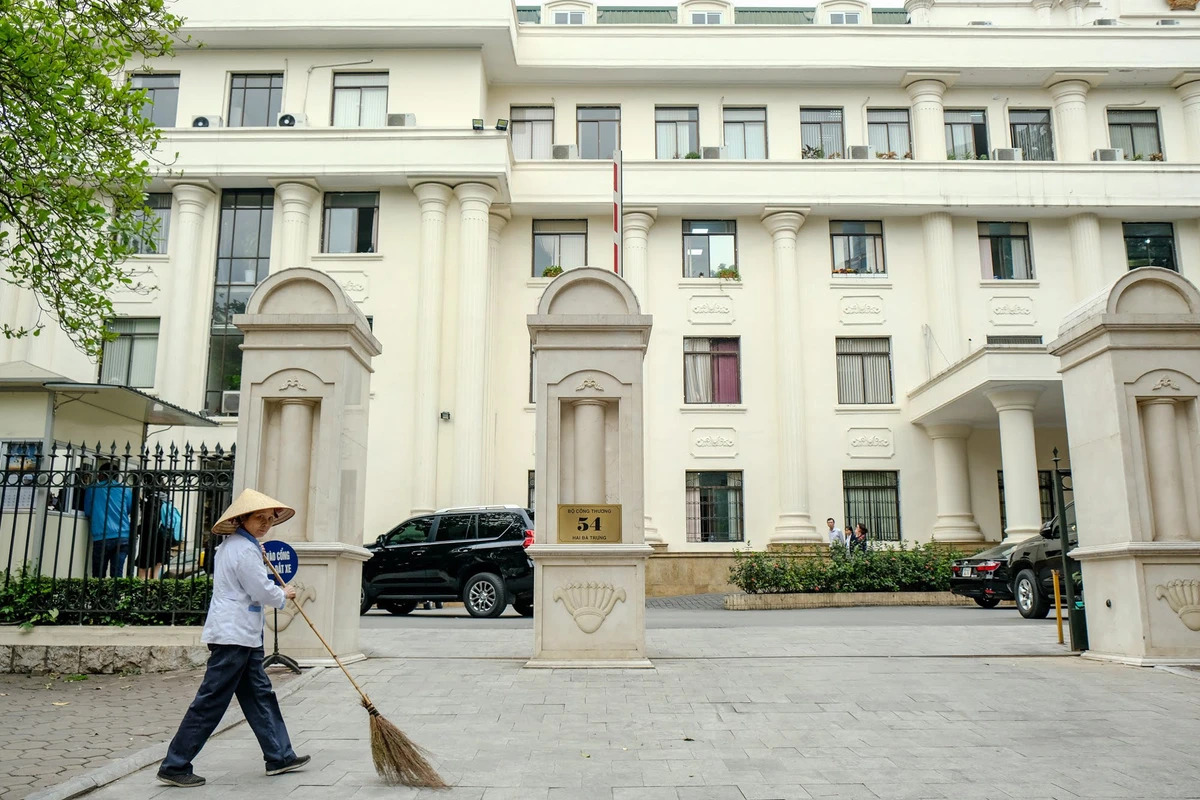
Head office of the Ministry of Industry and Trade. Source: Tuoi Tre
Since its promulgation, Decree 75 has been widely applied in practice, with hundreds of cases being handled, collecting hundreds of billions of VND in fines. According to the Summary Report of the Ministry of Industry and Trade, from 2019 to June 2025, the management agency has handled more than 200 violations, with a total fine of more than 1,000 billion VND.[1] These figures show that the Decree has made a significant contribution to deterring and handling unfair competition behaviors, protecting the interests of businesses, especially small and medium-sized enterprises as well as consumers. However, after more than 5 years of implementation, the summary report also pointed out many limitations and obstacles in the content and application mechanism, leading to low practical efficiency, some cases of prolonged or inconsistent handling.
The article analyzes the limitations of Decree 75 and proposes remedial directions to improve the legal framework and improve implementation efficiency. Identifying and overcoming these inadequacies not only helps Decree 75 play a greater role but also contributes to building a fair and transparent competitive environment, suitable for the context of Vietnam's international integration.
Actual implementation of Decree 75
According to the report of the Ministry of Industry and Trade, from July 1, 2019 to June 2025, the Department of Competition and Consumer Protection received and handled 214 cases of administrative violations in the field of competition. In particular, the prominent acts of abusing the dominant position in the market (accounting for about 40%), agreements to restrict competition (25%) and unfair competition (20%). Major cases such as sanctioning Hanoi Water and Environmental Sanitation Company Limited (Hanoi Water) with a fine of VND 200 million for abusing its dominant position, or large corporations such as Vinamilk and Masan being handled due to monopolistic distribution behavior that restricts competition, have created a positive precedent in complying with the competitive activities of enterprises.
Statistics also show that the handling of administrative violations is somewhat effective. In 2019, only 24 cases were handled with a total fine of 150 billion VND; by 2023, the number will increase to 50 cases with more than 300 billion VND. By the second quarter of 2025, 15 more cases have been handled, earning 100 billion VND[2]. These results reflect the efforts of state agencies in strengthening periodic and irregular inspections and examinations. However, behind the impressive numbers are many internal inadequacies of the Decree, leading to delays in handling, insufficient fines in some cases, and lack of effective inter-sectoral coordination mechanisms. These limitations not only stem from the content of regulations but also from the practical application, requiring timely adjustments to suit the rapid development of the digital economy and e-commerce.
Key limitations of Decree 75
In the process of implementing Decree 75, two main limitations of this Decree can be observed: (1) Limitations on the content of regulations and (2) Limitations in the implementation mechanism. These inadequacies have directly affected the effectiveness of sanctions, causing some violations to be ignored or handled incompletely.
Firstly, limitations on the level of detail and feasibility of sanctioning regulations.
Decree 75 clearly stipulates violations and corresponding fines, from warnings to fines of up to 10% of the previous year's revenue of the violating enterprise. However, practice indicates that some regulations are still general, lacking specific guidance on how to define "market dominance" or "non-competition agreement". Article 8 of the Decree stipulates the abuse of a dominant position but does not clarify the market share threshold, leading to difficulties in proving behavior. In practice, from 2019-2023, up to 15% of cases were suspended due to lack of evidence to determine market share, such as the case of handling e-commerce businesses that suspect price agreements but cannot accurately quantify the impact on the market.
Moreover, the maximum fine of 10% of revenue sounds strict, but in reality it is not enough deterrent for large corporations. The report cites the case of a number of foreign enterprises operating in Vietnam, where fines account for only a small percentage of profits, leading to repeated violations. By 2024, at least 5 recidivism cases will be recorded, mainly in the field of FMCG product distribution, where tacit monopoly agreements still exist. This shows that the Decree does not have an additional penalty mechanism such as confiscating illicit profits or temporarily banning operations, causing the deterrence effect to be reduced.
Second, restrictions on administrative procedures and processing time limits.
The Decree stipulates that the penalty period is 1 year from the date of detection of violations, but in practice, the procedure for collecting evidence is complicated, especially with indirect acts such as "tacit agreements" via email or messaging applications. The report states that an average case takes 6-9 months to complete, exceeding the stipulated deadline in 30% of cases. The main reason is the lack of specific regulations on the use of digital technology in investigations, such as big data analysis to detect price agreements on online platforms. From 2020-2025, the number of cases related to the digital economy will more than double (from 10 to 25 cases),[3] but the regulator lacks technical tools, leading to many cases being "missed" due to digital evidence being deleted or encrypted.
In addition, the Decree is not synchronized with other legal documents, such as the Law on Cybersecurity 2018, the Data Law 2024 or Decree 13/2023/ND-CP on personal data protection, making it difficult to coordinate.
Third, limited resources and enforcement awareness.
Although the Competition Department has increased its personnel, the report said that the staff is still thin, lacking in-depth training on international competition. This leads to a situation where handling is mainly concentrated in Hanoi and Ho Chi Minh City, while the central and mountainous provinces only handle less than 10% of the total cases. Moreover, enterprises' awareness of competition law is still limited; many small businesses do not know about Decree 75, leading to unintentional violations but still being heavily fined.
Finally, limitations on complaints and monitoring mechanisms.
The Decree stipulates the right to complain, but the procedure is complicated, the time limit is short (in 10 days), causing many businesses to ignore it. From 2019-2025, only 5% of sanctioning decisions were successfully appealed, mainly due to procedural errors. The report of the Ministry of Industry and Trade also points out the lack of an independent monitoring mechanism, leading to the risk of abuse of power or bias in handling.
In general, the implementation of Decree 75 in practice still has many limitations. This makes the effectiveness of the implementation of Decree 75 not meet the requirements and goals set.

SPX Express was fined VND 200 million. Source: ZNews
Directions to overcome and propose to complete Decree 75
In order to improve and limit the weaknesses of Decree 75, the Government and relevant agencies need to thoroughly improve the legal framework as well as enhance the effectiveness of activities in practice.
Firstly, complete the regulatory content to increase feasibility.
It is necessary to amend the Decree in the direction of detailing core concepts, such as adding a specific market share threshold such as 25-30% for the dominant position in the digital sector and clearly stipulating violations in the digital economy such as data manipulation and priority algorithms. Regarding the fine, it is proposed to increase the maximum level to 15% of revenue for repeat violations or related to economic security, and at the same time add penalties such as prohibition from participating in public bidding or forcible disclosure of violation information. The report suggests referring to international experiences, such as the EU Competition Law with the forfeiture penalty mechanism, to flexibly apply this mechanism in Vietnam.
Second, simplifying procedures and integrating technology.
Shorten the processing period to 6 months by adding regulations on the use of electronic evidence such as email, cloud data, and cooperating with the Ministry of Information and Communications to retrieve data from digital platforms. The participation of technology experts and experts in specialized fields is necessary to quickly handle cases on e-commerce platforms and social networks,.... At the same time, it is synchronized with the Law on Cyber Security by regulating the obligation to provide data of foreign enterprises, avoiding the situation and avoiding compliance due to server operations (data processing centers) located abroad.
Third, increase resources and raise awareness.
In the context of very active investment and business activities in Vietnam, with the participation of both domestic and foreign enterprises. The business market is very fiercely competitive. In order to ensure fairness and a healthy development of the market, in line with the State's desire to create a safe and sustainable business environment, it is urgently necessary to strengthen the management team in the field of competition, specifically the enforcement of competition law. In addition to increasing the number of employees, the competition management team needs to have deep expertise in law and business. At the same time, they must be well-trained and trained from developed countries to support the development of the business environment in Vietnam in the new context.
Fourth, improve the complaint and supervision mechanism.
Extend the time limit for complaints to 30 days, establish an independent complaint council with representatives of businesses and experts. At the same time, build an online monitoring system where businesses can report violations anonymously, and publish quarterly sanction reports to increase transparency. In addition, the consideration to amend the original document (Competition Law 2018) in this field is very necessary to synchronize with the system of state agencies, and the new management of relevant agencies.
We believe that the amendment of Decree 75 not only overcomes the current limitations but also serves as the foundation for the introduction of the new Competition Law.
Decree 75/2019/ND-CP has marked an important step in sanctioning administrative violations in the field of competition, contributing to building a healthy business environment. However, limitations in regulatory content, enforcement procedures, resources and monitoring have reduced efficiency, requiring timely adjustments. With the commitment to integration, Vietnam needs to strongly implement international commitments on investment, business and competition. Amendments to Decree 75 are also one of the necessary steps in the process of implementing these commitments.
[1] https://vcc.gov.vn/default.aspx?page=news&do=detail&category_id=e0904ba0-4694-4595-9f66-dc2df621842a&id=a0a20963-d194-47f1-8366-277436ed7aaa, accessed on 09/09/2025.
[2] https://vcc.gov.vn/default.aspx?page=news&do=detail&category_id=e0904ba0-4694-4595-9f66-dc2df621842a&id=4f6a3cf5-7904-4b6f-8006-6bc17ccfda61, accessed on 09/09/2025.


