


In the world of law, Dewey & LeBoeuf (D&L) was once a symbol of strength and ambition. Formed from the 2007 merger between Dewey Ballantine and LeBoeuf, Lamb, Greene & MacRae, the firm quickly became a "Big Law," the term for large law firms, The office has a global presence with huge revenues and reputable clients. With more than 1,300 lawyers and 26 offices worldwide, D&L represents a modern governance model: rapid expansion through the recruitment of "star" lawyers and strategic mergers with other law firms. However, just five years later, on May 28, 2012, D&L filed for bankruptcy, becoming the largest law firm collapse in U.S. history with $315 million in debt.[1]
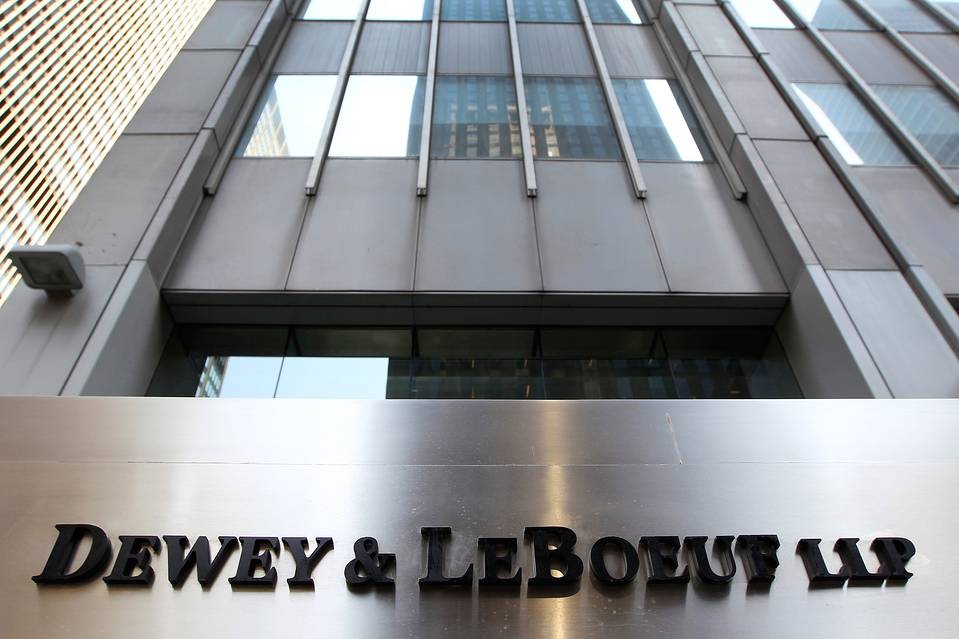
This collapse is not only a consequence of the global financial crisis of 2008 but also a testament to the flaws in modern law firm governance. In particular, the legal industry is facing challenges from digital technology and globalization.
Dewey & LeBoeuf's history of formation and bankruptcy
From the formation...
Dewey Ballantine, named after Thomas Dewey, a former governor of New York and presidential candidate. It is a reputable law firm but its profits have been declining since the 1980s. In contrast, LeBoeuf, Lamb, Greene & MacRae is a law firm focused on the energy, insurance and utilities sectors, with steady profits but a lack of global reputation. Under the leadership of Steven Davis, LeBoeuf began its expansion strategy in 1999 by recruiting outside partner attorneys with attractive compensation packages. A good example is Ralph Ferrara, who was hired from Debevoise & Plimpton in 2005 with a $16 million bonus and a fixed salary of $1.6 million a year. Ferrara brought in big customers such as Zurich and Royal Dutch Shell, generating $40 million in revenue in the first year alone.
In 2007, to compete with "Big Law" such as Skadden Arps or Cravath Swaine & Moore, Davis pushed for a merger with Dewey Ballantine, the largest merger in New York history. The McKinsey report said that D&L was born with the goal of becoming an American-style "circle magic law firm." Initially, the company thrived, but the cultural clash quickly became apparent as Dewey emphasized the tradition of lockstepping profits, while LeBoeuf emphasized the rainmaker model.
… To the Fall
D&L's collapse was the result of a number of potential risk factors that created the "perfect storm", a combination of external and internal factors of D&L itself. The first was the 2008 financial crisis, which caused revenue to plummet from $954.8 million in 2008 to $809 million in 2009. D&L was forced to lay off hundreds of employees, but agreements guaranteed salaries for more than 100 key member lawyers still to pay, forcing D&L to borrow from future revenues.
Then there was the fierce internal conflict between D&L. Angry emails from core partner Alexander Dye in 2007 revealed dissatisfaction with Davis and DiCarmine (the two leading partner attorneys leading the law firm), which led to the monitoring of the emails and Dye's removal from management. The culture of lack of solidarity makes it easy for member lawyers to leave when it is difficult. In 2012, an exodus of fellow lawyers occurred. The group of insurance lawyers left, followed by key associates Morton Pierce and Jeff Kessler, bringing with them many large clients.
Financial fraud was the final factor in the collapse of D&L. The leader was accused of manipulating the books to hide debt and defrauding investors during a $150 million bond issuance in 2010. The Manhattan Prosecutor's Office's investigation led to the 2014 prosecution, alleging fraud and fraud. The first trial in 2015 ended with errors; The second session in 2017 convicted Joel Sanders (the law firm's CFO) with a $1 million fine, while Davis and DiCarmine were acquitted or dropped the charges[2].
Lessons on Modern Law Firm Governance
The collapse of D&L offers many lessons for modern law firm governance, especially in the context of 2025 with the explosion of AI and globalization.
First, sustainable growth instead of massive expansion
D&L demonstrates that merging and hiring high-cost partner lawyers does not guarantee success without cultural integration. Today's law firms should prioritize organic growth, focusing on core expertise rather than a scale race. Because obviously, the law industry is a specific industry, focusing on expertise and dependent on a huge team of personnel. If the massive expansion lacks the necessary connectivity, it will be a big risk of signaling the collapse or at least the collapse of a law firm. The human factor is very important in a law firm, so training, creating trust, and long-term commitment for a common goal will create a deep culture and sustainability of a modern law firm.
In the AI era, leading Big Law firms are using technology to optimize processes, reduce dependence on human resources, instead of massively expanding personnel is also a good solution. However, no matter how much technology develops, setting development goals on human factors, a team of strong professional personnel and good ethics will help the law firm develop extensively.
Second, build a culture of solidarity and loyalty
D&L's individual performance-based growth model has led to a lack of "glue," making it easy for its lawyers to leave. Therefore, the application of a hybrid model between lockstep and personal performance to encourage long-term cooperation and collaboration of important member lawyers and stars in law firms.
Today, leading Big Law firms like Kirkland & Ellis thrive on a "one firm" culture, where fellow attorneys share common risks and benefits. At the same time, law firms also combine with training and application of technology, especially AI to improve the efficiency of lawyers.
Third, financial transparency and strict internal control
Fraud at D&L stems from a lack of oversight. Therefore, setting up an independent audit committee and using technology to track finances is an effective solution in modern law firm governance. According to observations, it can be seen that the collapse of Big Law companies is very rare, most of the risks stem from weakness in financial management as well as laxity in human management. Therefore, law firms can completely avoid failure with good governance and constant innovation in governance.
Fourth, diversify services to minimize risks
The 2008 crisis pushed D&L to a standstill due to its dependence on M&A and financing activities. Diversifying services, including ESG consulting and technology litigation, has helped many other large Big Law firms avoid the sudden impact of the disorienting economic crisis. Because during the financial crisis, not all areas of the legal profession have fallen into stagnation, but there are still areas of normal development, even better when the crisis occurs, such as the litigation segment.
Many experts in the legal industry believe that one of the important factors contributing to the failure of D&L is the absence of a traditional management structure with diverse and extensive services in various fields. In principle, this is a fundamental factor for law firms to disperse risks once a certain degree of "greatness" has been achieved. Everyone understands that people are the core of the legal industry, when a law firm depends on a few key personnel in some important industries, it will be an unpredictable risk, especially in the context of economic fluctuations and falling into recession.
Fifth, the personal responsibility of the leader
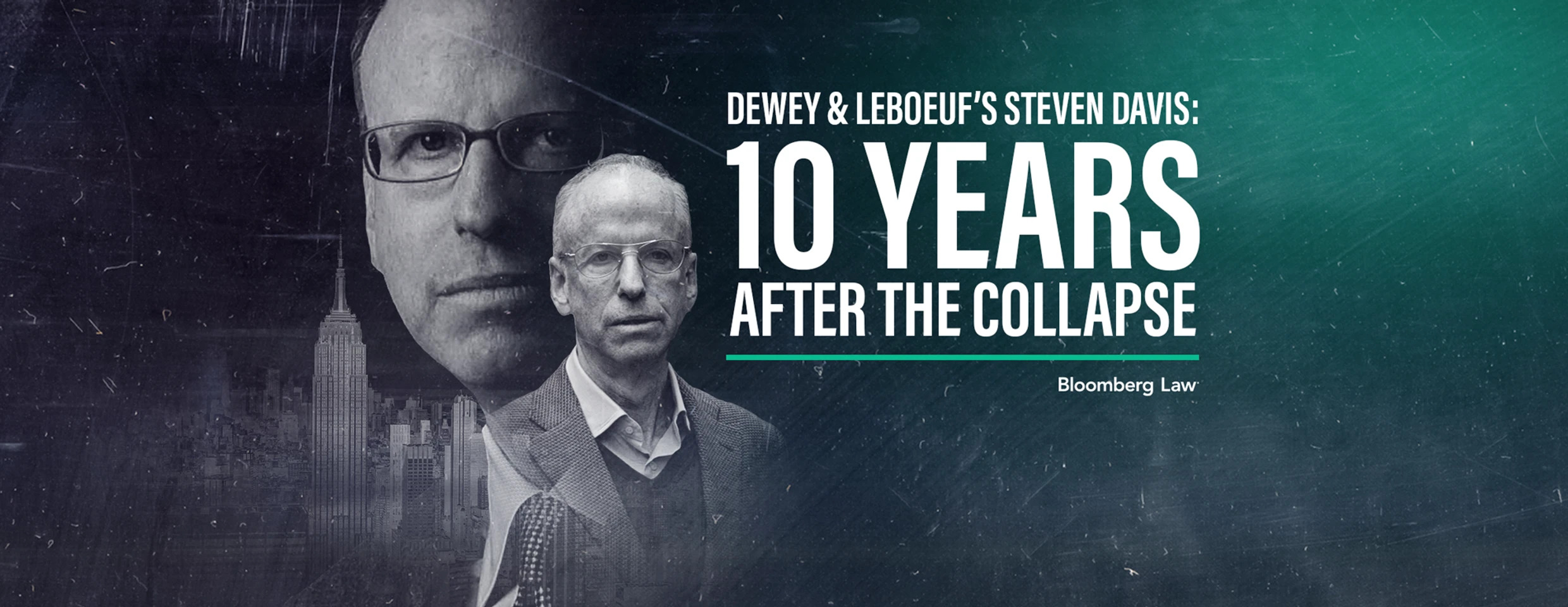
Davis, the chairman of D&L, accepted responsibility for its demise, but the incident showed that leadership must balance ambition with morality. The fact that Big Laws always have a headache to find the highest leader as well as a mechanism to create the best and sustainable leadership system is always a worry. The governance of modern law firms shows that the requirement for ethics-focused leadership training is always a long-term strategy and is very necessary. The great success or failure of law firms, whether it is a law firm with a few thousand lawyers or a few dozen lawyers, depends greatly on the top leader. Therefore, it is not easy to find, appoint and lead a law firm in the hands of a lawyer who is both professional and has a good management mind, strategy and vision. But the existence and remarkable development of leading law firms shows that this is the number one important governance factor of the modern legal industry. Where the strongest personalities with superior "brains" need a true leader.
The demise of Dewey & LeBoeuf is a wake-up call for modern law firm governance: Ambition must come with transparency, unity, and risk preparedness. As some legal experts conclude, this is not mere "greed" but systemic failure. In the digital era, law firms need to learn this painful management lesson so as not to repeat history, turning challenges into careers into development opportunities that are not only broad but also deep enough.
Lawyer Nguyen Van Phuc
HM&P Law Firm
[1] https://www.newyorker.com/magazine/2013/10/14/the-collapse-2, accessed 2025/10/23.


