


The Ministry of Public Security is submitting a draft amendment to the Prime Minister's Decision 09/2023/QD-TTg regulating the order, procedures, competence, issuance and management of APEC business travel cards (Decision 09) to seek opinions on adjusting regulations related to this regulation to suit the new development context of Vietnam.

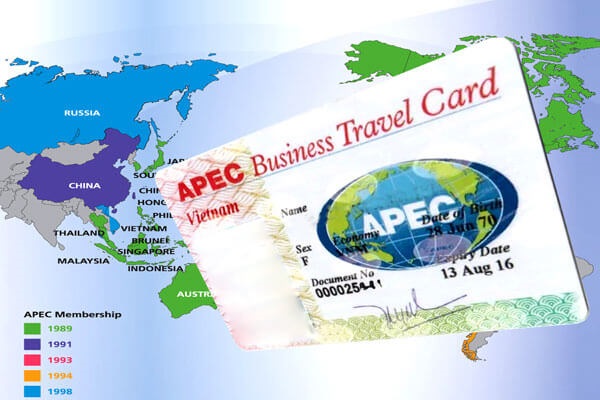
This is considered a "golden visa" when it allows entrepreneurs in the Asia-Pacific (APEC) member economies to move freely and prioritize movement in countries in member economies.
1. Regulations on the current legal framework for the issuance of APEC Business Travel Cards (ABTC)
According to Clause 1, Article 3 of Decision 09, these cards are issued by the competent authority of one of the member states on the basis of the consent of other member states. This concept has been amended and supplemented to better align with the definition adopted by APEC under the Draft Decision amending and supplementing a number of provisions of Decision No. 09/2023/QĐ-TTg (“Draft Decision”). Accordingly, the ABTC is defined as a card issued exclusively to businessmen, allowing entry to APEC member countries without applying for a visa. This is considered a "golden visa" when it allows entrepreneurs in the Asia-Pacific (APEC) member economies to move freely and prioritize movement in countries in member economies. In which, 21 member countries include: China, Japan, South Korea, a number of countries in Southeast Asia and the Americas, including Vietnam.
Owning this type of card is a great advantage for Vietnamese entrepreneurs who are operating or working in state-owned and private enterprises.[1] In addition to visa exemption, ABTC holders also enjoy priority immigration procedures through private lanes to help optimize costs and time, especially for short-term business trips.
In addition to purely conceptual modifications, a number of restrictions have been contemplated to ensure a faster and more cost-effective procedure.
2. Limitations of Decision 09
Currently, the validity period of ABTC is valid for 05 years from the date of issuance and there is no mechanism to renew the card.[2] Although the composition of the application is simpler than the first issuance, the processing time also causes many difficulties when entrepreneurs need to use the card as soon as possible. According to regulations, the processing time will take at least about 01 month to be issued a card. In some special cases, such as not receiving enough opinions from member countries, enterprises must continue to make written requests for competent agencies to consider and issue cards. However, in reality, this time may be longer when it is necessary to wait for the approval of member countries. Therefore, in case there is a need to re-issue the card, the enterprise must regularly check the expiration time to carry out procedures early, take responsibility for the additional time waiting for the card to be issued and ensure that work activities are not interrupted.
In addition, the complexity in the dossier and form of application for a card. For entrepreneurs belonging to private enterprises, the basic application dossier must include:[3] (i) A written request according to Form CV01 in the Appendix; (ii) A certified copy or electronic copy of the commercial contract signed directly with a partner of an APEC member economy with a term of not more than 02 years from the time of application; (iii) A certified copy or electronic copy of a valid passport or a document showing the need for frequent and short-term travel to carry out business signing and cooperation activities with foreign partners; (iv) A certified copy or a certified electronic copy of the decision on appointment of the businessman; (v) A report on the performance of social insurance obligations of the enterprise in the last 12 months and the process of paying social insurance premiums of the entrepreneur up to the time of requesting permission to use the card; (vi) The financial settlement report for the latest year of the enterprise which has been approved by a competent authority.
Accordingly, the complexity of the number and method of the required documents is also a barrier for entrepreneurs to apply for a license to use the ABTC. Specifically, for papers showing the need for frequent and short-term travel, it is relatively difficult to prove when there are no specific quantitative figures on the number of trips or other factors such as contract value. In addition, the form of submission has not recorded the implementation of online submission in electronic copies from documents.
Source: Ministry of Industry and Trade Web Portal (MOIT)
3. Proposed solutions in the new Draft
Firstly, the Draft Decision has abolished the phrase " ABTC cannot be renewed".[4] This adjustment is to be consistent with the regulation that there are only two forms of APEC card ownership, including the form of issuing a new card or re-issuing an ABTC. However, one of the above limitations has not been completely overcome when there is no simpler mechanism for expired ABTC. In case of expiration of the expiration date, the enterprise must still continue to carry out the procedures for issuing a new card according to the old regulations.
Secondly, in Clauses 7 and 8, Article 1 of the Draft Decision, the new regulations supplement the submission of dossiers in the form of online, dossiers submitted in the form of online will use the electronic version instead without having to submit the original. In addition, the composition of the dossier for the case of non-state enterprises is also simplified by removing a number of dossiers such as: (i) General report detailing the taxes paid by enterprises and entrepreneurs into the state budget in the 12 months up to the time of requesting permission to use ABTC...; (ii) A certified copy or certified electronic copy of a valid passport or a document showing the need for regular and short-term travel to carry out business cooperation activities with foreign partners, etc.; (iii) A report on the compliance with social insurance obligations of the enterprise in the last 12 months and the process of paying social insurance premiums of the entrepreneur up to the time of requesting permission to use the ABTC, enclosed with documents proving that... These are the components of the dossier that are already in the databases that can be exploited by the receiving and settling agencies. Therefore, businesses can reduce costs in the process of applying for a card.
Thirdly, the processing time limit of many procedures has been revised in the direction of reducing costs and time related to ABTC, and at the same time meeting the requirements of the Government in Decision No. 1891 on the plan to reduce and simplify administrative procedures. First, for the time limit for settling procedures for new and re-issuance[5], the time limit for approval of APEC member countries is reduced from 20 to 17 days from the date of exchange. In addition, the time periods such as issuing cards and returning results are reduced by 01 day. Taken together, the standard time period for an entrepreneur to request to receive a card is about 22 days. In case of loss of card[6], the time for the state agency to notify and send a written notice of the loss of the card to the business is shortened to 02 days.
In general, the amendments in the Draft Decision show the desire of the management agency to gradually overcome the remaining limitations of the Decision. Through the process of simplifying the components of the dossier, allowing online submission of documents and shortening the time for processing procedures, it not only contributes to reducing the administrative burden for businesses but also creates more favorable conditions for Vietnamese entrepreneurs in the process of moving and doing business with partners in the APEC region in the context of the meeting. enter as it is now. However, some issues such as the lack of a simpler card renewal mechanism for expired cards are still points that need to be studied and perfected in the coming time. Continuing to improve the legal framework related to the ABTC will play an important role in supporting Vietnamese entrepreneurs and enterprises to improve their connectivity, expand markets and promote trade and investment activities in the coming time.


