


Mergers and acquisitions (“M&A”) transactions are no longer unfamiliar to many companies in Vietnam. In practice, many companies are set up with the initial intention of being transferred to foreign investors at an appropriate time. M&A deals are considered "marriages"; despite a long process of mutual understanding, minor mistakes during the transaction can cause the "marriage" to fall apart. The failure of M&A deals also leads to an increase in related disputes, not only during the execution of the contract, but also after the transaction has been completed. These disputes often arise from the seller's lack of prudence in its role as a post-transaction leader.
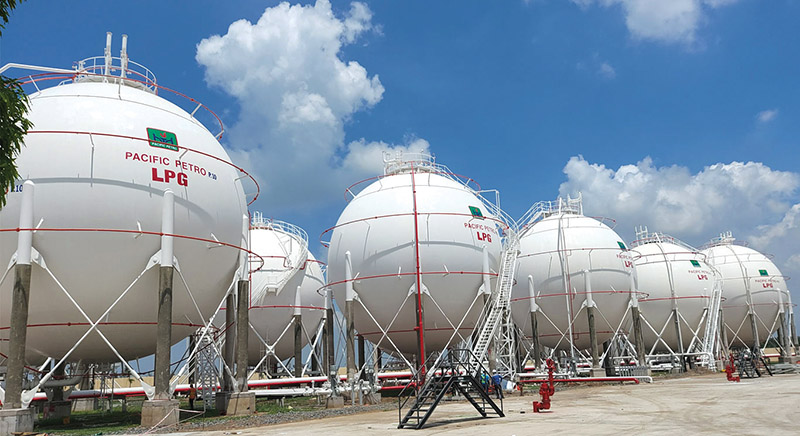
(Source: The Saigon Times)
From a typical case
Recently, major newspapers reported that the General Director of Pacific Petroleum Export and Import Trading Joint Stock Company (“Pacific Petro”) had been prosecuted and detained for investigation of accounting violations, with serious consequences[1]. It is worth noting that Pacific Petro is no stranger to the press, as the company and its General Director were previously involved in a labor dispute. The company, Pacific Petro, was founded in 2019 by Mr. Nguyen Thanh Tung ("Mr. Tung") along with other shareholders. In October 2019, the shareholders of Pacific Petro transferred their shares to Air Water Vietnam Co., Ltd ("AWI") of Japan. After the transaction, AWI held 51% of the shares of Pacific Petro, Mr. Tung held 48.94% and another shareholder held the remaining shares. At the same time, Mr. Tung continues to serve as the general director and legal representative of Pacific Petro in the post-transaction period. According to the press, Mr. Tung's case involved advances that he approved for himself without the necessary documentation or proper use for company purposes.
Based solely on the information provided by the press, it seems insufficient to draw conclusions about Mr. Tung's actions. However, encountering legal difficulties in the post-M&A transaction phase is a valuable lesson for sellers to consider.
Post-transaction seller’s right
A fundamental issue in capital-intensive companies (such as corporations and limited liability companies) is the relationship between the proportion of capital held and the rights within the company. It is understandable that after the transfer of a majority of shares to the buyer, the rights of the seller are gradually reduced. However, given that the managers of the post-transaction company are also the sellers who previously held the majority or all of the shares, these people may be completely confused about their rights in the company in the post-transaction M&A phase.
Before the transaction, the seller has the right to make full decisions on important issues of the company, including the use of the company's funds and assets. After the transaction, the seller's rights are largely shared with the buyer. Typically, the number of shares the seller retains after the transaction is not sufficient to decide important issues of the business. These issues often require the approval of the board of directors or higher, the general meeting of shareholders for corporations, or the board of members for limited liability companies.

In the case of Pacific Petro, Mr. Tung was retained to assume the title of General Director to maintain the stability of the company's operations. However, financial decisions at Pacific Petro may no longer be made under Mr. Tung's rights as before, but will be made by the board of directors or the general meeting of shareholders of Pacific Petro, which includes the purchaser or its authorized representatives.
Regrettable violations and lessons for the seller
Typically, in M&A transactions, the buyer wants to retain key personnel to manage the target company. These personnel are often the sellers (if the seller is an individual) or the representatives of the seller's capital (if the seller is an organization). Conversely, a portion of the seller's equity is retained in the target company to minimize risk and extend the payout period. Therefore, in many M&A transactions, the seller still holds a minority stake in the target company and retains key positions, as seen in the case of Pacific Petro. In essence, this is for the good purpose of helping the target company's operations not to fluctuate and be affected too much after the transaction, and also to help the parties manage the financial risks that may be involved in the transaction. However, due to the seller's lack of prudence in his role as a corporate manager, unnecessary disputes have arisen, causing risks and damages to both the company and himself.
In order to avoid unnecessary injuries after the M&A transaction, the seller must be very aware that his rights after the transaction correspond to the capital share he retains. This means that the seller must understand and accept that many of its rights have been transferred to the buyer post-transaction. At the same time, the seller, as the manager of the company, must strictly comply with the law and the company's articles of association regarding the rights of the CEO, the board of directors or the general meeting of shareholders in making decisions on company matters. In addition to determining the decision-making authority, the seller, as the manager of the company, must also comply with the processes and procedures for obtaining the approval of bodies such as the Board of Directors or the General Meeting of Shareholders.
In reality, there are still cases where the seller, while running the business, makes decisions or takes actions that do not comply with the law, thinking that it will help the business make quick decisions or simply because of habitual pre-transaction management practices. However, any decision made post-transaction may affect or infringe upon the legitimate rights and interests of the buyer, thereby exposing the seller to significant risks, including, in some cases, criminal liability.
Read more at: Giao dịch hậu M&A – phải chăng bên bán cần cẩn trọng hơn?


