


Vietnam is preparing and implementing many major changes in administrative boundaries in 2025, businesses may face many new challenges. These changes of the State are aimed at streamlining the administrative apparatus, improving management efficiency and promoting the development of Vietnam's economy more and more strongly. The change in administrative boundaries not only poses challenges in corporate governance strategies to adapt to the new situation but also brings opportunities for businesses. This article will analyze the main impacts of changing administrative boundaries and propose specific solutions for businesses to effectively adapt to these changes in the coming time.

This is the group's sixth factory worldwide and the second in Asia. The project includes five buildings with a total area of approximately 150,000 square meters, comprising office space, energy center, plastic molding and packaging area, automated warehouse, and other facilities. Source: Binh Duong Newspaper
1. Impact of administrative boundary changes on businesses
The change of administrative boundaries, including the merger, division, separation or renaming or upgrading and abolition of administrative units such as from the commune, district to provincial levels, not only affects the state management system but also directly impacts the operation of enterprises, not to mention the merger of a series of specialized agencies managing enterprises such as taxation, social insurance, business registration agencies, and the State Bank,.... From the perspective of businesses, the change, separation and merger of administrative boundaries, not to mention the management agencies, will greatly affect the operation and business strategy of the enterprise in the coming time.
Changes in information on legal documents
When administrative boundaries change, the address on legal documents such as Enterprise Registration Certificates, Investment Registration Certificates, tax information, land use right certificates, work permits, invoices of enterprises, seals, and other licenses,... It is possible that the information is no longer accurate and consistent with the actual information. Especially information about the address of the business.
Change of regulator
Changes in administrative boundaries often entail transfers between regulatory agencies, such as the Business Registration Office, Tax Authorities, Social Insurance (Social Insurance), or inspection agencies. Businesses may have to work with the new agency, carry out data transfer procedures, compare information and ensure continuity in administrative obligations. A lack of synchronization in the transfer process can cause disruption in business operations, especially if the new agencies have not synchronized data from the old one. Or the new receiving agencies are delayed in carrying out administrative procedures from the merger.
Impact on tax and reporting obligations
Changing tax authorities may result in changes in local tax codes, tax declaration processes, tax refunds, or tax data collation. Errors in this process can result in fines or suspension of tax transactions. In addition, the change of administrative boundaries may also affect tax incentive policies, especially if the investment preferential area changes. According to Official Letter 4525 dated April 9, 2025 of the Ministry of Finance ("Official Letter 4525"), a number of guidelines for determining investment incentives and procedures for adjusting investment projects in case of changing administrative boundaries for enterprises are clarified and implemented in practice.
Changes in local planning and policies
Changes in administrative boundaries are often accompanied by adjustments to urban planning, investment incentives, or land use regulations. An enterprise that is enjoying tax incentives in a poor province may lose this right if that area is merged into a class I urban area or a new development area. However, Official Letter 4525 emphasizes that investment incentives specified in the Investment License or Investment Registration Certificate will be guaranteed to apply in accordance with the law, even if there is a change in administrative boundaries. Conversely, some businesses may benefit from new preferential policies if their area is upgraded or rezoned.
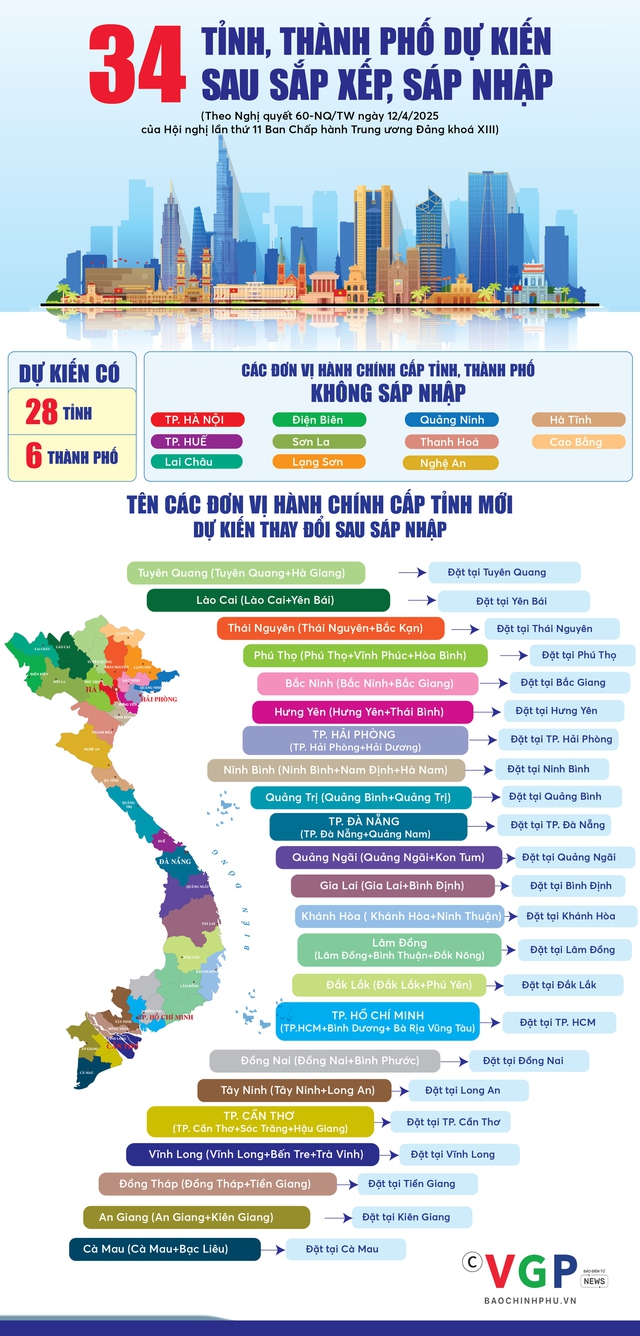
Source: Government newspaper
2. What do businesses need to prepare?
To adapt to changes in administrative boundaries, businesses need to take a series of specific measures, from monitoring policies, reviewing legal documents, to adjusting business strategies. Below are the preparation steps that in our opinion businesses need to consider and take in the coming time.
Closely monitor administrative decisions
Businesses need to proactively update information on decisions to change administrative boundaries from the National Assembly, the Government, or the People's Committees of provinces/cities. Official sources of information include: Website of the National Assembly, Government or Information Page of the People's Committee of the province/city and other official information sources for timely and official information.
Timely grasping resolutions, notices, or roadmaps for change will help businesses prepare appropriate action plans.
Review the system of legal documents and documents
Enterprises need to review all important relevant legal documents of the enterprise such as: Enterprise Registration Certificate, Investment Registration Certificate, Land Use Right Certificate, labor contracts, other contracts, tax documents, invoices, etc work permit, specific business license (if any),...
The review process needs to clearly identify which documents need to be updated with the address or name of the new administrative unit. Businesses should also make a list of procedures to be carried out and deadlines to avoid passivity when forced to change or have to change due to the lack of synchronization of information between the company's legal documents.
Choose which time and type of documents are prioritized for carrying out the adjustment procedures
In our opinion, once the address of the head office changes due to the merger or change of the name of the administrative unit, it is only "sooner or later" that the enterprise has to adjust the legal documents. Although according to the regulations as well as the guidance of the competent authorities, it is clearly stated that enterprises are not required to adjust legal documents when administrative boundaries change[1]. However, in fact, the inconsistency of the information of the enterprise, especially the business address on the invoices of the outgoing enterprises, as well as the input invoices are different, will cause a lot of trouble in the operation process. Therefore, businesses need to consider choosing the right time to adjust these documents. Depending on the type of operation of each company, we think that if the conditions are convenient, it can be adjusted as soon as possible. But businesses should also understand that, at the time the administrative boundaries have just changed, there will be many businesses at the same time carrying out these administrative procedures, therefore, it is possible that the procedure processing system will be overloaded and businesses will take longer to adjust legal documents. In addition to choosing the adjustment time, choosing which legal documents to adjust in advance to avoid serious impacts on business activities is something that businesses need to carefully calculate. We believe that the business registration certificate is one of the first documents that businesses need to adjust to be consistent with the data at the tax authority. This will help businesses more conveniently in the process of issuing invoices and declaring tax information to the State. During the procedure, businesses should consult and work closely with the tax authorities, social insurance and banks where they open accounts.
Rethink your business strategy
Businesses need to assess the impact of administrative boundary changes on long-term strategies such as considering changes in land management, traffic planning, or tax collection. For example, an area that is upgraded to a Class I metropolis may have higher operating costs but also open up greater market access opportunities. In addition, businesses also need to assess whether their business is subject to changes in investment incentives (such as tax exemption and reduction) or is entitled to new policies to make adjustments to the business plan in accordance with this change.
In addition, in case the enterprise wishes to expand branches or offices in localities other than the head office, the enterprise should also reconsider the expansion plan based on the new local planning to avoid the situation in a province with two to three representative offices or branches.
Adapt to changes
For businesses with branches or transaction points in many localities, internal communication is very important. Enterprises need to thoroughly grasp and inform all employees about the information about changes in administrative boundaries and their impact on businesses as well as employees. From there, businesses need to make changes and adjustments to their internal activities such as: (1) Update address information on websites, emails, and marketing materials released externally, on the business information page. (2) Guiding and training human resources, accounting, and legal departments on new processes related to addresses, contracts, or transactions to ensure that corporate personnel are aware of changes to avoid errors in transactions with customers or partners.
Strengthening the application of technology and digitalization to business operations
To minimize risks and adapt to changes in administrative boundaries, businesses should apply technology and take advantage of the country's digital transformation to simplify the process of adjusting and updating changes in administrative boundaries at enterprises. In particular, businesses need to pay attention to the use of enterprise management software (ERP) to synchronously update address, contract, and invoice information. As well as taking advantage of online public administrative services to submit documents and track the progress of administrative procedures carried out by businesses. At the same time, businesses must also digitize legal documents to easily look up and update them when necessary.

The LEGO factory in Binh Duong is adorned with models reflecting Vietnam's rich cultural heritage, such as Ly dynasty dragons, lion dances, Ben Thanh Market, and ao dai. Source: Binh Duong Newspaper
3. Opportunities from changing administrative boundaries
In addition to the challenges that we have clearly stated above, the change of administrative boundaries also brings a number of opportunities for businesses that, if they know how to seize and take advantage of, completely turn the challenges into great opportunities to bring businesses to develop and "take off" with the country.
The change of administrative boundaries with the trend of streamlining specialized agencies, minimizing state management agencies to create favorable conditions and development conditions for enterprises. Therefore, we believe that changing the administrative boundaries of Vietnam will help businesses:
First, access to new markets. Areas that are upgraded or merged often have stronger economic development potential, opening up opportunities for businesses to expand their markets, take advantage of new resources from changes to develop.
Second, improve infrastructure. New planning often comes with investments in transportation, telecommunications, and public services, helping businesses operate more efficiently.
Third, new preferential policies: Some regions may be subject to preferential policies to attract investment, especially in the fields of technology, manufacturing, or services.
In short, the change of administrative boundaries in Vietnam in 2025 is an inevitable reform step to serve the 100-year goal of bringing the country into a new era. This change reflects the State's efforts in optimizing State management activities and promoting sustainable development. For businesses, this is an important time to prepare thoroughly, from reviewing legal documents, adjusting contracts, to building strategies to adapt to new administrative areas, new ways of working and operating the State administrative apparatus. By proactively monitoring policies, coordinating with regulators, and leveraging technology, businesses can not only mitigate risks but also seize opportunities to thrive in this context. Thorough preparation will be the key to helping businesses overcome challenges and take full advantage of Vietnam's landmark adjustments in 2025.


