


Mergers and acquisitions (M&A) transactions are increasingly becoming important tools for businesses to scale, optimize resources and strengthen their competitive position. However, not every deal goes smoothly to the destination, with countless risks ranging from failed negotiations, strategic changes to regulatory interventions. In order to mitigate these risks, the parties often include cancellation clauses in the purchase and sale contract between the parties to ensure that the transaction goes smoothly and minimize the risks and investments in the transaction.
Concept, role and how to apply cancellation fees in M&A
A termination fee/break-up fee is a pre-agreed penalty, usually paid by the seller (the target company) to the buyer if the transaction is canceled due to the seller's fault, such as unilateral withdrawal, breach of exclusivity commitment, or acceptance of a more attractive competitive offer. In contrast, a reverse termination fee requires the buyer to compensate if the deal is not completed for reasons that are its responsibility, such as not raising enough capital or not being approved for antitrust. The core purpose of this mechanism is to compensate for lost costs, time and opportunities for the injured party, and to create an incentive for the parties to commit to completing the transaction.
In the world, termination fees have become a common practice, especially in the US with an average fee of about 3% of the deal value. However, in Vietnam, the application of this mechanism faces many obstacles due to the legal framework not being synchronized with international practices, lack of specific regulations and caution of the participating parties. Although M&A in Vietnam is booming with a deal value of more than 3 billion USD in 2024[1], termination fees are still not common, mainly appearing in large transactions with foreign elements.
According to international practice, this fee is calculated as a percentage of the transaction value, usually between 1% and 5%, depending on the size of the deal, the cost of due diligence, and the level of risk. According to a study in 2022, the average is about 3%, with fluctuations from 0.01% to 7%.[2] Triggers include (1) the seller's management changes its decision, (2) shareholders do not approve, (3) receive a superior proposal, violate the no-shop clause, or external events such as not being approved by the regulator[3].
The role of the termination fee is to protect the buyer from damages for expenses incurred such as due diligence costs, negotiations, and opportunity costs. This binds the seller to commit and allocate risk reasonably. Meanwhile, reverse termination fees protect the seller from risks from the buyer, as in large deals that encounter antitrust obstacles. However, the fee must be "reasonable" to avoid being seen as hindering competition or violating the fiduciary obligations of the management.
In Vietnam, termination fees are not directly regulated in the provisions of the law. However, in comparison with the current regulations, the transaction cancellation fee can be considered equivalent to the "penalty for breach of contract" under the Commercial Law 2005. With a maximum penalty of 8% of the value of the violated obligation, this mechanism fully meets the transaction cancellation fee according to international practices. But in case the parties agree on a higher fee, such as 10% according to US practice, the excess will be invalid, making this mechanism less attractive than the expectations of international investors when conducting transactions in Vietnam.
Moreover, the calculation and application of termination fees in Vietnam requires compliance with the principles of voluntariness, fairness and non-illegality. The contract must clearly stipulate the conditions for activation, but due to the lack of specific case law, the parties are often afraid to dispute the determination of the "breached part of the obligation". If the transaction is canceled due to objective reasons due to force majeure, the seller may not have to pay the fee, leading to a dispute over the boundary between the breach and the force majeure event, a dispute that causes a lot of controversy in Vietnam.
International comparison and application situation in Vietnam
In the US, the termination fee is flexible, with 3-4% accepted by Delaware precedent, as long as it does not hinder competition. About 20-30% of large deals have this clause, and reverse termination fees are common in antitrust risk. In contrast, in the EU and the UK, the mechanism is strictly restricted. The UK has almost banned public takeovers since 2011, allowing less than 1% in exceptions. Other EU countries limit it to less than 2% to protect competition and shareholder rights.
In Vietnam, the situation is different due to the civil-commercial legal framework. The Commercial Law 2005 provides for a penalty of no more than 8 per cent, but applies to M&A activities that usually involve the transfer of shares, which can fall within the boundaries between the provisions of the Commercial Law and civil law. If the agreement between the parties is considered a civil contract, the contract penalty does not have a ceiling, but in fact, the court usually applies 8% to avoid abusing the provisions on penalties for breach of contract between the parties who are enterprises. This creates uncertainty in M&A deals, if the part of the breach obligation is only partial, such as not transferring assets, the actual fee may be much lower than the value of the entire deal.
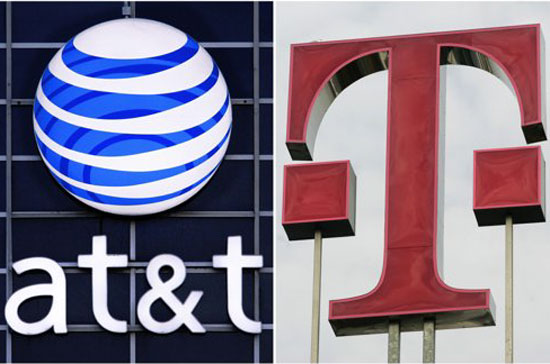
If the acquisition of T-Mobile is successful, AT&T will become the largest telecommunications carrier in the United States. Source: VnEconomy
Termination fees or reverse termination fees mainly appear in M&A with foreign elements, where international lawyers draft to conform to practice, but must be adjusted according to Vietnamese law. In domestic transactions, the parties give priority to deposits or simple penalties for violations according to the previous practices of Vietnamese law. Currently, there is no public precedent on termination fees in Vietnam, causing the parties to lack a reference base, leading to excessive caution or ignoring this mechanism when carrying out M&A transactions in practice.
In addition, in the context of Vietnam's integration of the CPTPP and EVFTA, cross-border trade encounters a conflict of law if the contract chooses a foreign law, but is enforced in Vietnam, the local court may not recognize the fee exceeding 8%. This complicates negotiations, especially when foreign parties expect higher fees to offset risks.
Practical examples and lessons for Vietnam
Despite the lack of public domestic examples, international cases offer valuable lessons. The AT&T-Mobile deal in 2011 failed due to antitrust violations of U.S. law. AT&T had to pay T-Mobile's parent company $4 billion in cancellation fees[4]. Similarly, Qualcomm bought shares of NXP in 2018. However, the transaction was not approved by the State Market Administration of China (SAMR) before the closing date of trading. This led to the cancellation of the deal, Qualcomm had to bear the previously agreed $2 billion termination fee[5]. These examples highlight the role of transaction cancellation fees/reciprocal transaction cancellation fees in transaction management risk allocation, which Vietnam can learn from, especially with deals related to national security or antitrust/economic centralization under the Competition Law 2018 and its guiding documents.
Potential legal risks and disputes
Through the above analysis, it can be seen that, according to the provisions of Vietnamese law, the biggest obstacle is legal risk in regulating transaction cancellation fees/counterparty transaction cancellation fees. From the risk of invalidating the fee if it exceeds 8%, the buyer is not fully protected. Until disputes over the unclear legal framework, the boundary between commercial or civil law is still a controversy in Vietnam. Thirdly, the violation of the responsibility of the trustee of the company's board of directors, although it is not yet common, but the possibility of being sued by shareholders if the transaction termination fee is high hinders a better proposal, according to the principles of corporate governance, the Law on Enterprises 2020 is still a blurred area. is not clear.
The application of termination fees in Vietnam faces many problems: the legal limit of 8%, lack of specific regulations, unpopularization and high risk of disputes. However, with the momentum of M&A growth, this mechanism has great potential if improved. Suggestion: update the law to raise the fee ceiling or separate regulations for M&A; encouraging case law; and awareness training. Only by overcoming these limitations can termination fees truly become an effective "insurance" for M&A transactions in Vietnam.
[1] https://cafef.vn/tien-quay-tro-lai-viet-nam-hon-220-thuong-vu-ma-tu-dau-nam-voi-gia-tri-len-den-32-ty-usd-188241128070759053.chn, accessed 2025/08/25.
[2] https://cdn.hl.com/pdf/2025/2024-transaction-termination-fee-study.pdf, accessed on 25/08/2025.
[3] https://hmplaw.vn/vi/dieu-khoan-bao-ve-thuong-vu-ma-cau-truc-chien-luoc-va-bai-hoc-tu-thuc-tien, accessed on 25/08/2025.
[4] https://www.telecoms.com/mobile-devices/at-t-pulls-out-of-t-mobile-merger, accessed on 25/08/2025.


