Procedures for issuance of permits for transport of dangerous goods on roads
1. What are dangerous goods? Classification of dangerous goods
1.1 Dangerous Goods
Dangerous goods are goods that contain dangerous substances or articles when transported on roads that are likely to endanger human life, health, the environment, national safety and security.
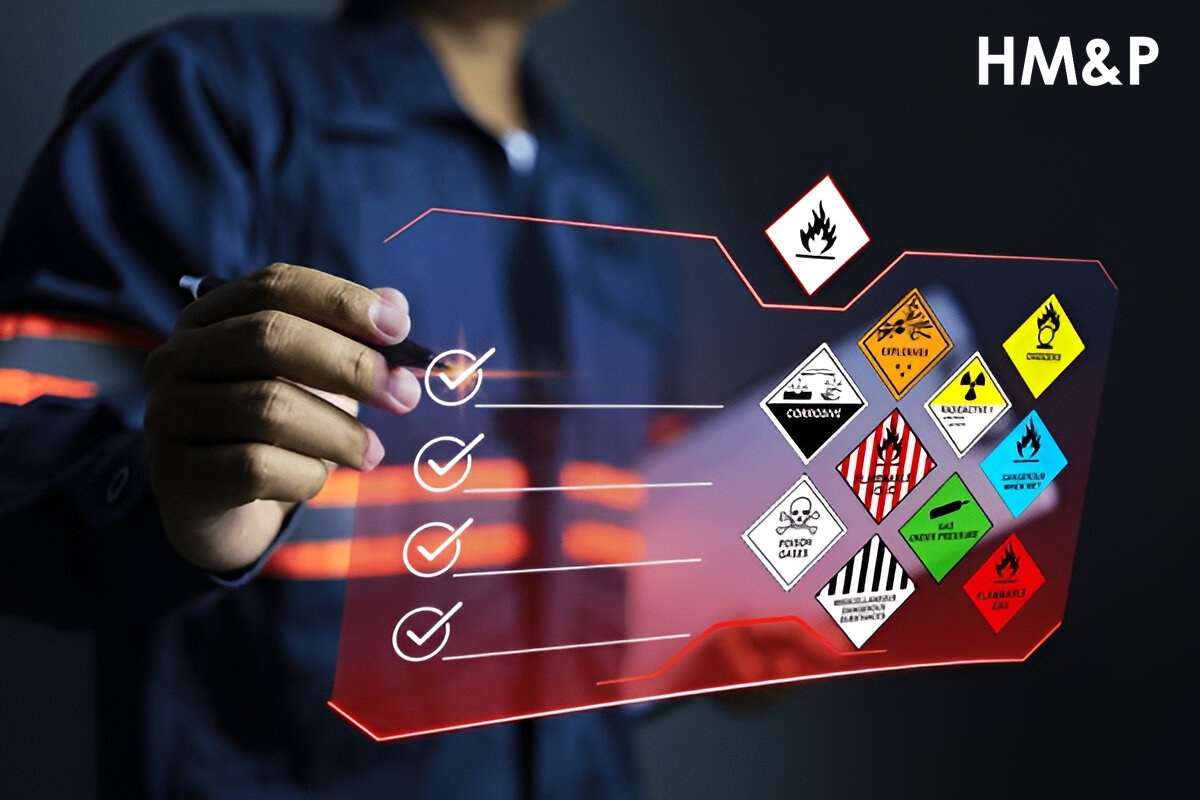
1.2 Classification of dangerous goods: Based on chemical and physical properties, dangerous goods are classified into 9 types and groups of the following types:
- Class 1: Explosives and explosive articles;
Group 1.1. Substances and articles with a wide explosive risk
Group 1.2. Substances and articles are at risk of splashing but do not explode widely.
Group 1.3. Substances and articles have a flammable hazard and a small explosion hazard or small splashing or both, but not a wide explosion.
Group 1.4. Substances and articles pose a negligible risk.
Group 1.5. The substance is insensitive but has a wide explosive risk.
Group 1.6. Special items are not sensitive, there is no risk of widespread explosion.
- Type 2: Gas
Group 2.1. Flammable gases.
Group 2.2. The gas is non-flammable, non-toxic.
Group 2.3. Toxic gases.
- Type 3: Flammable liquids and desensitizing liquid explosives;
- Type 4: Flammable solids, self-reactive substances and solid explosives immersed in liquid or desensitized;
Group 4.1. Flammable solids, self-reactive substances and solid explosives are immersed in liquids or desensitized.
Group 4.2. The substance has the ability to ignite on its own.
Group 4.3. The substance when filled with water produces flammable gases.
- Type 5:
Group 5.1. Oxidizers
Group 5.2. Organic peroxide;
- Type 6:
Group 6.1. Poison.
Group 6.2. Infectious substances.
- Type 7: Radioactive substances;
- Type 8: Corrosive.
- Class 9: Other dangerous substances and articles.
This dangerous goods also includes packages and containers of dangerous goods that have not been cleaned inside and outside after unloading all the dangerous goods mentioned above.
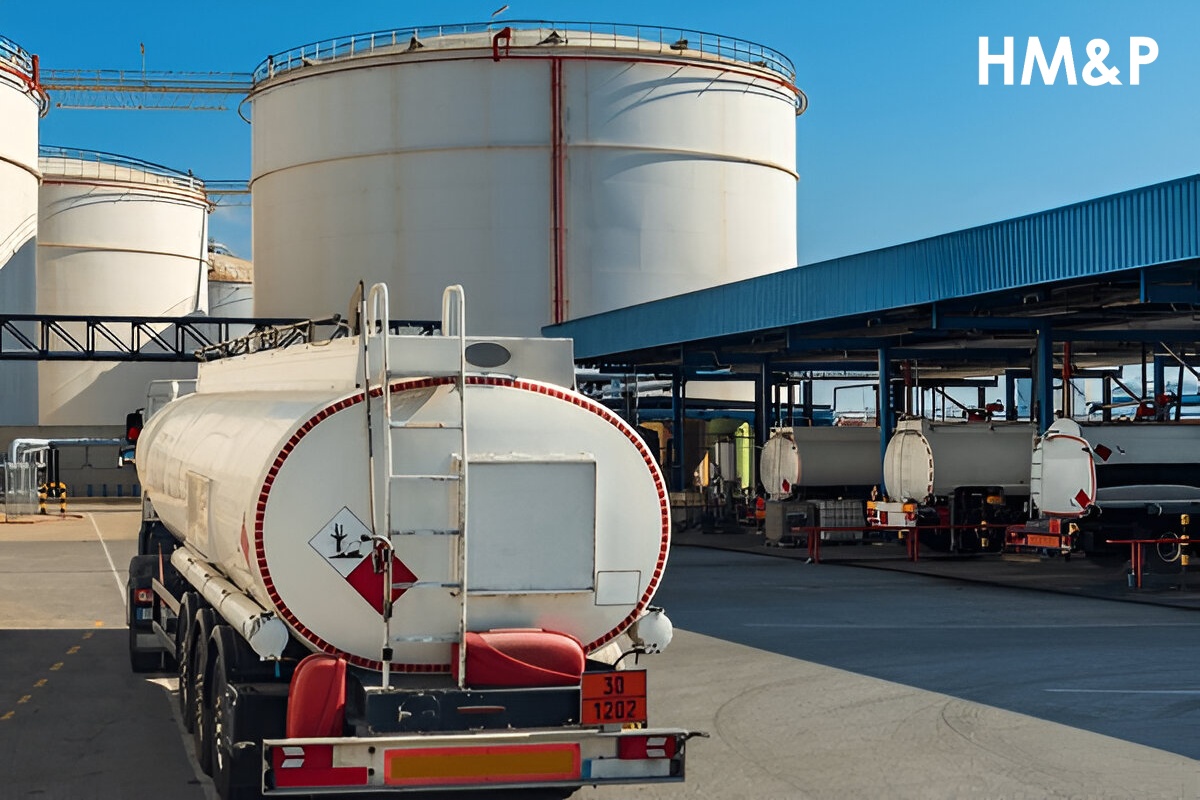
2. Conditions related to the issuance of permits to transport dangerous goods on roads
For the transportation of dangerous goods, individuals and organizations must have a license for transportation of dangerous goods issued by a competent agency.
|
Conditions for vehicles participating in transportation
|
- The means of transport must be eligible for participation in traffic, in addition, the special-use equipment of the means of transport must ensure national standards or national technical regulations or regulations of specialized management ministries;
- Cars transporting dangerous goods must affix the logo identifying dangerous goods; installing lights and warning signals;
If a vehicle transports many types of dangerous goods, it must affix enough logos of those goods to ensure easy observation and identification;
- Vehicles transporting dangerous goods, after unloading all dangerous goods, if they do not continue to transport such goods, the transporters and drivers shall have to clean and peel off or delete dangerous logos on such vehicles.
|
|
Contents of the License to Transport Dangerous Goods
|
- The contents of the license include:
- Name, address, contact phone number of the licensed unit; full name and title of the legal representative;
- Types and groups of dangerous goods;
- Itinerary and transportation schedule (applicable to case of issuance by flight);
- Duration of the license.
- The permit is valid nationwide and the term granted at the request shall not exceed 24 months and shall not exceed the useful life of the means of transport.
|
Note No. 1:
Drivers or escorts transporting dangerous goods must be trained in transporting dangerous goods.
3. Overview of procedures for issuance of permits for transport of dangerous goods on roads
|
STT
|
Category
|
Content
|
|
1
|
Receiving agency
|
- The Ministry of National Defense shall receive dossiers for:
- Organizations and enterprises under the management of this Ministry;
- Transporters hired by organizations and enterprises under the management of the Ministry of National Defense for transportation.
- The Ministry of Industry and Trade shall organize the issuance of licenses for transportation of dangerous goods of type 1, type 2, type 3, type 4, type 5, type 8 and type 9 according to the provisions of Clause 1, Article 4 of this Decree, except for plant protection chemicals.
- People's Committees of provinces and centrally-run cities shall receive dossiers for: dangerous goods being pesticide chemicals of organizations and individuals headquartered or branches in localities.
|
|
2
|
Form of implementation
|
- Submit directly at the receiving authority;
- Submission via postal service;
- Submit online through the public service system;
For dangerous goods of class 7 carried out on the service of supporting the application of atomic energy.
|
|
3
|
Components of the dossier
|
A dossier for issuance of a license to transport dangerous goods comprises:
- An application for a License to transport dangerous goods according to the form in Appendix IV of Decree 161/2024/ND-CP;
- The list of vehicles participating in the security transportation is still within the inspection period;
- List of drivers transporting dangerous goods (including: full name; personal identification number; license number, driving license class) and list of escorts in cases where escorts are required (including: full name, personal identification number);
- Certificate of completion of the dangerous goods safety training program of the driver or escort.
In addition, for each type of dangerous goods, a number of other documents may be required as follows:
- For dangerous goods of type 5 and 8: The plan for organizing the transportation of dangerous goods according to the form in Appendix V of Decree 161/2024/ND-CP has the minimum contents including vehicle control plates; full name of the driver; type of goods; mass; transportation route and time; measures to respond to chemical incidents in transportation.
- For dangerous goods of type 1, type 2, type 3, type 4 and type 9: The plan for organization and transportation according to the form in Appendix V attached to Decree 161/2024/ND-CP, has the minimum contents including vehicle control plates; full name of the driver; type of goods; mass; transportation route and time; emergency response measures in case of fire and explosion incidents.
- For dangerous goods being pesticide chemicals:
- One of the papers: supply contracts, financial invoices on export and import of pesticide products;
- The plan to organize the transportation of dangerous goods of the transport unit according to the form specified in Appendix V attached to Decree 161/2024/ND-CP, with minimum contents including vehicle control plates; full name of the driver; type of goods; mass; route, transportation time.
|
|
4
|
Fees and charges
|
Fees are not applied to this administrative procedure.
|
|
5
|
Result
|
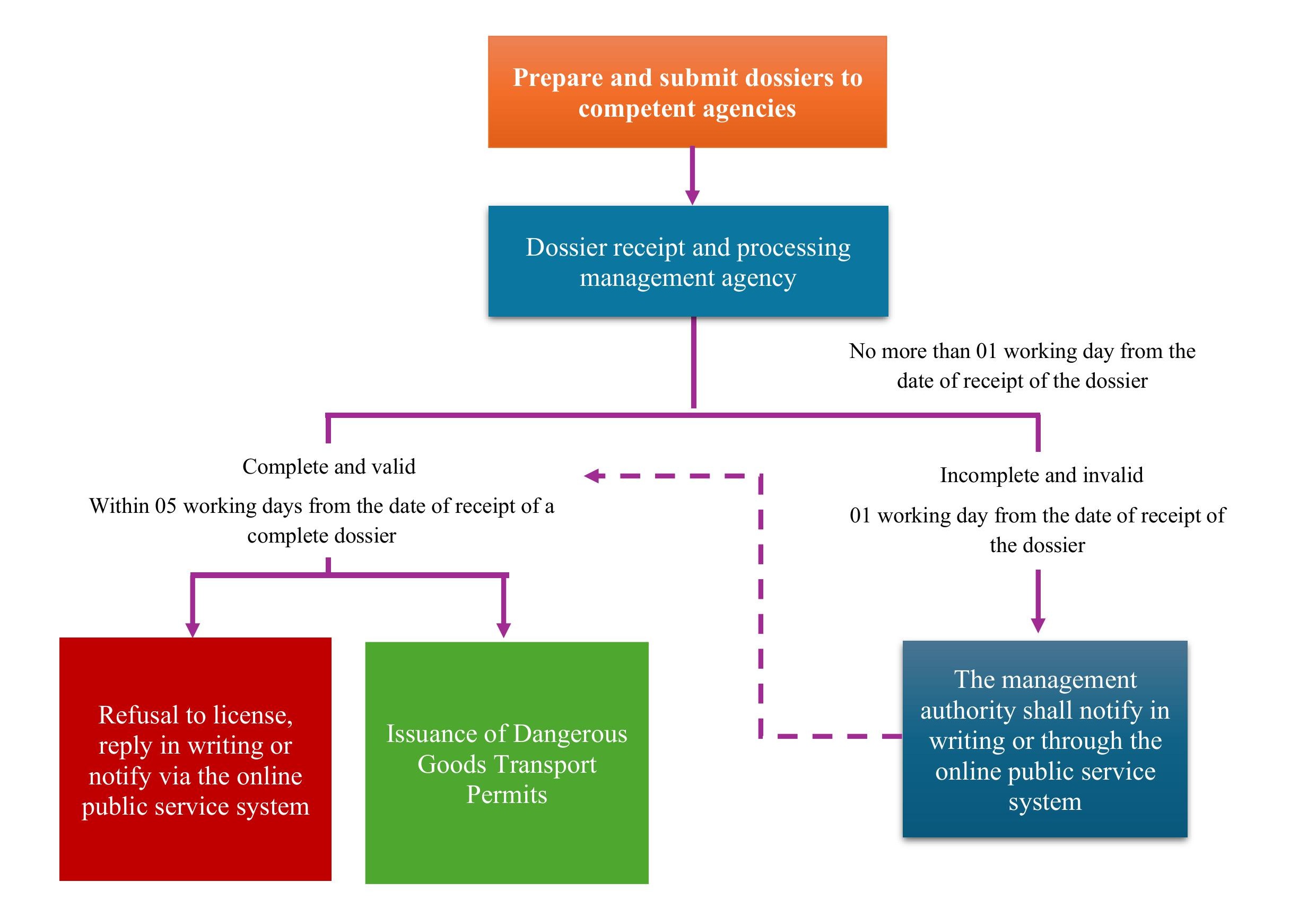
- License to transport dangerous goods issued on a one-trip basis in Appendix VII or on multiple trips in Appendix VIII of Decree 161/2024/ND-CP; or
- If the license is not granted, the agency shall reply in writing or notify via the online public service system and clearly state the reason.
|
Note No. 2: Some cases that are exempt from the issuance of a license to transport dangerous goods include:
- Transportation of dangerous goods is liquefied natural gas (LNG) and compressed natural gas (CNG) with a total volume of less than 1,080 kilograms;
- Transportation of dangerous goods is liquefied petroleum gas (LPG) with a total volume of less than 2,250 kilograms;
- Transportation of dangerous goods is liquid fuel with a total capacity of less than 1,500 liters;
- Transporting dangerous goods being pesticide chemicals with a total volume of less than 1,000 kilograms;
- Transporting dangerous goods for the remaining dangerous toxic chemicals in the types and groups of dangerous goods of Class 6.
Note No. 3: Cases in which dangerous goods are not allowed to be transported by road
It is forbidden to transport explosives, gas, petrol, oil and other flammable, explosive and desensitizing solids through tunnels with a length of 100m.
4. Procedure for submission of dossiers
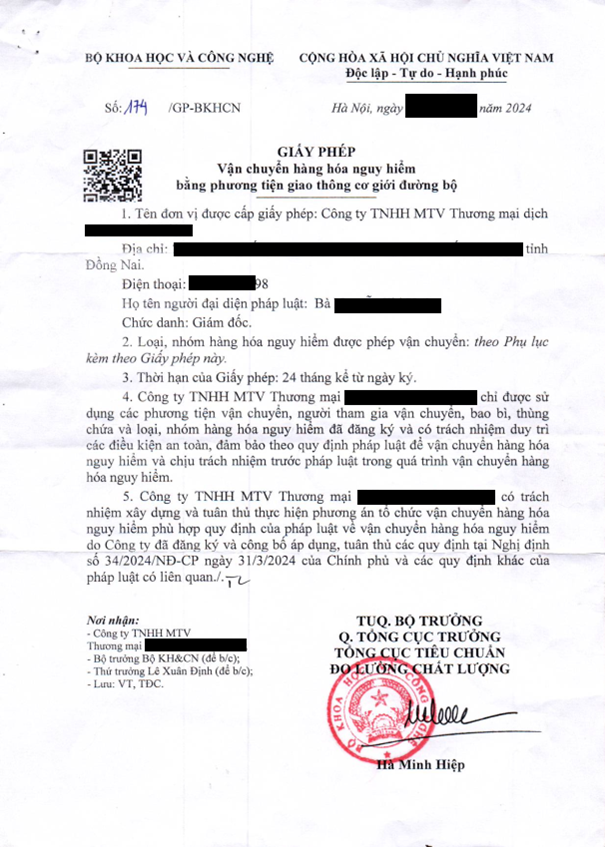
Form of license to transport dangerous goods by means of transport road motorized
Note No. 4: As of January 1, 2025, the competent authority for issuing permits for the transport of dangerous goods of Class 2, Class 3, Class 5, Class 8, Class 9, as well as petroleum products, gas, and other hazardous chemicals is the Ministry of Industry and Trade.


