


In the article "Strongly renovating the construction and enforcement of laws so that the country firmly enters a new era", Dr. Nguyen Hai Ninh - Member of the Party Central Committee, Secretary of the Party Personnel Committee, Minister of Justice said that in order not to miss the development opportunities, bring the country into a new era, the era of reaching out of the Vietnamese people should closely follow the profound directions of the General Secretary and the leaders of the Party and the House water in recent years. The Minister of Justice also affirmed that the time is ripe to promote the fundamental reform of law formulation and enforcement[1]. In particular, in the context of rapid global economic fluctuations and the increase in competition between countries, the law plays a key role in creating an investment environment. business is stable, equal and transparent. Fluctuations in global supply chains, regional conflicts, and the consequences of the COVID-19 pandemic have had a strong impact on business activities, requiring the legal system to have drastic innovations to respond to unpredictable scenarios.
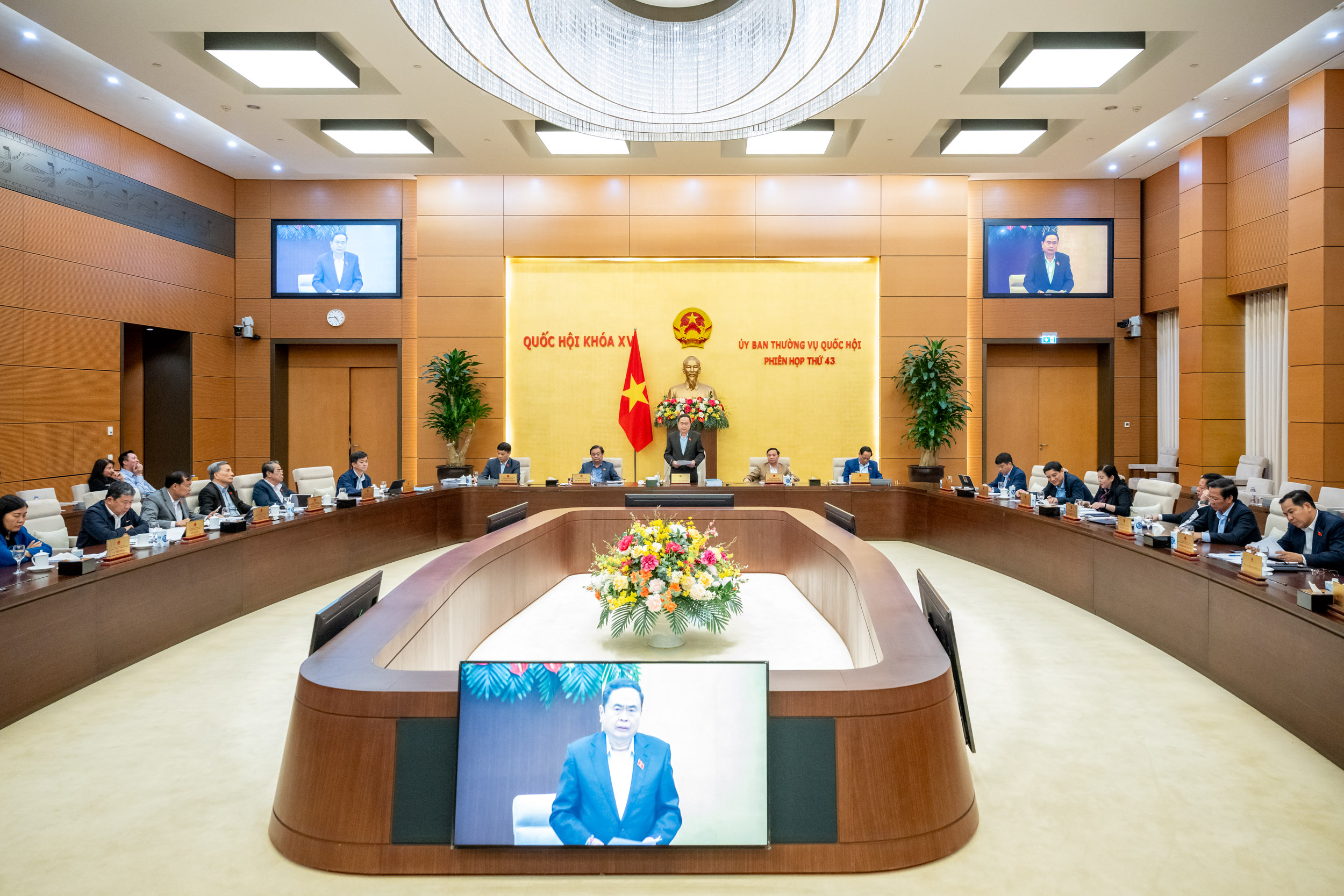
Source: National Assembly
As one of the economic bright spots in the Asia-Pacific region, Vietnam needs to quickly improve legal regulations, especially in the field of investment and business to attract FDI and enhance competitiveness. This proceedings paper refers to the process of developing and implementing laws, points out the requirements and challenges posed in the renewal of investment and business laws in the current context, and at the same time clarifies the importance of legal innovation in the field of investment, business as an important factor to ensure fast, sustainable economic development and international integration.
1. The process of developing and enforcing laws of our country
In the flow of thousands of years of history, Vietnamese law has formed and developed as an indispensable tool in building and preserving the country. From the Ly, Tran, Le, and Nguyen dynasties, laws imbued with national identity have been built, expressing the characteristics of "respect for law", "respect for discipline, discipline," and "respect for talent." These are the basic values of a country under the rule of law, contributing to ensuring stability and sustainable development.
The ideology of the rule of law of our nation has been continued and developed strongly in the Ho Chi Minh era. With a far-sighted vision, President Ho Chi Minh was soon well aware of the role of the Constitution and law in protecting the territory, building the nation and affirming the right to freedom and democracy for the whole people. The 1946 Constitution, promulgated immediately after the country's independence, is an important legal milestone, marking a great step forward for Vietnam's democratic rule of law.
In the renovation period, the law is not only a tool for state management but also a foundation to promote socio-economic development in the context of international integration. Since 1986, the Party and the State have focused on building a synchronous legal system, transforming the management mode from administrative orders to rule-based governance and compliance with market laws. Documents such as Resolution 48-NQ/TW, Resolution 49-NQ/TW, and more recently Resolution 27-NQ/TW, have clearly oriented for the completion of Vietnam's Socialist State under the rule of law in the new period.
It can be seen that continuous efforts in developing and enforcing the law have brought great achievements. Today's Vietnamese legal system not only regulates most areas of life but also ensures human rights and citizens' rights, creates a favorable legal environment for socio-economic development, maintains national security and defense, and improves the efficiency of state management. In any era, the law is a tool to protect justice, protect the legitimate rights and interests of all individuals and organizations, and is the foundation for building a fair, democratic and civilized society. Therefore, continuing to innovate and improve the legal system should be considered a key task to ensure the sustainable development and international integration of Vietnam in the new development period.
2. The new era, the era of the nation's growth is associated with the strategic vision of the Party
2.1 A new era, an era of national growth
The era is considered a historical period marked by landmark changes or changes, which greatly affect the development of society, culture, politics and science. From the Industrial Era to the Digital Age, each stage has left important imprints in the development process of mankind. The era of reaching out is a period of showing strong, drastic and confident movement, overcoming challenges to achieve great achievements. For Vietnam, the era of reaching out is a period of comprehensive development, with the aspiration to build a prosperous, democratic, fair and civilized country, under the leadership of the Communist Party.
The new era, the era of national growth, not only means economic development but also arouses the national spirit, the spirit of self-reliance, self-reliance, self-reliance and the desire to conquer new heights. This is the period when all people, under the leadership of the Party, unanimously strive for the common goal: to build a prosperous and happy Vietnam and make positive contributions to peace, comprehensive and strong development, breakthrough and take-off. In this era, Vietnam's strategic goals are clearly defined. Accordingly, by 2030, it will become a developing country, with modern industry and high middle income. By 2045, it will become a developed, high-income country, on par with the five continental powers. The new era is not only an economic change but also a period of affirming the country's position in the international arena, improving people's lives and bringing Vietnam on par with the five continental powers.
2.2 This is the ripe time to transform the development model
The XIV Congress is expected to be held in 2026, marking a strategic turning point in the country's development journey. This is an important time to review 40 years of renovation (1986 - 2026) and orient larger and farther goals. The economic, social and political achievements after 40 years of renovation have created a solid foundation for Vietnam to enter a higher stage of development. The 14th Congress of the Party was determined to be the time to open a new era for the people. This era is identified as the "era of reaching out for the Vietnamese nation", with the noble goal of building a strong country, shoulder to shoulder with the great powers of the five continents. This judgment is based on many important factors, both in terms of historical context, current achievements and future orientation. The Party defines the new era as the period when the country rises to become a modern industrial, high-middle-income country by 2030 and aims to become a developed and high-income country by 2045.
This will be the time when the Party and the State propose breakthrough policies, focusing on transforming the development model from relying on resources and cheap labor to relying on technology, innovation and quality of human resources. Considering the 14th Congress as the beginning of a new era is symbolic, expressing clear goals and showing the strong political determination of the whole Party, the whole people and the whole army in realizing the aspiration to build a prosperous and prosperous Vietnam. From a poor, backward, besieged and embargoed country, Vietnam has risen to become a developing country, with a middle income, deeply integrated with the world. The evidence is that the size of the economy in 2023 will increase 95 times compared to 1986, bringing Vietnam to the 35th position among the world's largest economies and ranking in the top 20 economies in terms of trade and attracting foreign investment[2]. At the same time, Vietnam has established diplomatic relations with 193 UN member states, building strategic partnerships with many great powers. Along with that, people's lives have improved markedly, the rate of poor households has decreased sharply, and the set goals have been completed soon. These achievements are a solid foundation for Vietnam to continue to rise in the new era, the era of prosperity and comprehensive development[3].
The world is in a period of epochal transition. The period between now and 2030 is an important time to establish a new world order. This is also the period when Vietnam needs to take advantage of strategic opportunities to realize the goal of 100 years of the founding of the Party and the country. The Industrial Revolution 4.0, especially artificial intelligence and digital technology, opens up opportunities for developing countries to get ahead. However, challenges from global competition, climate change and geopolitical instability are also increasing, requiring Vietnam to have a flexible and effective response strategy.
The history of Vietnam's revolution proves that under the wise leadership of the Party, the nation's self-reliance, self-reliance and self-reliance have helped the country overcome the toughest challenges, creating miracles such as colonial and imperialist victories and success in the renovation process. Currently, the Party's will blends with the people's heart, arousing the aspiration to build a prosperous and happy country. This is the motivation for the whole people to unanimously implement the goal of building a prosperous and strong socialist Vietnam, shoulder to shoulder with the great powers of the five continents.
The 14th Congress of the Party is considered a historical milestone, opening a new era because this is an important transition time, where the achievements achieved and great aspirations for the future converge. With a solid foundation and clear orientation, the 14th Congress will be a launching pad to bring the country into a breakthrough development period, marking the era of sustainable development, prosperity and deep international integration. The new era, the era of the nation's growth, is the period when Vietnam must take advantage of opportunities, overcome challenges, and fully take advantage of the Industrial Revolution 4.0, to realize development aspirations. With the ingenious leadership of the Party and the strength of the whole people, Vietnam can fully achieve its strategic goals, making the country a prosperous, prosperous and peaceful country in this new era.
.jpg)
3. Tremendous changes in the formulation and enforcement of laws in the field of investment and business in recent years
Over the years, the development and enforcement of laws in the field of investment and business have made important progress. The legal system on investment and business has created favorable conditions for domestic and foreign enterprises. Administrative procedure reforms, especially in the fields of business registration and investment, have reduced many barriers for businesses.
The adjustment of laws such as the Law on Investment, the Law on Enterprises, and the Law on Support for Small and Medium Enterprises,.... has contributed to increasing transparency and ensuring the interests of investors and businesses. As a result, the business environment in Vietnam has made strides in ranking in the ASEAN region.
3.1 The Land Law 2024 will continue to have a strong impact on business investment activities in 2025
The decision to implement the Land Law 2024 from August 1, 2024, 5 months earlier than originally planned, aims to unleash land resources and remove difficulties for businesses, demonstrating the National Assembly's strong efforts in promoting economic development. One of the important breakthroughs of the law is the abolition of the land price bracket, in order to narrow the gap between real and virtual values, thereby preventing corruption, negativity and limiting land-related claims. The land valuation policy will be implemented based on the principles of honesty and transparency, with the independence of the consulting organization and the appraisal agency, creating a foundation for a healthy and fair real estate market. The law also limits land acquisition to large-scale commercial housing projects with synchronous infrastructure, while other projects must be auctioned or bid to select investors with real capacity. This promotes small businesses to associate and form large corporations to increase competitiveness. Although the number of enterprises may decrease, the size and capital of the remaining enterprises will be expanded, contributing to creating a strong market. In addition, the law allows businesses to switch from paying land rent once to annually, helping to ease the initial financial pressure, which is especially useful for small and medium-sized businesses.
Along with that, Article 127 of the Land Law 2024 expands land use rights for socio-economic development projects, including industrial parks, high-tech parks, high-tech agriculture, production and business establishments, trade, services, health, education, and tourism. These changes create favorable conditions, promote investment and sustainable economic development.
3.2 Adopting breakthrough regulations in the field of investment.
a. Special investment procedures come true
The special investment procedure was approved by the National Assembly at the end of 2024, which is a breakthrough in investment law. This procedure shifts from the "pre-inspection" to "post-inspection" mechanism, reducing many types of licenses and shortening the project implementation time, thereby emphasizing the reform of the investment process in the direction of speed, transparency and prioritizing key areas such as high technology[4]. This has a positive impact on the economy through shortening the implementation time of the project reduce compliance costs, besides encouraging capital inflows into key industries such as high technology, improving national competitiveness. In addition, the "post-inspection" mechanism promotes innovation, creates job opportunities, and supports sustainable development in the context of increasing global competition.
b. Major changes in the authority to decide on investment policies[5]
The amended Law on Public Investment brings far-reaching changes in the authority to decide on investment policies, marking an important step in the reform of public investment management. The biggest highlight is the increase in the national project limit to VND 30,000 billion, reducing the burden on high-level people, at the same time, empowering the right to decide on group B and C projects from the People's Council to the People's Committee[6], increasing local initiative and responsibility. In particular, the transfer of the right to adjust the medium-term public investment plan from the Standing Committee of the National Assembly to the Prime Minister[7], helping to improve flexibility in administration, respond faster to economic realities. These reforms not only reduce the approval time but also create a strong motivation for localities to optimally exploit resources, promote strategic projects, thereby contributing to sustainable economic growth.
However, along with the opportunities, the challenge is to ensure the management capacity of local governments, maintain transparency and avoid abuse of power. The new regulations are expected to promote effective decentralization, create a favorable legal environment for public investment to maximize its potential, contributing to building a competitive, modern economy and uniform development among regions.
.jpg)
4. Limitations and development orientations
In the journey to make the country a developed country with high income in the socialist orientation, the limitations of legal institutions are a big challenge that needs to be solved immediately. The quality of law-making, although there has been a lot of progress, has not yet met practical needs. Many newly promulgated laws must be amended or adjusted due to inadequacy, wasting resources and prolonging the implementation time. Administrative procedures are still complicated and multi-layered, losing the opportunity to attract domestic and foreign investment capital, and at the same time limiting the exploitation of resources from the people. At the same time, the legal regulations have not kept up with the development speed of digital technology, the legal foundation for businesses to do business with these technology solutions is still a bottleneck.
This situation not only inhibits the development of businesses and the economy, but also reduces investors' confidence in the domestic business environment, causing the country to miss many opportunities to go to rapid and breakthrough development. The lack of synchronization between management levels and the ineffective implementation of legal policies have caused many regulations to fail to promote their practical value. If these bottlenecks are not removed in time, they will slow down the growth process, making it difficult to realize the goal of bringing Vietnam on par with developing countries in the world. In order to avoid missing out on development opportunities and achieve the strategic goals set by the Party, it is necessary to focus on the following oriented and practical solutions:
First, to develop synchronous and accessible laws. One of the basic problems today is the lack of synchronization between legal regulations related to business and investment[8]. Although there have been some efforts to adjust the legal system, there are still many overlaps and contradictions between legal documents, especially between codes, decrees and circulars. This causes significant difficulties for businesses and investors in the process of law enforcement. To solve this problem, it is very important to build a synchronous legal system. Regulations in relevant fields need to be updated and adjusted so that they are consistent, avoiding contradictions or lack of clarity in the application process. The Government and authorities need to coordinate more closely in drafting, promulgating and supervising the implementation of legal provisions to ensure consistency throughout the entire legal system. Investors, especially foreign investors, will find it difficult to make investment decisions if they do not understand the legal regulations related to their rights and obligations. This requires state agencies to focus on developing and publicizing legal regulations in a clear, easy-to-understand and easy-to-look up manner. In addition, it is very important to disclose information about the process of investment approval, licensing, inspection, examination and handling of violations. State agencies need to maintain an independent and transparent oversight mechanism for business and investment activities. This not only helps to improve transparency but also creates confidence for businesses and investors in enforcing their legal rights. A complete legal system must not only ensure the interests of the state and organizations, but also protect the legitimate interests of businesses and investors. In particular, the settlement of investment and business disputes needs to be conducted fairly, transparently and quickly. The government needs to develop clear legal mechanisms to protect the interests of investors, especially in the context of increasing international investment disputes. Dispute resolution processes, from negotiation to arbitration and courts, need to be enhanced in terms of efficiency and transparency, avoiding protracted and unfair situations.
Building a synchronous, transparent and accessible legal system in the field of business and investment is an urgent requirement in the current period. This is an important factor not only to create a healthy business environment, but also a foundation to attract investment, develop the economy and improve national competitiveness. To achieve this goal, it is necessary to have synchronous coordination between state agencies, enterprises and legal organizations, and at the same time focus on reforming administrative procedures, improving the quality of training and legal support. Developing a synchronous and effective legal system will help build trust, encourage investment and promote sustainable economic development in the future.
Second, strongly innovating the law-making process associated with the creativity and development of technology. The new era is the period of the technological revolution, where innovation and application of technology become the decisive factor for development. In order to develop in the era of digital technology and the industrial revolution 4.0, the renewal of the law-making process is necessary and must be associated with creativity and technological progress. This is the period when the innovation and application of technology are not only key factors in economic growth but also determine the competitiveness of the country. Therefore, it is important to create a favorable legal framework that encourages innovation and entrepreneurship, and it is necessary to minimize legal barriers that can hinder the development of new ideas, products, and services.
In particular, to promote innovation, it is necessary to build an open legal space, allowing the testing and deployment of innovative business models, especially the application of new technology fields such as artificial intelligence, Blockchain, and Fintech in business activities. Specifically, it can be seen that Vietnam has made new strides in orienting Blockchain as one of the leading trends of the Fourth Industrial Revolution[9] , but the legal environment surrounding this field has not yet been completed. Besides, it is undeniable that Fintech has made leaps and bounds in the Vietnamese market when statistics from the Fintech In Asean Report show that Vietnam has reached 263 companies in 2022 from 39 Fintech companies in 2015[10]. However, the rapid development of this service makes the regulations of the legal system not keep up. Fintech products are always innovative and creative, but whether the operation method is in accordance with the law or not is a matter that needs to be studied. Flexible legal frameworks can help businesses test innovative ideas without worrying about violating regulations while ensuring the protection of the legitimate interests of consumers and the community.
An effective solution to this is to adopt a "sandbox" model, which allows businesses to test new technologies or services within a closely monitored legal framework. This model not only provides opportunities for innovative initiatives to be implemented in practice, but also minimizes legal risks, and promotes the development of advanced technology industries such as fintech, digital health, and other emerging technologies. Many countries around the world have successfully applied this model and 5 out of ASEAN countries have applied this mechanism[11]. This is the direction that needs to be studied and applied in Vietnam in the current context.
Third, the implementation and development of laws associated with international integration. In the new era, international economic integration is not only an important factor but also a decisive driving force for the development of the national economy. The expansion of trade relations and the signing of free trade agreements (FTAs) with strategic partners will create great opportunities for Vietnamese goods and services to reach out to the world. By participating in global trade agreements, Vietnam not only strengthens exports but also expands investment markets, promotes technology transfer, and develops high-value-added sectors.
In addition to signing FTAs, joining international organizations such as the WTO, ASEAN, APEC and other international financial institutions is also an important factor that has helped Vietnam deeply integrate into the global economy. The commitments in these organizations not only help improve Vietnam's image and position in the international arena, but also open up opportunities for international investors to participate in the Vietnamese market. This not only creates investment capital flows, but also promotes the transfer of technology and management experience, thereby improving the production capacity and governance of domestic enterprises.
However, in order to successfully integrate and make the most of the opportunities that integration brings, a key factor is to adjust the legal system to be in line with international commitments. The study and reference to the legal systems of other developed countries will be a stepping stone for the process of improving Vietnam's legal regulations. Areas such as intellectual property, environmental protection, taxation, and labor need to be reviewed and adjusted to ensure that Vietnam fully implements its international commitments, while protecting the legitimate interests of its people and businesses. In particular, in the context of globalization, the requirement to protect intellectual property rights has become increasingly important. Vietnam needs to improve its capacity to protect the interests of inventors and creative enterprises, and at the same time create a favorable legal environment for innovations, avoiding acts of infringing intellectual property rights from foreign partners. Meanwhile, protecting the environment, enforcing sustainability commitments, and reforming tax and labor regulations are also priorities. This not only helps maintain the stability and development of the economy but also helps Vietnam build its prestige and attractiveness to international investors.
In parallel with the completion of legal regulations, it is necessary to promote reform and improve the competitiveness of domestic enterprises. The Government needs to create policies to support and encourage innovation, technology transfer and improve product quality. At the same time, the training of human resources with skills and competencies in accordance with the requirements of the international market should also be prioritized. In particular, domestic businesses need to be equipped with skills and knowledge to take advantage of opportunities from FTAs and international commitments, thereby reaching out to the world and affirming their position in the global value chain.
In conclusion, international economic integration is an important strategic step for Vietnam to develop sustainably in the new era. To do this, in addition to expanding trade relations and joining international organizations, Vietnam's legal system needs to be reformed, updated in a timely manner and in line with international commitments. At the same time, it is necessary to promote domestic business reform, improve competitiveness to be able to take full advantage of the benefits of integration, towards a modern, transparent and comprehensive economy.
In the context that the country is gradually transforming strongly in the new era and deep international integration, the development and enforcement of laws in the field of investment and business need to be renewed to meet the requirements of sustainable development and keep up with the development of technology. In order to create a flexible, transparent and effective legal environment, it is necessary to continue to improve the legal system, ensuring synchronization, accessibility and conformity with international commitments. At the same time, the process of law-making is inseparable from creativity, technology application and innovation, thereby creating opportunities for businesses to develop strongly and improve national competitiveness. The renewal of law enforcement requires close coordination between state agencies, businesses and social organizations, in order to ensure that legal regulations are not only in line with reality, but also contribute to removing barriers, encouraging innovation and entrepreneurship. Moreover, international integration and the implementation of global commitments will create new opportunities, promote economic development and enhance the country's position in the international arena.
With synchronous solutions and a strong determination to reform in law formulation and enforcement, Vietnam can build a solid legal foundation, meet the requirements of development in the new era, promote economic prosperity and protect the legitimate interests of all members of society according to the orientation of the Party and the State. This is the key for us not only to maintain stability, but also to create a dynamic, innovative and sustainable economy, in line with the world's development trends.
Lawyer Nguyen Van Phuc
HM&P Law Firm
The proceedings paper has been selected for inclusion in the national conference. We cordially invite our valued clients to view the PDF file HERE
[1] https://nhandan.vn/doi-moi-manh-me-cong-tac-xay-dung-va-thi-hanh-phap-luat-de-dat-nuoc-vung-buoc-tien-vao-ky-nguyen-moi-post843942.html, accessed on 13/01/2025.
[2] https://kinhtetrunguong.vn/kinh-te/kinh-tet-vi-mo/tu-hao-viet-nam.html, accessed on 2025/01/13.
[3] https://special.nhandan.vn/co-do-vi-the-va-uy-tin-quoc-te-cua-Vietnam-khi-buoc-vao-ky-nguyen-vuon-minh/index.html, accessed on 2025/01/13.
[4] https://daibieunhandan.vn/cu-the-hoa-thu-tuc-dau-tu-dac-biet-post401048.html, accessed on 2025/01/13.
[5] https://vcci.com.vn/news/nhieu-thay-doi-lon-trong-phap-luat-ve-dau-tu, accessed on 13/01/2025.
[6] Article 8, Clause 7, Clause 8, Clause 9, Article 18 of the Law on Public Investment 2024.
[7] Clause 3, Article 71 of the Law on Public Investment 2024.
[8] https://kinhtedothi.vn/lam-ro-su-chua-dong-bo-trong-cac-quy-dinh-ve-dat-dai-giua-cac-luat.html, accessed on 13/01/2025.
[9] https://dangcongsan.vn/kinh-te/chinh-thuc-ban-hanh-chien-luoc-blockchain-quoc-gia-681306.html, accessed on 2025/01/13.
[10] https://singaporefintech.org/wp-content/uploads/2023/05/5_fintech-in-asean-2022.pdf, accessed on 13/01/2025.
[11] https://daibieunhandan.vn/chuan-bi-the-nao-cho-co-che-sandbox-cong-nghe-post365902.html, accessed on 13/01/2025.


