


HM&P's Managing Partner Van Phuc Nguyen and Legal Associate Nguyen Nhat Duong share HM&P's insight on the hidden risks of non-enforcement of arbitral award in The Saigon Times (No. 35-2023) on 31 August 2023. Below is the English version translated by HM&P of this article:
The first dispute
The Plaintiffs are GLOBAL PAYMENT SE and UTC INVESTMENT CO., LTD and the Defendant is VMG Media Joint Stock Company. Both parties are related to the share purchase agreement at VNPT Electronic Payment Joint Stock Company which was settled at the Singapore International Arbitration Centre according to the award issued on October 21, 2021. Accordingly, the Defendant shall enforce the award with a total payment of more than 517 billion VND to the Plaintiffs. The Plaintiffs later filed a petition for recognition and enforcement of the award at the Court of Vietnam. However, on June 30, 2022, the People's Court of Hanoi City issued a decision refusing to recognize and enforce this award in Vietnam, and one of the grounds that the dispute is not subject to the jurisdiction of foreign arbitrators. The Plaintiffs then appealed against the decision of the People's Court of Hanoi City. On January 17, 2023, the High People's Court in Hanoi City issued Judgment No. 09/2023/HS-PT rejecting the appeal of the Plaintiffs and upholding the decision of the First Instance.
The second dispute
The Plaintiff is WP PTE and the Defendant are AO Water Corporation and Mr. Do Tat T. Both parties are related to the share purchase agreement at SD Surface Waterplant Joint Stock Company which was settled at the Vietnam International Arbitration Center according to the award issued on December 16, 2022. Accordingly, Defendant shall execute Plaintiff's requested award. Subsequently, the Defendant filed a petition for annulment of the arbitral award violated the fundamental principles of Vietnamese law, in particular, that the Arbitral Tribunal was not objective in resolving the dispute. On July 04, 2023, the People's Court of Hanoi City issued Decision No. 12/2023/QD-PQTT which annulled the aforementioned arbitral award, in accordance with the grounds presented by the Defendant.
Dispute resolution through commercial arbitration is currently considered to be an effective method of dispute resolution and in line with international commercial practice. In addition to commercial mediation, commercial arbitration is increasingly being chosen by parties in commercial relations due to its readily apparent advantages. In addition to the quick resolution time, the professionalism and capacity of the arbitrators, who are specialized in each specific case, is what the parties, most of the companies, seek.
(Sources: https://thesaigontimes.vn/)
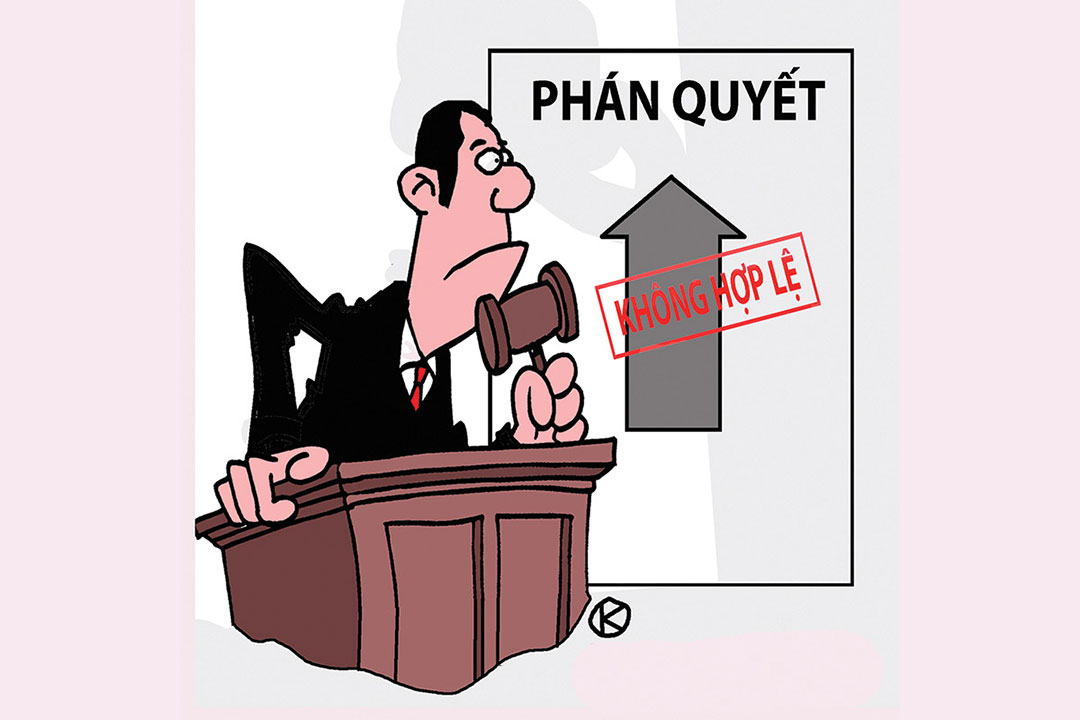
However, dispute resolution through commercial arbitration does not always completely resolve the dispute between the parties. The disadvantage of this method is the involvement of the court at the most important moments. For example, for domestic arbitral awards, the court has the power to annul the award if requested by one of the parties (usually the defendant), while for foreign arbitral awards, the party to be enforced must request the court in Vietnam to recognize and enforce such awards in Vietnam. In this situation, the court has the power not to recognize and enforce foreign arbitral awards in Vietnam if they fall into the cases prescribed by law.In this article, we will mention some typical reasons that courts in Vietnam have recently used to refuse to recognize and enforce foreign arbitral awards in Vietnam or annul domestic arbitral awards.
1. The party to enforce of the foreign arbitral award owns real estate in Vietnam
According to Article 470.1.a of the Civil Procedure Code 2015, civil cases related to the right to property that is real estate in the territory of Vietnam are under the exclusive jurisdiction of Vietnamese courts. According to this provision, if the dispute between parties is related to the right to real estate in Vietnam, it can only be resolved in Vietnamese courts and not in foreign arbitration centres. Firstly, it is necessary to determine what is a case related to the right to real estate. Currently, there is no regulation that clearly explains what is a case related to the right to real estate in Vietnam. However, based solely on the wording of this provision, it can be understood that the case must have as its subject matter the ownership/the right of use of real estate or other rights directly related to real estate.
However, recently, in Judgment No. 09/2023/HS-PT[1]dated January 17, 2023 of the High People's Court in Hanoi on the recognition and enforcement of foreign arbitral awards in Vietnam, the Court concluded that “if the award of foreign arbitrators is recognised and enforced in Vietnam at the request of Global Payment Service and UTC Investment Co., Ltd, it will have to enforce the movable and immovable assets of VMG Media Joint Stock Company in Vietnam in the process of enforcing the arbitral award and according to Article 470 of the Civil Procedure Code, which provided for the “Exclusive Jurisdiction of Vietnamese Courts”, only Vietnamese courts have jurisdiction to decide on matters relating to the right to property that is real estate in the territory of Vietnam”. Therefore, it can be seen that the court concluded that this dispute is not resolved in the form of arbitration under Vietnamese law, in accordance with Article 459.2.a of the Civil Procedure Code 2015.
In our opinion, this argument of the court is not fully convincing. Based on the above analysis, the subject matter of the dispute under Article 470.1.a of the Civil Procedure Code 2015 must be the ownership/right to use real estate or other rights directly related to real estate, while with regard to the dispute between Global Payment Service ("GPS"), UTC Investment Co., Ltd ("UTC") and VMG Media Joint Stock Company ("VMG"), the parties have a dispute about the rights and obligations arising under the Share Purchase Agreement between the parties in VNPT Electronic Payment Joint Stock Company, in particular, the representations and warranties of VMG. The parties do not have any dispute about the right to property, which is the real estate of VMG in Vietnam. The Court's argument lacks a solid foundation because if the judgment is recognized and enforced in Vietnam, then VMG must use the property that is real estate to enforce the judgment, the parties cannot be considered to have a dispute over these properties. At the time of enforcement, the dispute of the parties has been settled by an arbitration award, during the enforcement phase, the disposal of the property of the party to be enforced for the enforcement of the judgment cannot be considered as disputed property in relation to the settled case.
This argument also sets a dangerous precedent for the recognition and enforcement of foreign arbitral awards in Vietnam, because once the party to be enforced is required to own any real estate in Vietnam, it is enough to make the foreign arbitral award almost impossible to be recognized and enforced in Vietnam. In this situation, dispute resolution through commercial arbitration is almost no longer valid for the parties.
2. Domestic arbitration award contradicts basic principles of Vietnamese law
Recently, Decision No. 12/2023/QD-PQTT[2] dated July 04, 2023 of the People's Court of Hanoi City on the request to annul the arbitral award declared acceptance of the request of AO Water Corporation (“AO Company”) and Mr. Do Tat T (“Mr. T”) for the annulment of the arbitration award in Dispute No. 79/21 dated December 16, 2022 of the Vietnam International Arbitration Centre (“VIAC”). Accordingly, this dispute arose between AO Company, Mr. T and WP PTE (“WP”) and was resolved by VIAC. However, the Court concluded that the Arbitral Tribunal has issued the award contrary to the fundamental principles of Vietnamese law, namely the principle that arbitrators must be independent, objective, impartial and comply with the law (Article 4.2 of the Law on Commercial Arbitration 2010).

The Court's argument is based on two grounds, namely that (i) the Arbitral Tribunal used instruments and documents submitted by WP without consular legalization and (ii) the Arbitral Tribunal did not approve the request for verification of AO's and Mr. T.'s signatures on the instruments and documents submitted by WP.
In our view, neither of the Tribunal's arguments is convincing.
Firstly, the Law on Commercial Arbitration 2010 does not contain any provisions requiring consular legalization of foreign documents for use in Vietnam. Simultaneously, the scope of regulation of the Civil Procedure Code 2015 and the Law on Commercial Arbitration 2010 are completely independent from each other. While the Civil Procedure Code 2015 regulates procedural activities in court, the Law on Commercial Arbitration 2010 regulates dispute resolution in commercial arbitration. Even though the provisions on the annulment of arbitral awards are stipulated in the Law on Commercial Arbitration instead of the Civil Procedure Code, it can be understood that the annulment of arbitral awards is only one stage of dispute resolution activities by arbitration. In order to annul an arbitral award, the court must rely on the provisions of law directly regulating dispute resolution activities by arbitration, specifically the Law on Commercial Arbitration. In the case that the court considers the request based on Article 478 of the Civil Procedure Code 2015 to request consular legalization of documents in the same way as in court, is it convinced? In addition, if it is based on Article 4.2 and Article 9.4 of Decree 111/2011/ND-CP as cited by the Court, the request for consular legalization is also not necessary because the Arbitral Tribunal itself, which is the body receiving documents from Vietnam, has not requested consular legalization and this is fully in accordance with the relevant provisions of Vietnam, here the Law on Commercial Arbitration as mentioned.
Secondly, according to the Court, the Arbitral Tribunal's act of approving the request to verify the signatures of AO Company and Mr. T regarding the material provided by WP is not objective. However, this argument did not prove to be relevant in the context of this case. Because, according to the content of the mentioned Decision No. 12/2023/QD-PQTT, WP has been confirmed by the owner of the signature on the relevant document that the signature is his own, and this person also carries out procedures such as signing the document directly before the notary and swearing that it is his signature. Simultaneously, WP also has the opinion of professional lawyers in Singapore and has been confirmed by them that the signature on the document is real and legally valid. Based on these grounds, there is no reasonable basis for the Tribunal to conclude that the signature on the relevant document is forged, thereby arguing that the Arbitral Tribunal acted without objectivity.
In summary, in our opinion, the reasons and explanations given by the court prove that the arbitral tribunal is not independent, objective, impartial, and in accordance with the law, and therefore the award is unfounded and not really reasonable, contrary to the fundamental principles of Vietnamese law.
However, apart from this case, from another angle, it can be seen that Article 4.2 of the Law on Commercial Arbitration 2010 is very broad and unclear. In addition to the factors that are difficult to define as “independent, objective, impartial”, "in accordance with the provisions of law" is also a very broad category. According to this provision, if the arbitrator does not comply with the provisions contained in legal documents, whether it is a law, decree, circular or even a decision of the People's Committee at the commune level, it may also be considered to be in violation of the fundamental principles of Vietnamese law. This is indeed a risk for arbitral awards.
It can be seen that the two cases cited above are just a few of many cases in which arbitral awards may be annulled or not recognized and enforced in Vietnam for reasons that have not really convinced relevant businesses and legal practitioners. This will be a huge obstacle to the development of commercial arbitration in Vietnam, as well as to the parties' choice of using commercial arbitration to resolve their disputes, while also creating bad precedents for the parties in using this dispute resolution method.
Read the article in Vietnamese at: https://thesaigontimes.vn/rui-ro-cho-cac-phan-quyet-cua-trong-tai-thuong-mai/
[1] https://congbobanan.toaan.gov.vn/2ta1176341t1cvn/chi-tiet-ban-an, retrieved 8/10/2023.
[2] https://congbobanan.toaan.gov.vn/2ta1225914t1cvn/chi-tiet-ban-an, retrieved 8/10/2023.


