


The change of the chemical legal system in Vietnam from the beginning of 2026 marks a new era in safety, security governance and chemical industrial development. With the National Assembly's passage of the Chemical Law No. 69/2025/QH15 and the simultaneous introduction of guiding Decrees such as Decree 24/2026/ND-CP, Decree 25/2026/ND-CP, and Decree 26/2026/ND-CP, chemical businesses are facing stricter and more comprehensive compliance requirements than ever before. In this article, we will analyze and clarify common legal risks under the new regulations and long-term risk management strategies to help businesses minimize legal risks and optimize operational efficiency in the context of the digitalization of the state's chemical management.
The Law on Chemicals 2025 was born to overcome the inadequacies of the old law, and at the same time introduce new concepts such as "green chemistry", "chemical security" and "chemical management in products"
New governance model for chemical enterprises
The new stage of the chemical legal system is no longer discrete regulations but has been integrated into a closed management lifecycle, from import, production and trading to storage, transportation and final use. This change reflects modern management thinking: shifting from paper document control to electronic data cross-checking through a modern management system and the National Single Window Portal.
The Law on Chemicals 2025 was born to overcome the inadequacies of the old law, and at the same time introduce new concepts such as "green chemistry", "chemical security" and "chemical management in products". For businesses, this means that compliance obligations do not stop at pure chemicals, but also extend to mixtures and products containing hazardous chemicals. The regulatory mechanism is clearly stratified according to the level of risk, including conditional chemicals, chemicals requiring special control, and prohibited chemicals, each requiring a separate type of license and reporting regime.
Common mistakes of chemical enterprises in legal compliance
Errors in the scope of licenses and chemical lists
One of the most common errors is a mismatch between the actual list of chemicals being traded and the list listed on the Certificate of Eligibility for Business. In fact, many businesses default that when they have a general certificate, they can trade in all types of conditional chemicals. However, according to Decree 26/2026/ND-CP, the certificate is issued based on the specific list and actual conditions of the warehouse corresponding to that type of chemical.
Chemical Safety Sheet (SDS) and Label Management
The SDS is a core technical document, but it is often overlooked or sketchy. Circular 01/2026/TT-BCT requires SDS to be standardized according to 16 mandatory items and must be in Vietnamese.
Common errors about SDS can be mentioned such as: (1) SDS only has an English version or the translation does not meet the specialized terminology; (2) The SDS lacks information on ecotoxicity or shipping information; (3) The Vietnamese sub-label does not match the GHS warning information on the SDS. These violations are often severely sanctioned, in particular, they may be required to recall and re-paste the entire batch of goods that have been put on the market.
Reporting and updating data to the Chemical Declaration System (CIS)
With the implementation of comprehensive digital transformation, the "submitted data" on the system becomes the most important inspection evidence. Decree 26/2026/ND-CP requires that reports on chemical activities of the previous year must be submitted before February 15 every year. Errors often occur when the reporting data does not match the accounting or inventory books, or the business forgets to update when there is a change in the person in charge of safety.
Technical infrastructure and safety standards of chemical warehouses
The chemical warehouse is the place where the inspection team focuses on field inspections the most. Any negligence in the arrangement or lack of rescue equipment is recorded as a serious safety breach.
Decree 26/2026/ND-CP tightens regulations on the preservation of chemicals that are likely to react with each other. Businesses often make mistakes when arranging goods according to the usable area instead of physicochemical properties.
Compatibility: Strong oxidizing agents (such as $KMnO_4$) should not be placed near flammable substances. Safety distances and partition walls must ensure that if a package leaks, the chemicals will not come into contact and cause a chain reaction.
Rules and signboards: Every factory must have a table of chemical safety rules and hazard signs suitable to the level of hazard. Signs must clearly show the warning diagram according to GHS standards (e.g., flame for flammables, skull for acute poisons).
Emergency Response Equipment and Personal Protective Equipment (PPE)
Decree 25/2026/ND-CP requires rescue equipment to be "correct and sufficient" according to the approved Chemical Incident Prevention and Response Plan.
Specialized PPE: Chemical-resistant gloves and respirators must be suitable for the type of chemical in stock. For example, if the warehouse contains $HF$ acid (hydrofluoric acid), the enterprise must have calcium gluconate available in the first aid medicine cabinet; if there is only ordinary bandage, it is considered to lack appropriate rescue equipment.
Lightning collection and ventilation systems: Warehouses must have standard lightning protection and ventilation systems to prevent the accumulation of explosive chemical vapors or poisoning for warehouse keepers.
Human Resource Management and Safety Training Strategies
Human resources are the key to the success of compliance. The Chemical Law 2025 not only requires professional qualifications but also emphasizes substantive training.
The professional qualifications of the person responsible for chemical safety are a "sensitive" point when the inspection team reviews personnel records. Decree 25/2026/ND-CP has standardized the requirements for the qualifications of people in charge of safety at production facilities to have a bachelor's degree or equivalent or higher. For the person in charge of safety at the business establishment, it is mandatory to have an intermediate degree or higher.
Enterprises often make mistakes when the person in charge is not actually the person named on the legal documents, or the person named has a degree that is not on the list of chemical training as regulated.
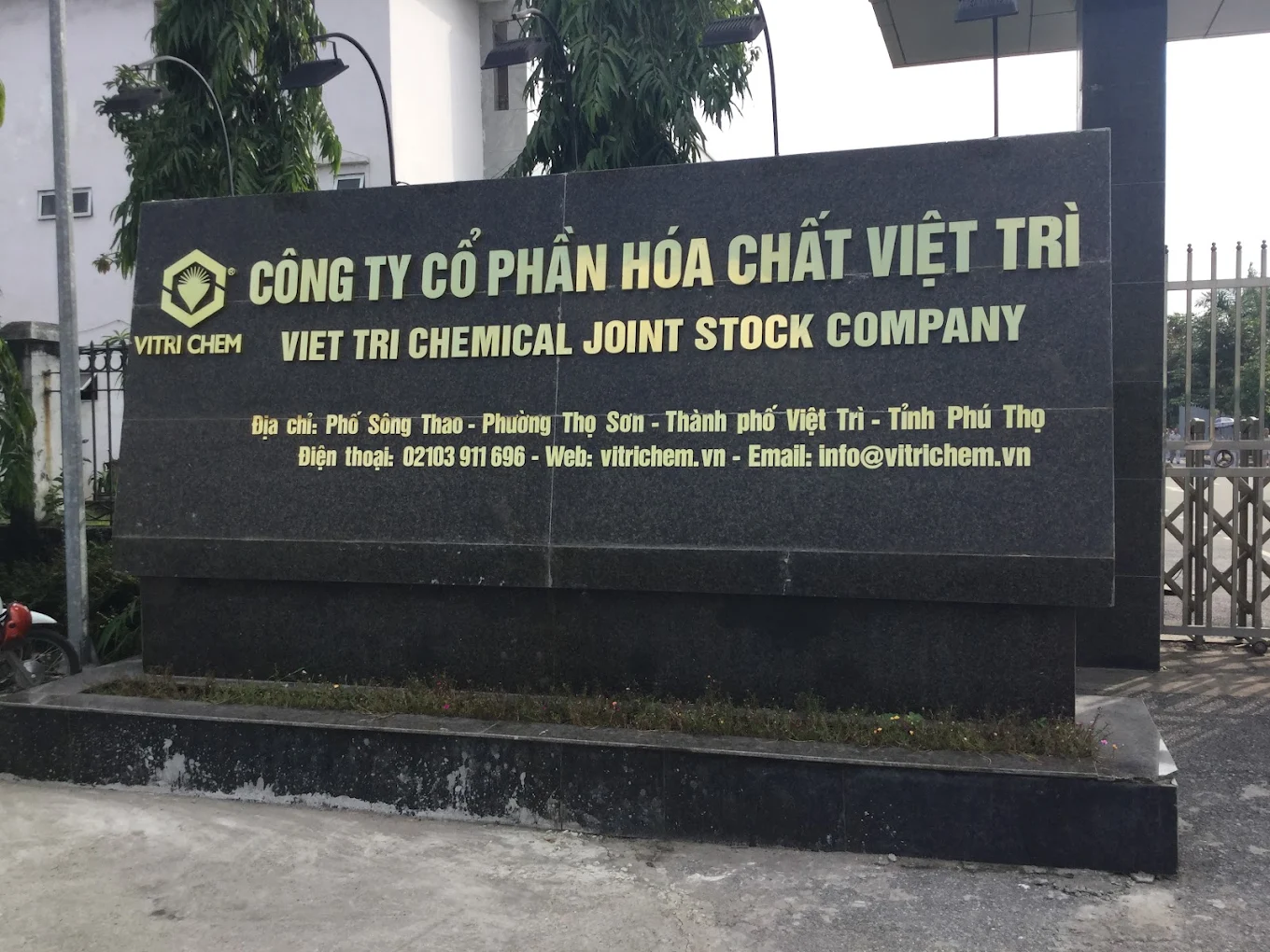
Source: Chemicals Joint Stock Company Vietnam Tri
Chemical safety training record system
Decree 25/2026/ND-CP expands the subjects subject to chemical safety training, including business leaders, managers and direct workers.
Training process: Enterprises can organize their own training if they have qualified trainers (experienced and qualified according to the new regulations) or hire specialized consultants.
Components of the dossier: A complete set of training dossiers must include: (i) Contents of the training program; (ii) List of learners; (iii) Exam questions and achieved results; (iv) The decision on recognition of training results is signed by the legal representative. Lack of any of these 4 components leads to the unrecognized training results.
Chemical Supply Chain Management
For chemical businesses, the risk is not only in the warehouse but also on the transportation route and at the border gate. Mastering the electronic declaration process and transportation conditions is key.
i. Declaration of imported chemicals through the National Single Window Portal
The current Decree requires chemicals under Chapters 28 and 29 of Circular 31/2022/TT-BTC to be declared before customs clearance.
Data integration: The CIS system is interconnected between the Ministry of Industry and Trade, the Ministry of Natural Resources and Environment and Customs. Any deviations in volume, concentration, or CAS codes are detected immediately.
Operation errors: Enterprises often forget to attach the Vietnamese SDS or attach the old MSDS of the foreign manufacturer. This causes the declaration response to be suspended, causing large warehousing costs at the port.
ii. Transportation of dangerous goods by road according to Decree 161/2024
Decree 161/2024/ND-CP imposes heavy responsibilities on cargo owners (transport hirers).
Goods owners must affix dangerous logos and danger signals on their packaging; provide transportation records (04 sets) and safety instructions for drivers. At the same time, training must be conducted for drivers and escorts must have a valid certificate of completion of the dangerous goods transportation training program. Hiring transport units without licenses to transport dangerous goods is a serious violation for which chemical businesses are often jointly responsible when there is an incident on the road.
In addition, enterprises must note that ensuring chemical safety is inseparable from environmental safety and fire prevention security. Enterprises with large-scale chemical warehouses are often subject to special supervision by environmental agencies. At the same time, for chemical warehouses, the appraisal and approval of fire protection design and acceptance are prerequisites for being granted the Certificate of eligibility for chemical trading.
Develop a sustainable chemical compliance program
In order to comply well and build a sustainable and effective business process, chemical businesses should develop a reasonable and effective compliance program with the following notes:
Digitized SDS library: Every chemical has a Vietnamese SDS stored on a common server so that all departments (sales, warehouse, procurement) can access it.
Change management: Any change in warehouse size or inventory triggers a legal and safety risk assessment process.
Continuous training: Not only waiting for the training period every 2 years, weekly exchange sessions at the warehouse help employees imbibe the rules of arranging and responding to incidents.
Periodic data reconciliation: Once a quarter, the accounting and warehouse departments must compare the actual data with the data declared on the CIS system for timely adjustment.
Partnerships: Maintain communication channels with regulatory agencies such as the Department of Chemicals, the Ministry of Industry and Trade and the Department of Industry and Trade where the business operates for guidance on the latest provisions of the current Chemical Law.
Compliance with chemical laws in the new period from 2026 is no longer an obligation but has become a standard for businesses to affirm their prestige and competitiveness in the international market. With the strong shift to green chemistry and digitalization of management, businesses that are proactive in preparing and building a strict internal compliance system will minimize legal risks, protect the safety of workers and ensure sustainable development.


