


In the previous issue, through the article titled “Expanding markets from FTAs - Seeking opportunities from challenges”, the author analyzed several challenges faced by Vietnamese enterprises in leveraging the benefits from Free Trade Agreements (FTAs), one of which is the rules of origin of goods. This is also one of the barriers for Vietnamese enterprises to enjoy tax incentives under FTAs. Above all, to fully capitalize on Vietnam’s signed FTAs, it is time for Vietnamese enterprises to be more serious in researching and applying the regulations on origin of goods in FTAs to support their export activities.
Rules of origin - master to confidently apply
To maximize potential, enterprises need to update and understand the regulations on rules of origin stipulated in FTAs, especially the Comprehensive and Progressive Agreement for Trans-Pacific Partnership (CPTPP), the EU - Vietnam Free Trade Agreement (EVFTA). FTAs often have quite complex rules of origin, including pure origin, cumulative origin, or origin based on value-added rules. Each type of goods will have its own rules of origin, and enterprises need to determine exactly which type of rules applies to their products.
For pure origin, enterprises must prove that the entire production or farming process is carried out in the member country of the agreement. This often applies to agricultural, aquatic or mineral products. Enterprises producing these goods need to ensure that all stages of production take place within the territory of Vietnam or member countries of the agreement.
Meanwhile, cumulative origin is an important provision in modern FTAs such as CPTPP and EVFTA, allowing enterprises to use raw materials from other member countries of the agreement while still being considered to meet the rules of origin. This creates opportunities for Vietnamese enterprises to utilize raw materials from other countries without losing the entitlement to enjoy tariffs preferences. However, determining and declaring cumulative origin requires enterprises to have a good and accurate raw material management system.
Finally, for processed or assembled products, the rules of origin based on the value-added rule may require a certain percentage of the added value to be created domestically. For example, in many cases, at least 40% of the value of the product must be created in Vietnam or other member countries of the agreement. To meet this requirement, enterprises need to manage production costs carefully and transparently.
Preparing a complete and accurate certificate of origin (C/O) dossier
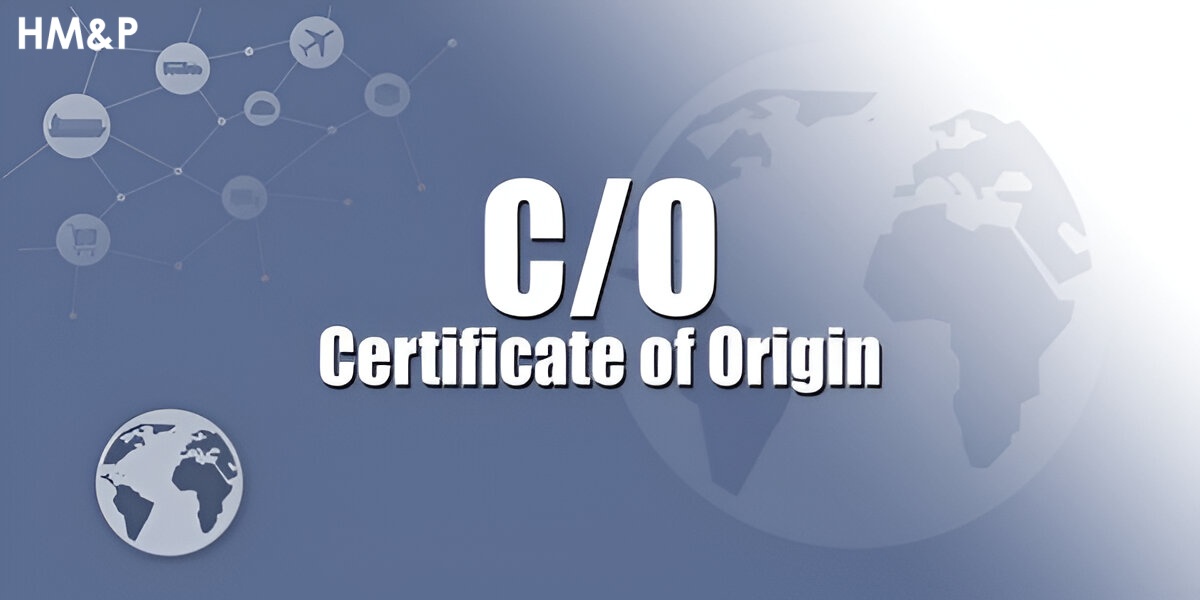
One of the common legal difficulties that Vietnamese enterprises encounter is preparing and providing a complete, accurate and valid C/O. C/O is an important legal document to prove that goods meet the rules of origin stipulated in FTAs. Each trade agreement has its own C/O form and issuance process, and enterprises must ensure that the information on the certificate of origin is free of errors or omissions. Some points that enterprises need to note regarding the certificate of origin dossier are as follows:
First, enterprises must register for a certificate of origin at authorized authorities, such as the Vietnam Chamber of Commerce and Industry (VCCI), the Import-Export Management Department in provinces, cities or units under the Ministry of Industry and Trade. Registration requires enterprises to provide complete information about the production process, source of raw materials and details related to the rules of origin. Errors in this stage can lead to the refusal of C/O issuance, or even the denial to enjoy tariff preferences in the export market.
Second, enterprises need to build a strict system of storing and managing origin records, ensuring that all documents related to the origin of goods are kept for a sufficient period (usually 5 years) to meet the inspection requirements of the competent authorities when necessary. During the post-clearance inspection process, if violations of the certificate of origin are detected, enterprises may be fined, and even face tax recovery or lose the opportunity to enjoy tariff preferences.
Third, some FTAs such as EVFTA allow enterprises to use the self-certification mechanism of origin, meaning that enterprises can self-declare origin without having to apply for a C/O from the competent authorities. However, to use this mechanism, enterprises must register with the EU's REX (Registered Exporter System) and take full responsibility for the accuracy of their origin declarations. Therefore, it is necessary to train staff and build an internal management system to monitor and ensure the accuracy of origin information.
Building a system of origin management and supply chain tracking
To ensure compliance with the rules of origin and enjoy incentives from FTAs, enterprises need to build an effective system of origin management and supply chain tracking. This is an important solution to help enterprises not only meet legal requirements but also optimize production and business processes.
To achieve this, enterprises first need to establish a comprehensive control system for the production process and supply chain. This system includes tracking the origin of raw materials, managing production costs and monitoring the rate of domestic value added. This not only helps enterprises meet the requirements of the rules of origin but also optimizes production costs, improving competitiveness in the international market.
Next, for products that use raw materials from many different sources, especially when using raw materials from other member countries in the agreement, enterprises need a detailed supply chain tracking system. This includes checking, confirming the origin of raw materials, storing purchase invoices and related documents. FTAs such as CPTPP and EVFTA allow for the accumulation of origin between member countries, but this requires enterprises to clearly demonstrate the origin of raw materials and comply with regulations.
Lastly, to minimize errors and increase transparency, enterprises can apply information technology to the management of origin and supply chain. Using supply chain information management software or ERP (Enterprise Resource Planning) systems will help enterprises track every step of the production and export process, ensuring that all information is updated and stored accurately. This also helps enterprises respond quickly to inspection requests from authorities.
Box 1:
|
One of the main reasons that hinders many Vietnamese enterprises from benefiting from FTAs is the regulations on rules of origin of goods. Rules of origin of goods in FTAs are quite diverse and complex, with each type of goods having its own rules of origin, enterprises need to accurately determine the type of rules applicable to their products. |
Box 2:
|
To effectively control the issue of origin of goods, enterprises need to solve the following problems:
|
Read more at: Quy tắc xuất xứ – bài toán cần giải cho doanh nghiệp Việt Nam
Lawyer Nguyen Van Phuc - Ho Tran Phu Loc
HM&P Law Firm


