


Through this article, HM&P Law Firm (“HM&P”) addresses key issues of the General Meeting of Shareholders (GMS), including the form of organization, shareholder verification, information disclosure, data protection, proxy, meeting minutes, extension of meeting time, and the authority of the Board of Directors (BOD). Additionally, it provides legal compliance guidance to help businesses ensure transparency and effective corporate governance.
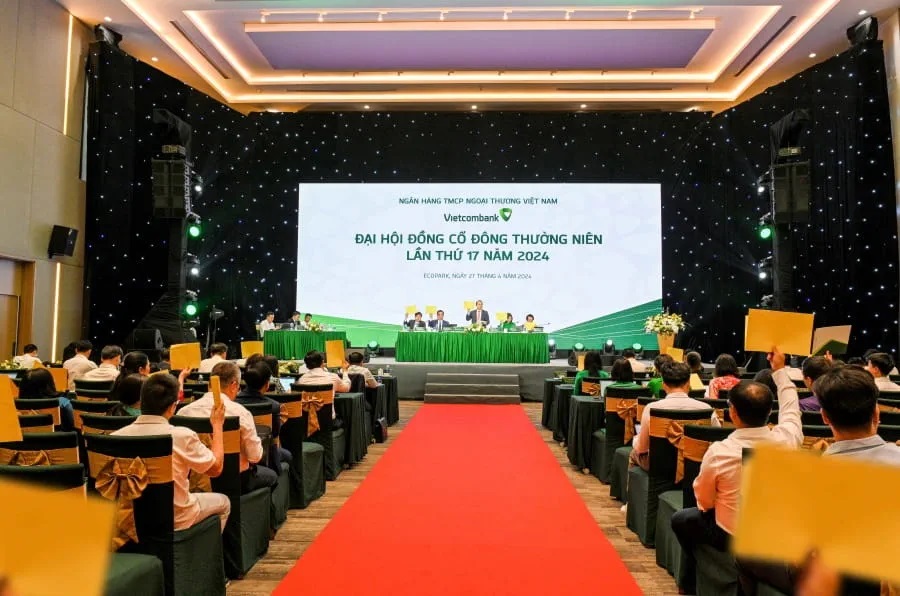
Source: VNBA
1. In what forms can a company hold a GMS?
HM&P:
Pursuant to Clause 3 Article 144 of the Law on Enterprises 2020 and in practice, the GMS can be held by the company offline, online or a hybrid form of online and offline.
However, the legal framework for holding an online GMS still seems to be unclear. Except for the definition of shareholders' right to participate and vote through online conferences in Clause 3, Article 144 of the Law on Enterprises 2020, both the Enterprise 2020 Law and the Implementing guidelines do not provide specific regulations for this activity. Therefore, the actual holding of GMS still depends on each company. In principle, the regulations on holding GMS under the Law on Enterprises 2020 are still applied when the company holds an online GMS. However, this form still has certain characteristics. For example, the shareholder registration, authentication form, voting method, etc. will depend on the regulations of each company. Since there is no specific legal framework for this activity, companies can promulgate their own rules for holding the GMS based on existing legal regulations and the company's situation.
2. If the company does not have a website, how is the announcement of the GMS information published?
HM&P:
According to the current regulations, the invitation to the meeting is sent by a method that ensures that it reaches the mailing address of the shareholders and is published on the company's website. If necessary, the company may publish it in the central daily newspaper or local daily newspapers as specified in the company's articles of association.
In addition, pursuant to Clause 3 Article 10 Circular 96/2020/TT-BTC, for public companies, the company is required to announce on the website of the State Securities Commission of Vietnam, Stock Exchange (in case of listed organizations, registered trading organizations).
Therefore, if the company does not have a website, the company must still use all other methods to ensure that the information reaches the shareholders. In particular, in this case, the company may consider posting the notice of the meeting at its head office and publishing it in the central or local daily newspapers.
3. How to verify shareholder identity and ensure security in online meetings?
HM&P:
To ensure the validity and security of online GMS, companies must implement a robust shareholder identity authentication system. First, the use of a secured login system is mandatory, where each shareholder is provided with a personal account to access the online meeting platform. In addition, Two-Factor Authentication (2FA) is an effective method to minimize unauthorized access risks. The system will send a one-time password (OTP) to the shareholder’s mobile device or email, ensuring that only authorized individuals can participate and vote.
Moreover, companies can enhance identity verification by implementing digital signatures. Digital signatures issued by reputable certification authorities help guarantee the authenticity of voting information, prevent forgery, and ensure legal validity. To further strengthen security, companies should encrypt all transmitted data and adopt security protocols such as SSL/TLS to protect information from cyber threats.
Finally, choosing a trusted online meeting platform is crucial for data security. Businesses should utilize systems with strong cybersecurity measures to prevent cyberattacks, protect shareholder information from leaks, and prevent unauthorized access. These measures not only ensure the legitimacy of decisions made during the meeting but also reinforce shareholder trust in the company's transparency and governance.
4. What measures do businesses need to protect information and ensure shareholder privacy in online GMS?
HM&P:
Protecting personal information and ensuring shareholder privacy is a crucial requirement when organizing online GMS. First, the company must establish and adhere to an information security policy that clearly defines how shareholder personal data is collected, stored, and processed. This policy must comply with legal regulations on personal data protection and be clearly communicated to all relevant parties.
In addition, the company must train employees on information security to help them understand security risks and preventive measures, thereby minimizing the risk of data leaks due to human error. Another important measure is intrusion monitoring and detection, applying network activity tracking tools to promptly identify and address unauthorized access or cyberattacks targeting the online meeting system.
Furthermore, the company must ensure legal access rights to shareholder data, allowing only authorized personnel to access this information and logging in to all access activities to prevent misuse. At the same time, notifying shareholders about their privacy rights is essential, helping them understand how their data is used and providing mechanisms for requesting corrections or deletion of personal information if necessary.
The comprehensive implementation of these measures not only helps businesses comply with legal regulations but also enhances the company's reputation, builds shareholder trust, and ensures transparency in corporate governance.
5. How is the authorization to attend the GMS understood by law?
HM&P:
In practice, the authorization to attend the GMS is frequently used. Clause 1 Article 144 of The Law on Enterprises 2020 stipulates that shareholder or their authorized representatives, which are organizations, may authorize in writing one or more individuals or organizations to attend the GMS. A Power of Attorney (“POA”) is prepared in accordance with the provisions of civil law and clearly indicates the names of the people or organizations to be authorized and the number of shares to be authorized. Therefore, it's important to note that current law does not limit the number of people or organizations that may be authorized by an individual shareholder or a shareholder's proxy, as long as the proxy specifies the number of shares authorized for each person or organization. In practice, many companies limit the number of individuals or organizations that may be authorized for each individual shareholder or proxy holder that is an organization. While this limitation may facilitate the conduct of the meeting, it may not secure the rights of the shareholders as it limits the right to participate in the GMS.
Regarding the documents required for attending the GMS as an authorized representative. According to Article 144 of The Law on Enterprises 2020, individuals and organizations authorized to attend the GMS must present a written authorization document when registering for the meeting before entering the meeting room. Thus, the law does not specify any additional documents or materials that participants must prepare besides the POA. However, based on practical experience, we note that in addition to a valid POA, the following documents are also necessary:
In the case where an individual shareholder authorizes another person to attend the GMS, the authorized person must present a valid personal identification document (valid ID card/Passport) to verify their identity as the authorized representative. Additionally, depending on the company’s requirements, participants may need to prepare a shareholding certificate (if any) and the meeting invitation letter. For shareholders who are organizations, the authorized representative must also provide a copy of the Enterprise Registration Certificate and the decision to appoint the representative to attend the meeting.
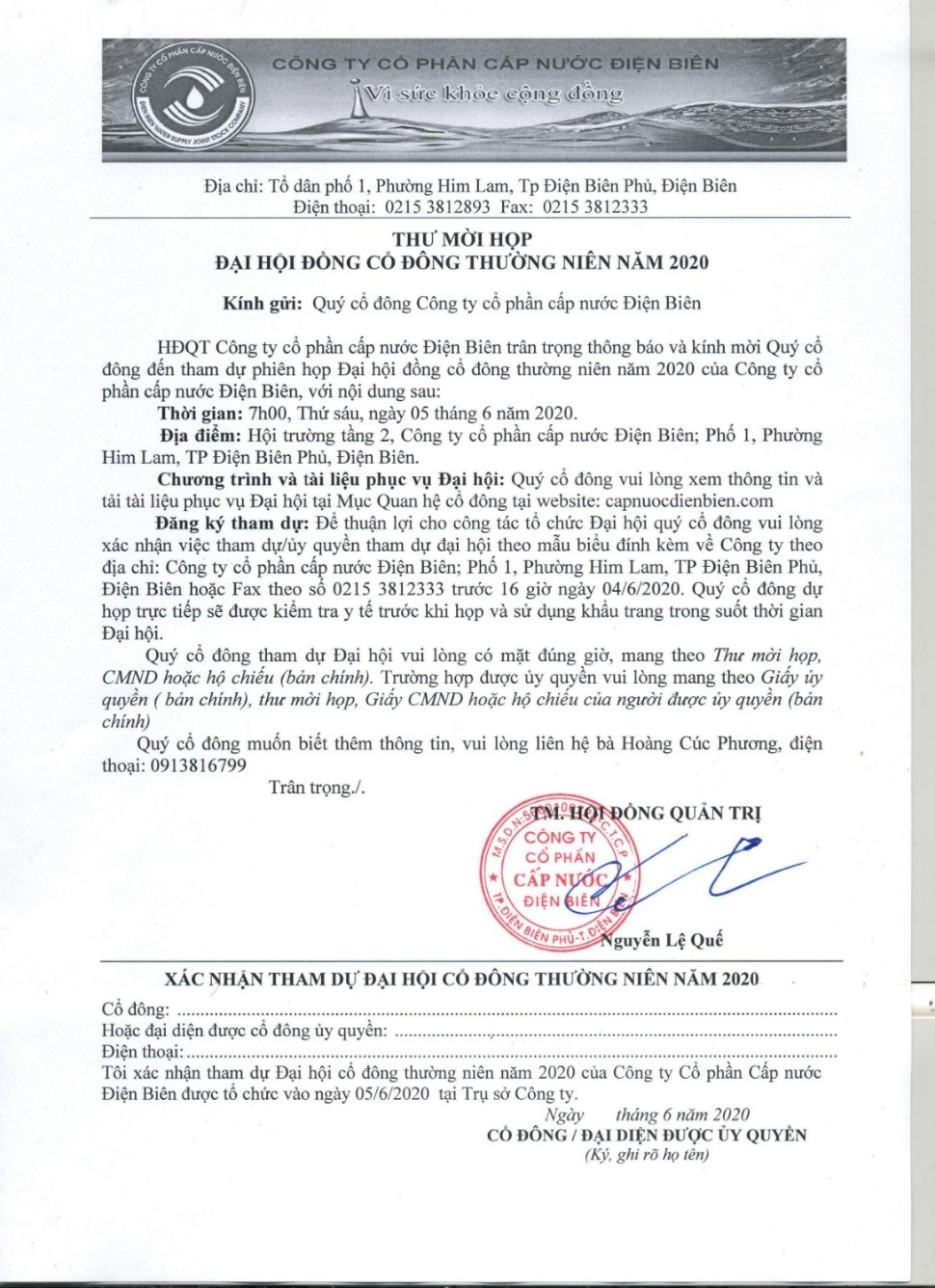
An image of the 2020 GMS invitation from Dien Bien Water Supply Joint Stock Company, which requires shareholders to bring the meeting invitation, ID card, or passport of the authorized representative. (Source: http://capnuocdienbien.com/quan-he-co-dong/thu-moi-hop-dai-hoi-dong-co-dong-thuong-nien-nam-2020-83.html)
As mentioned in Note 6 and Note 7, the company should prepare a POA template for shareholders to use, and this document can record the shareholder's authorization to the members of the BOD, the SB to attend the meeting, thus ensuring the participation rate of the meeting in the GMS. In practice, in addition to the mandatory contents required by the Law on Enterprises, some listed public companies also stipulate that authorization must be made in writing using the company's prescribed form and must include the scope of authorization, the signatures of the authorizing shareholder, and the authorized representative attending the meeting.
It should be noted that, in some cases, foreign individual or organizations shareholders may authorize an individual in Vietnam to attend the GMS. However, in practice, this authorization process does not always proceed smoothly, particularly when disputes arise, and court intervention is required. In May 2024, in Judgment No. 18/2024/KDTM-PT dated May 24, 2024, the High People’s Court in Hanoi ruled that, upon request, a foreign shareholder’s authorization letter for a representative to attend the GMS in Vietnam must be consular legalized. This requirement ensures the authenticity of the document and protects the rights of the parties involved.
According to Clause 4 Article 9 of Decree 111/2011/ND-CP, documents may be exempt from consular legalization if the receiving authority in Vietnam does not require it (in this case, the receiving authority is understood to be the company). Therefore, if a company stipulates that the authorization letter must be consular legalized, the authorized representative must provide a consular legalized authorization letter when attending the GMS to avoid disputes regarding their authority.
From a practical perspective, the requirement for consular legalization of GMS authorization letters depends on each company’s regulations and charter. Therefore, when organizing a GMS, the company should clearly define its requirements for letters of authorization to prevent disputes and ensure the meeting’s legality.
6. Does a company require to prepare meeting minutes and resolutions of the General Meeting of Shareholders in a foreign language?
HM&P:
As mentioned in Step 10 above, meeting minutes must be prepared in Vietnamese and may also be prepared in a foreign language. Meeting minutes in Vietnamese and in a foreign language are legally equivalent. If there is a discrepancy between the content of the Vietnamese and foreign language meeting minutes, the content of the Vietnamese meeting minutes shall prevail. This is stipulated in Article 150 of the Law on Enterprises 2020. Therefore, it can be seen that the foreign language content in the meeting minutes is not mandatory and the company can supplement it as it sees fit.
Meanwhile, the Law on Enterprises does not specify a mandatory language for GMS resolutions. In our view, Vietnamese remains the preferred language because resolutions of the GMS are issued based on the minutes of the meeting of the GMS (Vietnamese is mandatory). Therefore, resolutions drafted in Vietnamese provide consistency with the meeting minutes. In addition, foreign languages may still be used at the company's discretion.
7. How long can a company extend the time for holding the GMS?
HM&P:
According to Clause 2 Article 139 of the Law on Enterprises 2020, the annual GMS must be held within 04 months from the end of the fiscal year. Unless the Articles of Association stipulate otherwise, the BOD decides to extend the annual GMS, if necessary, but not more than 06 months from the end of the financial year.
Under this provision, if a company's fiscal year ends on December 31, the final deadline for holding the annual GMS is June 30 of the following year. However, in practice, many companies hold meetings after this date, either because the first or second meeting could not be held, subsequent meetings are held after June 30. Based on the provisions of the Law on Enterprises, these companies are currently in violation of the laws. Previously, when failing to hold the GMS within the prescribed time, the company could be fined from 5,000,000 VND to 10,000,000 VND (as regulated in Point a Clause 1 Article 34 of Decree 50/2016/ND-CP). Now, the penalty is no longer specified in Decree 122/2021/ND-CP. However, the delay in holding the annual GMS may result in the company not being able to approve important decisions, such as the annual financial reports submitted to the competent authority. As a result, the company may be fined for related conduct.
From the shareholders' perspective, the company's delay in holding the annual GMS clearly affects their rights if they are not able to access information, make presentations and express opinions on the company's activities in the past year and plans for the next year. In this case, the company is exposed to the risk of shareholders filing a lawsuit for violation of their rights.
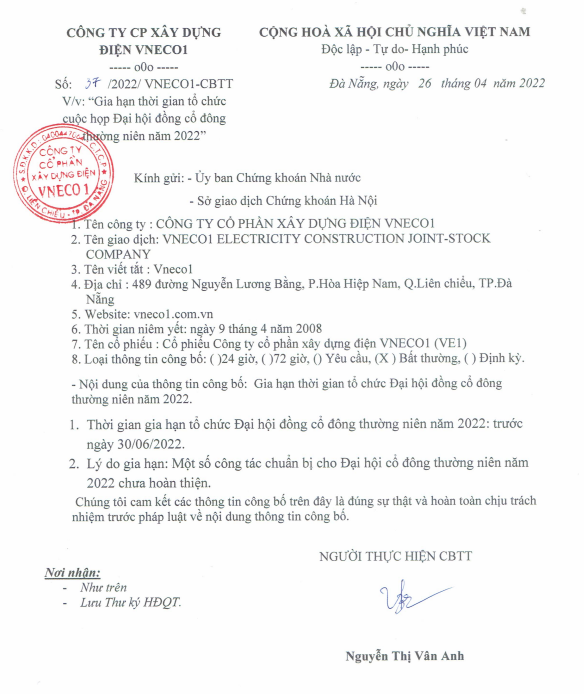
Image announcing information about the extension of holding the General Meeting of Shareholders until the last day according to the legal deadline (Source: https://owa.hnx.vn/ftp///cims/2022/4_W5/000000011491283_cbtt_gia_han_thoi_gian_to_chuc_dai_hoi.hnx.pdf)
8. How do company determine the necessary reasons for to extend the period of holding the GMS?
HM&P:
Although the Law on Enterprises requires a company to convene the Annual GMS within four (04) months from the end of the fiscal year, an exception exists whereby the BOD has the authority to extend the deadline for holding the Annual GMS when necessary. However, such an extension must not exceed six (06) months from the end of the fiscal year, unless otherwise stipulated in the company’s Charter (Clause 2, Article 139 of the 2020 Law on Enterprises).
Pursuant to this regulation, it can be understood that if the company’s Charter does not provide otherwise (in a manner that restricts this extension), the BOD has the discretion to extend the Annual GMS deadline by a maximum of two (02) additional months. Nonetheless, the Law on Enterprises does not explicitly define what circumstances would qualify as "necessary" for the BOD to decide on such an extension, leaving this determination entirely at the discretion of the BOD.
Some companies often cite rather broad justifications for such extensions, such as allowing the BOD additional time to adequately prepare matters before presenting them to the Annual GMS for consideration (https://cafef.vn/du-lieu/alv-293672/alv-nghi-quyet-hdqt-vv-gia-han-thoi-gian-hop-dai-hoi-dong-co-dong-thuong-nien-nam-2023.chn)
We believe that necessary reasons may stem from objective circumstances, such as force majeure events that prevent the Annual GMS from being held within the four-month period from the end of the fiscal year, or circumstances where holding the Annual GMS within this period would not ensure shareholders' rights are fully exercised. Additionally, reasons may arise from the company's internal matters, such as requiring additional time to finalize the annual financial statements, operational reports, and other relevant documents before presenting them to the Annual GMS.
However, regardless of the justification, when deciding to extend the Annual GMS deadline, the BOD must be able to substantiate the necessity of such an extension. The Annual GMS retains the right to request the BOD to provide an explanation for the extension and, if deemed necessary, may also hold the BOD accountable for this decision.
9. Authority of the GMS in nominating a member of the BOD.
HM&P:
In practice, there are many cases where an individual is nominated by a shareholder or group of shareholders to be a member of the company's BOD, but then the nomination is withdrawn by that the shareholder or group of shareholders. The incident occurred at Vietnam Export Import Commercial Joint-Stock Bank (Eximbank) in 2023. According to Clause 5 Article 115 of the Law on Enterprises 2020, the shareholder or group of shareholders holding 10% or more of the total ordinary shares or a smaller percentage as prescribed in the company’s charter has the right to nominate a person to become a member of the BOD. In particular, the ordinary shareholders must form a group to nominate a member of the BOD and notify the group meeting before the opening of the GMS. However, in practice, there are still cases where the nomination of members of the BOD is made directly at the GMS, which is not clearly stipulated in the Law on Enterprises. In our view, the nomination and the change of nomination if conducted at the meeting must be approved in advance by the GMS, as stipulated in section c of Step 3 above. The same applies to the withdrawal of the nomination.
10. The authority of the GMS if a member of the BOD revokes the letter of resignation.
HM&P:
The resignation and subsequent withdrawal of a resignation letter by a BOD member is not uncommon in practice. Many companies face difficulties and confusion in determining the appropriate course of action when encountering such situations. According to Point b Clause 1, Article 160 the GMS has the authority to dismiss a BOD member once their resignation has been approved. However, the current law does not provide specific regulations on handling cases where a resignation letter is withdrawn. Therefore, when receiving a withdrawal request, the GMS must still convene a meeting to review the matter, regardless of whether the BOD member withdraws their resignation or not. If the BOD unilaterally accepts the withdrawal, it may result in a violation of the GMS's authority. To ensure legal compliance and enhance corporate governance effectiveness, companies should clearly define in their charter the procedures for both resignation and withdrawal of resignation letters by BOD members.
11. What are the regulations on the process of announcing voting results and storing the minutes of the GMS?
HM&P:
The chairperson of the meeting or the vote-counting committee must announce the voting results immediately during the meeting and record them in the Meeting minutes. In the case of an online meeting, the results may be announced via the internal information portal or sent as an electronic notification immediately after the meeting.
According to Clause 5 Article 150 of the Law on Enterprises 2020, the GMS Meeting minutes must be sent to all shareholders within 15 days from the date the meeting concludes. The distribution of the vote-counting minutes may be replaced by publishing the content on the company’s website.
For public companies holding an annual GMS, as stipulated in Point b Clause 3 Article 10 of Circular 96/2020/TT-BTC, the company must disclose the meeting minutes, the GMS resolution, and accompanying documents within 24 hours from the time the resolution is passed.
For an extraordinary GMS, as per Point c Clause 1 Article 11 of Circular 96/2020/TT-BTC, the company must disclose the resolution, meeting minutes, and accompanying documents (or the vote-counting minutes in the case of shareholder opinion via written ballots) within 24 hours from the time the GMS decision is passed. Notably, if the GMS approves delisting, the company must disclose the delisting decision along with the approval ratio of non-major shareholders.
Regarding document storage, based on Point d Clause 1 Article 11 and Clause 6 Article 150 of the Law on Enterprises 2020, the meeting minutes, the annex listing shareholders registered for attendance, the passed resolutions, and related documents attached to the meeting invitation must be kept at the company’s headquarters.
12. What are the roles and responsibilities of the SB in overseeing the organization and conduct of the GMS?
HM&P:
According to Article 170 of the Law on Enterprises 2020, the SB is responsible for overseeing the management and administration of the BOD, the Director, or the General Director, ensuring compliance with the law and the company’s charter.
Specifically, the SB has the right to attend and participate in discussions at GMS meetings, BOD meetings, and other company meetings. This allows the SB to directly monitor the organization and conduct of meetings, ensuring that decisions made are in accordance with legal regulations and in the best interests of shareholders.
Additionally, the SB is responsible for reviewing the legitimacy and legality of business management and operations, as well as the recording of accounting books and preparation of financial reports. If any violations are detected, the SB must immediately notify the BOD in writing, request the responsible individuals to cease the violations, and propose corrective measures to remedy the consequences.

Image of Managing Lawyer Nguyễn Văn Phúc attending the GMS 2024.
13. Does the GMS have the right to annul an issued Resolution?
HM&P:
The annulment of a GMS resolution aims to protect shareholders' rights, concretize the group’s right to restore legitimate interests when infringed, while also ensuring the stable operation of the company and creating an environment that attracts investment.
As a general principle, the entity that issues a decision has the authority to revoke or annul that decision, but such revocation or annulment must be carried out through a corresponding lawful decision. For shareholders or shareholder groups that meet the conditions specified in Clause 2 Article 115 of the Law on Enterprises 2020, their rights and legitimate interests can be protected by requesting the convening of an extraordinary GMS. The purpose of the meeting is to review serious violations in the process of issuing the GMS resolution, as stipulated in Point c Clause 1 Article 140 of the Law on Enterprises 2020.
After the meeting, if the GMS does not approve the amendment or annulment of the resolution, the shareholder or shareholder group has the right to file a lawsuit requesting the Court or Arbitration to review and annul the GMS resolution in accordance with Article 151 of the Law on Enterprises 2020.
14. Is information on the remuneration payment for the BOD required to be reported at the annual GMS?
HM&P:
According to Clause 9 Article 278 of Decree 155/2020/ND-CP, the BOD must fully comply with its responsibilities and obligations as prescribed by the Law on Enterprises, the company’s charter, and is responsible for “Reporting on the activities of the Board of Directors at the General Meeting of Shareholders (GMS) as stipulated in Article 280 of this Decree.” At the same time, pursuant to Article 280 of Decree 155/2020/ND-CP, which regulates the BOD’s activity report at the annual GMS, the BOD is obligated to report on its activities at the meeting in accordance with Point c Clause 3 Article 139 of the Law on Enterprises, the company’s charter, and must include details on remuneration, operating expenses, and other benefits of the BOD and each BOD member, as specified in Clause 3 Article 163 of the Law on Enterprises and the company’s charter.
Accordingly, Clause 3 Article 163 of the Law on Enterprises 2020 stipulates that the remuneration of each BOD member is included in the company’s business expenses following the provisions of laws on enterprise income tax, must be separately recorded in the company’s annual financial statements, and must be reported to the GMS at the annual meeting. It is important to note that, under Clause 2 Article 15 of Decree 156/2020/ND-CP (amended by Decree 128/2021/ND-CP), a public company that fails to record the remuneration of each BOD member as a separate item in its annual financial statements and report it at the annual GMS will be subject to a fine ranging from VND 20,000,000 to VND 30,000,000.
For joint-stock companies that are not public companies, although the current law does not provide for administrative penalties for similar violations, the Law on Enterprises 2020 still requires joint-stock companies to include the BOD’s remuneration in the company’s business expenses. This information must be separately presented in the annual financial statements and submitted to the GMS at the annual meeting.
Therefore, to ensure legal compliance, minimize legal risks, and avoid unnecessary complaints or disputes, all joint-stock companies, whether public or non-public, must report this information at the annual GMS as required by law.


