


Singapore, Hong Kong, New York and London are the top four international financial centres, each of which has developed trade and financial dispute resolution mechanisms to meet the needs of the global financial community. These mechanisms include specialized courts, international commercial arbitration, and alternative dispute resolution (ADR) methods. Each center has its own characteristics, reflecting its history, legal system, and role in the global financial markets. Vietnam is in the process of building its own international financial center (Vietnam IFC) and the experience of dispute resolution of these financial centers will be a valuable lesson for Vietnam to build an effective settlement mechanism for Vietnam IFC in the coming time.
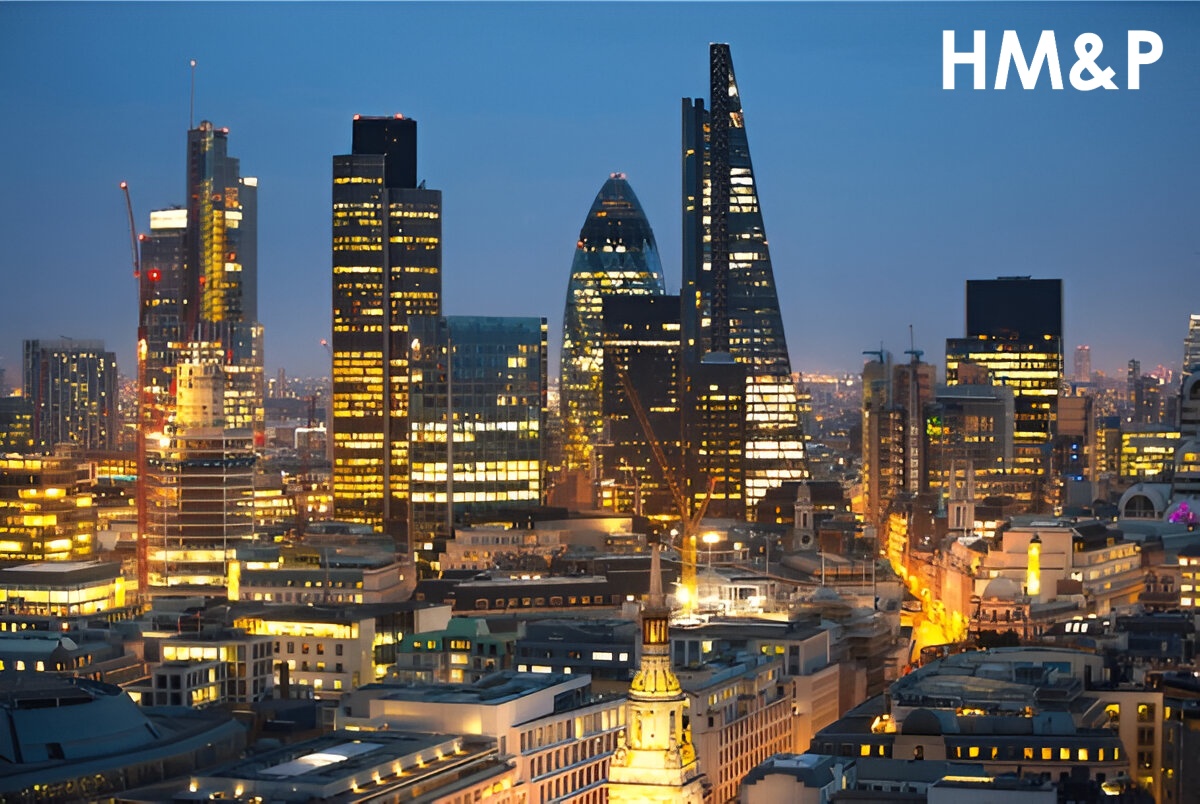
Specialized court system in charge of resolving financial disputes
Singapore International Trade Court
The Singapore International Commercial Court (SICC) was officially launched in 2015, under the Supreme Court of Singapore[1]. The SICC is designed to handle complex international trade disputes, particularly in the banking, finance and investment sectors. The SICC's hallmark is its flexibility: the panel of judges is composed of both prestigious Singaporean and international judges, foreign lawyers are allowed to litigate, and the parties can agree to limit the right to appeal to expedite the process. SICC also allows the flexible application of evidentiary law, creating a trial forum with high judicial prestige but friendly to businesses. Likened to "arbitration within the framework of the court", as a result, the SICC attracts global financial institutions, especially those who want to avoid arbitration but still need a neutral and effective court.
Hong Kong Trade List
Hong Kong does not have its own court dedicated to financial disputes, but uses the Commercial List in the Superior Court. This list focuses judges with commercial experience to handle complex financial cases, ensuring that the case is tried by an expert. The English common law system, high judicial independence, and financially savvy judges help Hong Kong maintain its credibility in international litigation. However, the lack of a specialized court like the SICC makes Hong Kong less competitive than Singapore in attracting international financial disputes.
Chamber of Commerce of the New York State Supreme Court
In New York, financial disputes are handled through the Commercial Division of the New York State Supreme Court, which was launched in 1995[2]. The Commercial Division specializes in complex commercial litigation, including banking, securities and investments. The judges here have deep expertise, and their own procedural rules help to handle it effectively. In addition, cases with federal elements (such as international securities disputes) are brought before the Southern District Court of New York (S.D.N.Y.). Although it does not have its own "financial court", New York relies on an excellent team of judges and a rich treasure trove of case law to maintain its position as a leading financial center in the world.
Chamber of Commerce and Financial List of London
London has a long tradition with the Commercial Court of the Supreme Court of the United Kingdom, which handles international financial, insurance and trade litigation. In 2015, Britain launched Financial List in the Commercial Court and the Court of Justice, focusing on complex financial disputes such as derivatives, foreign exchange, and credit debt[3]. Financial List ensures that cases are tried by highly specialized judges, with expedited procedures, especially for cases that have a great impact on the market. The combination of the Commercial Court and the Financial List helps London maintain its leading position in the adjudication of financial disputes.
London and Singapore have the most advanced specialized court structures, with Singapore standing out for its internationalization and flexibility, and London relying on a long-standing reputation and rich case law. Hong Kong and New York, although they have specialized departments, lack their own court bodies, making them inferior in terms of the level of specialization as well as the legitimacy of a particular trade settlement mechanism.
International Commercial Arbitration Centers
Singapore International Arbitration Centre – Rising Star
The Singapore International Arbitration Centre (SIAC) is one of the world's leading arbitral institutions, behind the International Court of Arbitration 2021 (49% of choices).[4] In 2022, SIAC accepted 357 new cases, with financial, banking, and investment disputes accounting for a large proportion. SIAC stands out for its flexible procedures, competitive costs, and strong support from Singaporean courts, which rarely intervene in arbitral awards. SIAC's neutrality and credibility attract disputes from China, India, and ASEAN, making Singapore Asia's leading arbitration destination.
Hong Kong International Arbitration Centre – Bridge to China
The Hong Kong International Arbitration Centre (HKIAC) is also in the top 3 globally, with 344 new cases in 2022 – a historic record. HKIAC is favored by its UNCITRAL-based arbitration law, its international team of arbitrators, and its unique reciprocal assistance mechanism with mainland China (which allows for an emergency remedy from a Chinese court). This makes HKIAC an ideal choice for financial disputes related to China, with its parallel English-Chinese language and modern procedures.
AAA/ICDR in New York – U.S. Regional Strength
The American Arbitration Association (AAA) and the international branch of the ICDR in New York handled 755 international arbitrations in 2022, far surpassing SIAC and HKIAC thanks to the size of the North American market. However, AAA/ICDR is rarely chosen in global disputes, only prevalent in the Americas, especially Latin America. New York is also the venue for ICC arbitration cases, with the advantage of a team of leading lawyers and arbitrators, and strong support from US courts under the 1958 New York Convention. However, the complicated legal procedures of the United States make some international parties afraid to choose New York.
London Court of International Arbitration – "Arbitration Capital"
The London Court of International Arbitration (LCIA) has a long history dating back to 1892, accepting 293 new cases in 2022. London is the most popular venue for arbitration (54% of the 2021 survey), thanks to stable English law, a team of good arbitrators, and support from the English courts. Many ICC arbitration cases have also chosen London, especially for complex financial disputes such as derivatives or mergers. Prestige and rich case law help LCIA maintain its leading position.
London and Singapore lead in terms of credibility and number of international arbitrations, with SIAC standing out for its affordability and neutrality. HKIAC has a unique advantage over China, while AAA/ICDR is strong in the Americas but less attractive to European and Asian parties. London holds the traditional advantage, but Singapore is in close competition.
Alternative Dispute Resolution (ADR) Mechanism
Singapore with FIDReC and mediation
Singapore's Financial Sector Dispute Resolution Centre (FIDReC) assists consumers and small businesses in resolving disputes with banks, insurance, and securities, with a judgment limit of SGD 150,000. FIDReC offers free mediation and binding arbitration, which reduces the burden on the courts. In addition, the Singapore Mediation Centre (SMC) and SIMC promote commercial mediation, especially for international disputes, creating an effective ADR ecosystem.
Hong Kong with FDRC and ICB
Hong Kong's Financial Dispute Resolution Centre (FDRC) handles individual/small business complaints against banks and securities (HKD 1 million limit). The FDRC uses mediation first, then moves on to arbitration if necessary. The Insurance Claims Bureau (ICB) supports insurance disputes (up to HKD 1.2 million). Hong Kong courts also encourage mediation through Practice Directive 31, creating a strong ADR culture.
New York vs. FINRA and Private Mediation
In New York, FINRA mandates arbitration for securities disputes, handling 2,500–4,000 cases per year, with an average duration of 16 months. Banking and insurance rely on regulators such as the CFPB or private mediation (JAMS, AAA). New York courts encourage ADR, and class actions are a unique tool for resolving large-scale financial disputes.
London with FOS and CEDR
The UK's Financial Ombudsman Service (FOS) handles around 192,000 financial complaints each year, with binding judgments of up to GBP 350,000. FOS is free for consumers, reducing the load on the court. The Center for Effective Dispute Resolution (CEDR) provides high-quality commercial mediation, trusted by financial businesses. The British courts are also actively promoting mediation.
London leads the way with FOS – a large-scale and efficient ombudsman system. Singapore and Hong Kong have FIDReC and FDRC/ICB, which focus on small, low-cost disputes. New York is strong on FINRA and private mediation, but lacks a centralized ombudsman, making the system more fragmented.
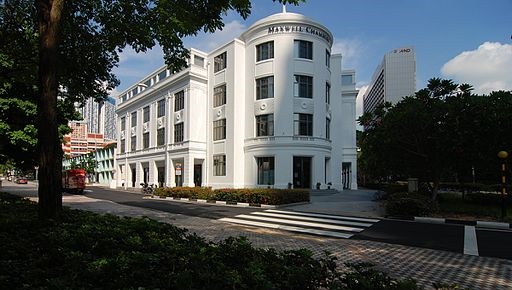
Maxwell Chambers, Singapore. Source: Oxford University Press
Transparency, speed, cost, and efficiency
Transparency
Courts in all four centers are open to trial and judgment, except for sensitive cases. SICC (Singapore) allows identity security if needed, suitable for businesses. Arbitration at SIAC, HKIAC, LCIA, and AAA/ICDR is confidential, only announcing an award if the parties agree. London and New York have the advantage of public case law, while Singapore and Hong Kong are strong in arbitration security. The Ombudsman (FOS, FIDReC) does not publicly make personal decisions but reports trends, ensuring trust.
Calculate the speed
Arbitration is faster than litigation, with SIAC, HKIAC, LCIA completed in 12-18 months, with expedited procedures in less than 9 months. Singapore and London courts handle commercial cases in 12-15 months, Hong Kong 12-18 months, but New York is slower (2-3 years) due to discovery and jury. Ombudsman (FOS, FDRC) settles in 6-9 months, suitable for small disputes.
Cost
London and New York have the highest legal fees ($500-1,000 per hour), while Singapore and Hong Kong are 20-30% cheaper. Arbitration fees at SIAC, HKIAC, LCIA are based on the value of the dispute, which is usually lower than attorneys' fees. The Ombudsman (FOS, FIDReC, FDRC) is almost free for consumers, being the most economical option.
Enforcement Efficiency
Arbitral awards from all four centres are enforced globally under the 1958 New York Convention. The Singapore and London court rulings are supported by the 2005 Hague Convention, while Hong Kong has an agreement with mainland China. The New York court ruling is more difficult to enforce internationally because the United States has not participated in the 2005 Hague, but it is strong within the United States. The Ombudsman is binding on the financial institution and is highly compliant.
Singapore and London are leading the way in enforcing judgments thanks to international treaties. Hong Kong has an advantage over China, while New York is strong in the U.S. but limited abroad. Arbitration is the optimal choice for cross-border enforcement.
Reliability and practical use
London is the leading dispute resolution forum, with English law accounting for ~40% of international financial contracts. The Commercial Court, Financial List, and LCIA are trusted for their rich case law, good judges, and stability. London attracts large financial deals (derivatives, mergers), despite their high costs.
New York dominates disputes involving the U.S. dollar and the U.S. market, with ~50% of international bonds using New York law. The Commercial Division and AAA/ICDR are trusted in the Americas, but are less popular with the European/Asian side due to complex procedures.
Hong Kong is a neutral option for disputes with China, with the HKIAC and the High Court favored. However, political concerns (the Security Law 2020) have caused some parties to turn to Singapore, although the HKIAC still has a record case in 2024.
Singapore is quickly becoming Asia's legal hub, with SIAC and SICC attracting cases from India, the Middle East, and ASEAN. Neutrality, affordability, and strong regulatory infrastructure help Singapore compete with London, surpassing Hong Kong in the GFCI rankings.
London leads in prestige and scale, Singapore emerges from neutrality and efficiency, Hong Kong is strong in terms of Chinese connections, and New York dominates in the United States. The choice depends on geography, applicable laws, and security needs.
Singapore, Hong Kong, New York and London all have developed financial dispute resolution mechanisms to meet the diverse needs of the global financial world. London maintains its leading position thanks to tradition, case law, and popular English law. Singapore stands out for its SICC, SIAC, and neutrality, making it the "legal capital of Asia". Hong Kong plays the role of a bridge with China, despite facing political challenges. New York dominates dollar-related disputes, but complicated procedures limit global appeal. Each center has its own strengths: London in terms of prestige, Singapore in terms of efficiency, Hong Kong in terms of Asian connectivity, and New York in terms of market size. Financial firms can choose the right mechanism based on their need for speed, cost, security, and enforceability, as competition drives reform in these centres.
[1] https://www.judiciary.gov.sg/singapore-international-commercial-court/about-the-sicc/establishment-of-the-sicc, accessed 24/08/2025.
[2] https://ww2.nycourts.gov/courts/comdiv/index.shtml, accessed on 24/08/2025.
[3] https://www.nortonrosefulbright.com/de-de/wissen/publications/0ee0087d/the-financial-list-resolving-financial-markets-disputes-in-london, accessed 2025/08/24.


