


Advertising and marketing activities of enterprises in Vietnam are facing a profound legal transformation, stipulated by Law No. 75/2025/QH15 of the National Assembly amending and supplementing a number of articles of the Advertising Law 2012 (Advertising Law amended 2025). This document is issued with the aim of modernizing the legal framework, which was established from the previous Advertising Law, to accommodate the explosive development of advertising in the online environment and forms of marketing through influencers (influencers, KOL/KOC). The amended Advertising Law 2025 will officially take effect from January 1, 2026.
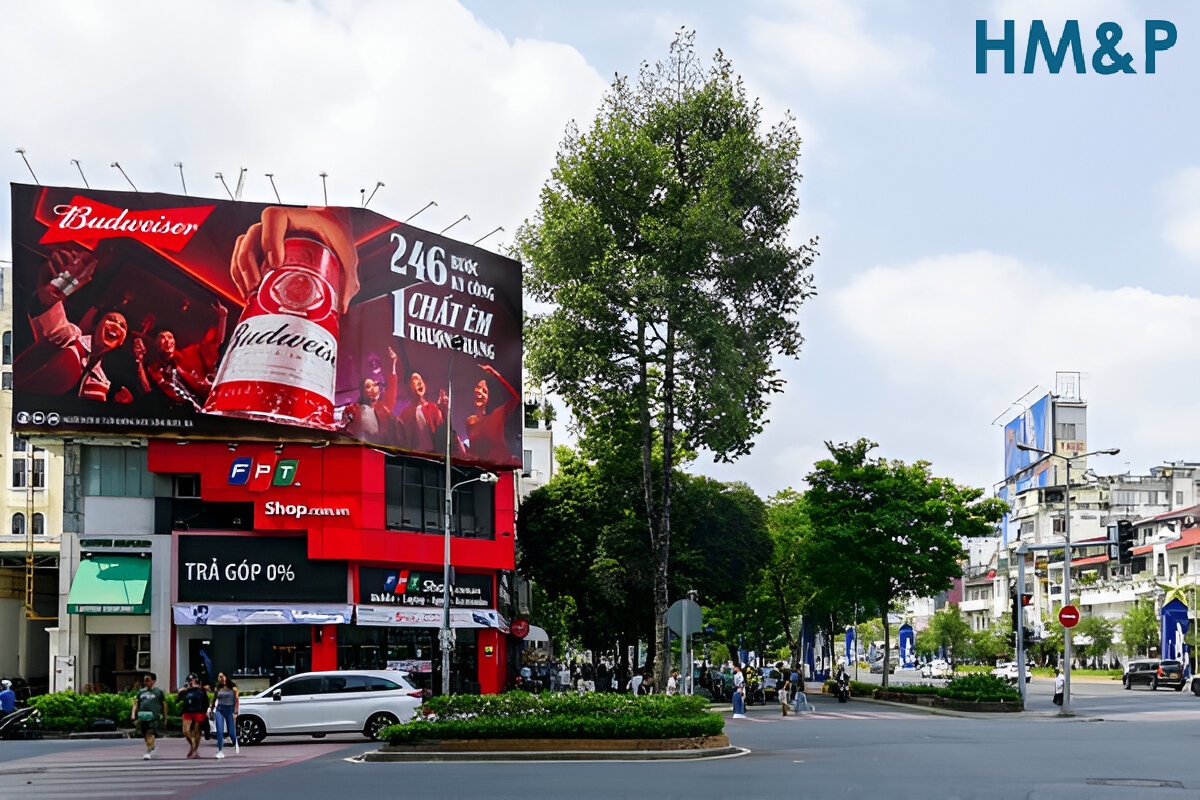
1. Changing the mindset of advertising management in Vietnam
To ensure synchronous and effective implementation, the Government has planned to implement the Law on Advertising, accompanied by the promulgation of detailed Decrees. In particular, the management of sensitive industries requires detailed regulations from the Government on the list and requirements for advertising content for special products, goods and services.
The amended Advertising Law 2025 is designed to build a transparent and healthy online advertising environment, and protect consumer rights by defining responsibilities more clearly for all participants, especially relevant businesses and individuals.
This change is reflected in two main pillars:
Firstly, strict technical and content management in the network environment
For the first time, the Law stipulates in detail the identification of advertisements, the management of links (URLs), and the time limit for handling online violations.
Second, personalize the liability of the person who conveys the advertisement
The law has added specific provisions that require influencers to take personal responsibility for the truthfulness of the content they convey.
This shift can be understood as a shift from the "Law on Paper", focusing on traditional forms, to the "Digital Law", officially bringing digital economic activities into a strict regulatory framework. This requires businesses to review their pre-programmed advertising strategies and data flows, as well as strengthen technical controls.
2. Managing advertising in cyberspace
The addition of regulations on advertising on digital platforms is considered one of the most important new points of the amended Advertising Law 2025, reflecting the State's need to control cyberspace in the new context.
2.1. Technical Control and Path Management
The amended Advertising Law 2025 for the first time clearly stipulates the requirements for ad identification and management of linked links (URLs). This regulation places heavy responsibility on advertising service providers and content publishers. Specifically, they must closely control and monitor links in advertising to ensure they comply with Vietnamese law.
This means that businesses must strengthen technical due diligence for media partners, especially in campaigns using programming technology. Businesses need to ensure that landing pages[1] do not contain content that violates or leads to pages with legal risks.
2.2. 24-hour violation handling mechanism and technical measures
A groundbreaking change of the amended Advertising Law 2025 is the establishment of a rapid response mechanism. Organizations and individuals that detect violations, including violations on digital platforms, must be responsible for warning, removing, or blocking infringing content within 24 hours of receiving a request from the competent authority.
If the parties fail to comply with the request to remove or block the content within the 24-hour time frame, the state agency reserves the right to apply necessary technical measures to handle and impose administrative sanctions at the same time. This creates a great strategic risk for cross-border platforms that are popular in Vietnam such as Facebook, Linkedin, or Google.
The 24-hour deadline requirement shows the regulator's determination to control cross-border content. Businesses that rely on large platforms to run campaigns must understand that the risk of content being removed suddenly and disrupting the campaign is very high if the content is considered infringing. Therefore, it is necessary to have mechanisms to strictly check the legality, issue early warnings and contingency content plans to minimize damage during implementation.
Compliance with the 24-hour deadline also creates significant pressure on technical infrastructure. To meet this requirement, large enterprises and publishers must invest in a 24/7 automated content monitoring system to be able to detect and act in a timely manner. Small businesses or agencies that lack technological capabilities will have great difficulty in ensuring the statutory response speed.
3. Strengthen the legal responsibility of KOLs/KOCs
The amended Advertising Law 2025 introduces a revolutionary change, personalizing and clarifying the responsibilities of those who deliver advertisements for the first time, including KOLs, KOCs, and celebrities.
3.1. Expanding the definition of advertising subjects
The amended Advertising Law 2025 expands the concept of "Conveyor of advertising products" in Clause 8, Article 2. This scope includes those who directly advertise, and more importantly, those who recommend or endorse products, goods, and services on the Internet are also considered Carriers of advertising products, also known as advertisers.
The concept is expanded to prevent influencers from shirking responsibility by claiming to be just "sharing personal experiences." The law has confirmed that KOLs, KOCs, influencers, and celebrities are all "carriers of advertising products", forcing them to be held liable more clearly and fully than the Advertising Law 2012.
3.2. Mandatory obligations of influencers
Clause 3, Article 15a (new) of the amended Advertising Law 2025 stipulates specific obligations for influencers when advertising:
Product appraisal: KOLs/KOCs must use or understand goods, products, and services before advertising.
Legal checks: The credibility of the business must be verified and legal documents related to the product/service must be checked.
Transparency disclosure: It's mandatory to clearly communicate to followers that the content is advertising (i.e., paid/sponsored).
Comprehensive liability: Responsible before the law or jointly (administrative, criminal, or civil remedies) if the advertising content is dishonest, misleading, or violates Article 19 of the requirements for advertising content.
Tax liability: Fulfill tax obligations on income earned from advertising activities.
This change in liability is summarized as follows:
|
Subject |
Advertising Law 2012 |
Advertising Law amendments 2025 (Effective from 01/01/2026) |
|
Ad conveyor (KOL/KOC) |
Failure to clearly define obligations; the risk is primarily with the Ad Owner. |
Take personal liability; Mandatory product use/understanding, legal checks, and publicity are advertisements. |
|
Business (Advertiser) |
Primary responsibility for content accuracy. |
Joint responsibility; It is mandatory to provide documents proving and supervising KOLs/KOCs. |
|
Digital platforms/issuers |
General regulations on censorship. |
Must control the path; Mandatory handling/removal of infringing content within 24 hours at the request of the competent authority. |
3.3. Responsibilities and sanctions for violations
Sanctions are strengthened to ensure transparency. According to Decree 24/2025/ND-CP, [2]both KOL/KOC and business units may be fined from 20 to 30 million VND if they do not clearly disclose the receipt of money for advertising or product reviews.

In addition, organizations operating digital platforms that do not ensure transparency and complete information about products may be fined heavier, from 100 to 200 million VND. This fine reinforces the responsibility of platforms to maintain an honest advertising environment.
The increase in personal liability of KOLs/KOCs means that businesses cannot simply pay remuneration. This change increases contractual risk, forcing businesses to include mandatory due diligence and indemnity clauses in their contracts. This leads to a shift from conventional service contracts to a riskier type of contract, increasing legal costs and contract negotiations for businesses with KOLs/KOCs when executing campaigns advertising and communication for businesses.
In addition, the mandatory disclosure of "this is an ad" will reduce the "organic" (naturally developed) nature of the content, which can affect the conversion rate in a business's advertising campaign. This forces brands to adjust their strategy, possibly turning to partners who are more likely to build trust even if it is publicly announced that this is advertising content.
4. Regulations on strict management of special goods and services
The 2025 Law continues to tighten management over sensitive sectors, which have a direct impact on consumers' health and finances. The government is entrusted with the power to prescribe a detailed catalogue of "special products, goods, and services" and specific requirements for their advertising content. The areas of focus are usually health (medicines, dietary supplements), finance (banking, insurance), and other specialty services.
The main goal of the amended Advertising Law 2025 is to prevent businesses from taking advantage of consumer psychology to falsely advertise, especially the exaggeration of the benefits of functional foods, treating them as medicines.
The use of names and images of doctors, pharmacists, or medical professionals without legal basis or beyond the scope of permission will continue to be severely sanctioned. In addition, the Law also requires proof of conformity/conformity, which creates great pressure on businesses, forcing them to increase investment in scientific research, clinical trials and quality control processes to build a solid set of legal documents for each campaign. This makes marketing costs shift from pure communication costs to the cost of compliance and proving product quality, becoming a burden for businesses in business activities.
5. Enterprises must adjust their operational and compliance strategies
Firstly, adjust the content of the service contract and carefully appraise it with KOL/KOC
With KOLs/KOCs having to bear personal liability, businesses are forced to optimize advertising contracts. Mandatory terms must be added to transfer compliance responsibilities, such as the KOL/KOC's commitment to have used or understood the product, and have checked the legality of the sponsoring enterprise.
In particular, it is necessary to establish heavy penalty clauses or compensation clauses if the KOL/KOC violates contractual obligations, leading to the business being administratively sanctioned or sued by consumers.
Secondly, strictly manage advertising content to comply with the requirements of the law
Businesses can consider developing a detailed KOL Code of Conduct to guide KOLs on how to publicize advertising content such as requiring the use of hashtags or clearly stating in short video content "This is advertising content" or "this is sponsored content" in order to comply with regulations and avoid sanctions for violations from competent agencies.
Third, businesses need to keep records and documents related to advertising campaigns
Keeping records that demonstrate a business's compliance when advertising becomes paramount. Businesses must keep detailed legal records proving the conformity of the product, as well as evidence that the KOL has been provided with sufficient legal information and documents before advertising.
New legal requirements force businesses to seek legal support from legal persons or law firms specializing in providing services to businesses to avoid risks arising in this process.
The amended and supplemented Advertising Law in 2025 is forecasted to create a big push, promoting the professionalization of the entire advertising industry in Vietnam. It will gradually eliminate marketing activities based on ambiguity or false advertising. The personalized responsibility imposed on KOLs/KOCs forces this community to act as controlled media professionals, requiring transparency and a deep understanding of the product. In the long run, this will enhance consumer trust and create a fairer competitive environment where product quality and honesty in communication are determinants of the sustainable success of the business.
Lawyer Nguyen Van Phuc
HM&P Law Firm
[1] Landing pages, see more at: https://mobio.io/landing-page-khac-gi-website, accessed on 30/09/2025.
[2] See more at: https://chinhphu.vn/?pageid=27160&docid=212837, accessed on 30/09/2025.


