


Technology and digitalization are rapidly changing professional professions and legal fields that are not out of that spiral. Artificial Intelligence (AI) has become a powerful tool, helping lawyers and legal professionals improve their work efficiency, from document research to contract analysis. However, this convenience comes with challenges in terms of professional ethics, information security, and liability.

With the development of more than 1,800 legal technology tools (Legal Tech) on the market by 2025, the use of AI is not only a trend but also a determining factor for the competitiveness of law firms[1].
The Basics of AI in Law
To understand the role of AI in the legal field, it is necessary to grasp the core concepts in this field. AI is defined as the ability of a computer system to simulate human cognitive functions, such as reasoning, learning from new data, and making decisions. In particular, machine learning (ML) is an important subset, using statistics to analyze data, identify patterns and predictions without direct human intervention. Generative AI, which includes large language models (LLMs) such as GPT-4, is capable of processing diverse data from text, images, and audio,... to create new content based on user requirements.
Foundation Models are trained on vast amounts of data without labels, allowing them to adapt to a wide range of specialized applications. In addition, AI Agents represent a more advanced generation of AI, capable of collecting data from multiple sources, planning iterations, and resolving multi-step issues automatically. These concepts are not only theoretical but have been tested in practice, showing the process from input data to practical applications such as creating legal documents or analyzing images.
When applying AI to law, it is necessary to consider specific factors such as data sources and ownership, data subjects, the role of the developer or implementer, the purpose of use, human involvement, and potential algorithmic bias. These factors emphasize that AI is not a "magic" tool but requires thorough evaluation to ensure fairness and trustworthiness. If the AI training data is biased, the results of the legal analysis can lead to wrong decisions, affecting the results of the work.
Application of AI in Legal Practice
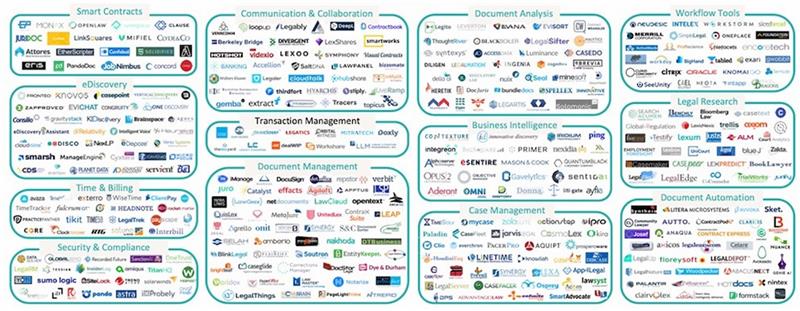
AI is revolutionizing the practice of law by optimizing traditional processes, helping lawyers focus on strategic tasks instead of repetitive work. The Legal Tech market has seen an explosion with over 100 new tools launched in 2023 alone, including platforms like Harvey, Casetext, and LexisNexis[2]. These tools are categorized according to their functionality: contract management, document analysis, workflow tools, and more.
In the future, AI will change the role of lawyers. Instead of spending hours manually researching, lawyers can use NLP (Natural Language Processing) to process complex legal documents, or ML to predict case outcomes based on historical data. Generative AI Assistants can personalize services according to customer needs, while integrating blockchain with AI provides secure and transparent transactions, such as smart contracts that automatically check for compliance.
The efficiency benefits are clear, customer service is enhanced with greater speed and accuracy, leading to greater satisfaction and expanded access to legal services to a wide range of audiences. Law firms that use AI effectively will have a competitive advantage, especially in the context of regulation and ethics without a clear legal framework or guidelines. In some cases, AI can analyze large data sets to identify patterns in litigation, helping to forecast risks and optimize strategies. However, to achieve maximum efficiency, lawyers need to constantly update AI advances, avoid being outdated in an industry that is conservative, less changing, and less affected by technology like the legal profession[3].
Application of AI in the field of contracts
One specific application of AI is in the contract sector, where the technology operates across a[4] multi-layered "stack", from computational infrastructure (such as GPUs) to trained models and final applications. AI uses algorithms to learn from data, predict and generate content, helping to automate contract drafting, analysis, and management.
There are four main elements to consider in an AI-related contract: (1) Control of the AI system; (2) Use of data and intellectual property rights; (3) Legal/regulatory risks; and (4) Indemnity/liability. For example, when using a tool like Harvey's, lawyers can quickly analyze merger contracts, summarize financial statements, or create new documents. The actual demo shows a user-friendly interface where AI handles complex tasks in just a few seconds, saving significant time compared to the manual method.
The efficiency here is not only in speed, but also in accuracy, which reduces human error and enhances compliance. However, for balance, it is necessary to ensure that AI does not exceed the limits of human control, avoiding complete dependency that leads to unforeseen risks. Moreover, for young lawyers, the use of AI tools in contracts will be an unpredictable risk, when experience and professional experience are not enough to help lawyers recognize errors and variables that differ between reality and results from tools.
Source: PitchBook
Ethical and legal risks in the use of AI
While AI offers superior efficiency, ethical issues are the biggest barrier. With generative AI and emerging technology, lawyers and legal practitioners need to consider adhering to basic ethical principles: (1) Responsibility. Lawyers need to evaluate the benefits versus abuses in the process of using the tools as well as who is responsible when problems occur during use; (2) Trust. The evaluation of results is consistent and reliable enough to support lawyers to bring better work results to clients; (3) Privacy. Respecting data rights is a priority, especially input data; (4) Control. Preventing, avoiding abuse or in other words, avoiding the abuse of AI tools in the process of practicing should be thoroughly considered by lawyers; (5) Safety and security; (6) Transparency; (7) Fairness; and (8) Updates. Update new tools and also the regulatory legal framework for this activity.
Guidelines, from reputable organizations such as the American Bar Association (ABA) or the New York State Bar Association, emphasize the need for disclosure using AI in court documents and accurate human examination. Federal courts have issued regulations requiring certification that AI-generated content has been verified, avoiding the case of "misresearch" as has occurred in some cases[5].
Key ethical factors include the ability to understand technology risks, security (keeping customers confidential), communication (customer consultation), reasonable fees (no charge for AI-saved time), and supervision (training employees on GenAI). An example discussed is the case of the company Tech Innovations Inc. using LegalTech to manage contracts: while effective, risks such as forgetting regulations, false warnings, or security breaches can occur without ethical oversight. Algorithmic bias is also a big problem, which can lead to discrimination in legal analysis.
Balancing the application of AI and occupational risk
To balance efficiency and ethics, law firms need to adopt best practices in risk management. AI governance starts with the basic questions: Where is AI used? What are resources for AI? How are positive impacts measured? Do third-party providers use AI? Who is responsible?
In terms of data ownership, it is necessary to clearly assess ownership, understand the rights involved, and document everything. In the relationship with suppliers, law firms, lawyers need to carry out thorough due diligence, supervision through KPIs and evaluate the ability to provide services to make the best choice with the first condition being the safest. The legal profession, like almost the medical profession, has no room for unfortunate mistakes that can "blow away" the brand and reputation built within a hundred years of building within a case, a customer. In litigation, avoid the risk of losing credibility with customers due to information that has not been thoroughly reviewed and checked after AI assistance. It is very necessary to preserve AI documents and use technology under the close supervision of the department, and competent and professional people in law firms. In conclusion, risk management and compliance with detailed internal guidance from law firms are two important factors in the practice of law and the use of AI in the rapidly changing landscape of the legal profession. Law firms and lawyers across the globe also emphasized that new AI laws are evolving, with a focus on data rights and transparency, therefore, firms need to pay attention to important legal cases and ensure the "supreme leadership" role of law firms in AI oversight. By establishing internal policies, regular training, and updating regulations, lawyers can leverage AI without sacrificing professional ethics, a category that is not allowed in the legal profession.
Using AI in the practice of law offers a great opportunity to increase efficiency, from rapid analysis to accurate predictions, making the legal industry more accessible and competitive. However, to achieve true balance, ethics must be the foundation: from transparency and fairness to accountability. AI and tools from AI do not replace humans but assist, requiring constant monitoring and adaptation by law firms and lawyers to new regulations. In this context, successful lawyers will be the ones who not only harness technology but also defend the core values of the profession. Only when efficiency and ethics go hand in hand, AI can truly become a reliable companion in the field of legal practice not only in the world but also in Vietnam.
[1] https://www.fortunebusinessinsights.com/legal-technology-market-109527, accessed on 2025/09/15.
[2] https://blog.legaltechmg.com/legal-techs-32b-market-map, accessed on 2025/09/15.
[3] Currently, there are no statistics or surveys in Vietnam on the application of lawyers and law practice organizations in the use of AI tools. The figures and statistics are collected and evaluated by the author from the resources of the foreign law market.
[4] Technology terminology, see more here: https://interdata.vn/blog/stack-la-gi/, accessed on 15/09/2025.


