


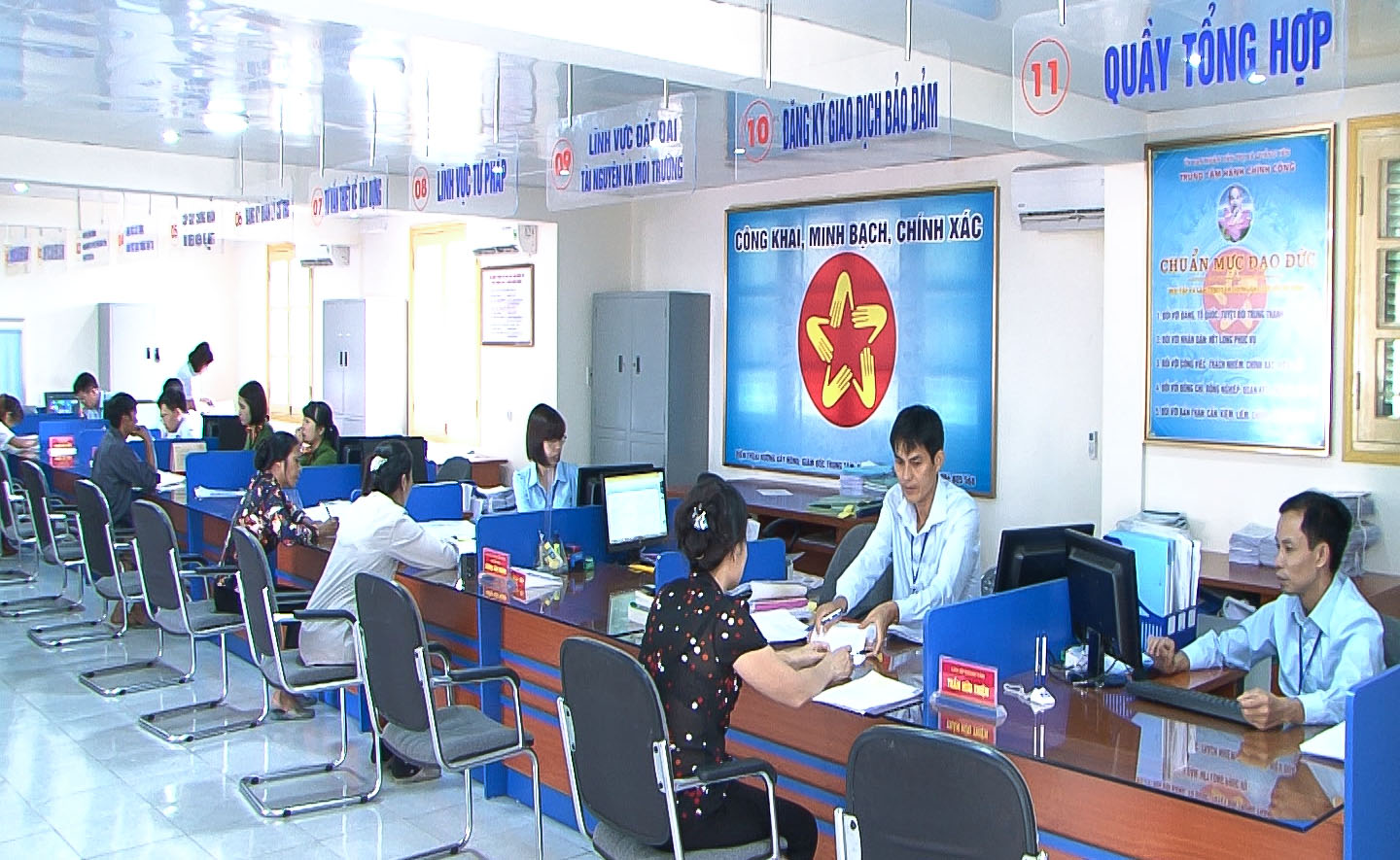
Administrative procedure reform is considered the 'backbone' of the modern investment environment. However, practice shows that in Vietnam, many businesses still face cumbersome and inconsistent procedures - even going against the spirit of reform. The gap between policy and practice is therefore still quite far.

The gap between policy and practice is therefore still quite far. Source: Government News
The current situation of administrative procedure reform in Vietnam
At business registration agencies
According to current regulations, business registration procedures are carried out entirely online, without requiring the legal representative to present in person. However, in fact, in Ho Chi Minh City. Ho Chi Minh City, the representative must still appear in person at the request of the licensing agency. Specifically, the Department of Finance of Ho Chi Minh City in some cases requires the legal representative of the enterprise to present directly before being granted an enterprise registration certificate. This regulation not only slows down the progress of establishing businesses but also makes it difficult for individuals who cannot be present in the locality.
When the tax authorities are worried about the distance and there is no effective solution
Another prominent issue is tax-related procedures, especially in districts (formerly) in Ho Chi Minh City. According to regulations, newly established enterprises must work directly with the tax authority to be approved to issue e-invoices. This process requires the business to submit a series of documents, including a business license, a lease or borrowing agreement, a bank account statement, and written explanations according to the form. These requirements are not only complex but also time-consuming, especially when the tax authorities frequently request additions or corrections to records without providing clear instructions.
Moreover, the fact that the tax authority requires businesses to present directly to explain more about the submitted documents makes many businesses, especially small and medium-sized enterprises, face difficulties. This not only prolongs processing times, but also creates a sense of lack of transparency, as additional requests are often not notified in advance or are not based on a clear legal basis.

According to regulations, newly established enterprises must work directly with the tax authority to be approved to issue e-invoices. Source: Government News
Procedures for investment registration of foreign investors
In case it takes more than one year for foreign investors to establish a representative office, it clearly reflects the lack of consistency in the competence to process documents between state agencies. Typically, a foreign investor takes more than a year but has not yet been able to complete the procedures for establishing a representative office of a foreign trader in Ho Chi Minh City. The reason is that the activities of foreign traders "overlap" between ordinary activities and activities in the field of education. Understanding this, from the beginning, foreign traders have contacted and worked many times but have not received a satisfactory solution. Forcing them to submit a representative office dossier in advance in Ho Chi Minh City. Upon receipt of this dossier, the licensing agency immediately refused on the system and there was no written explanation. In order to continue the process and not delay the operation, the investor must adjust and submit the dossier to the Ministry of Education and Training. However, when this agency handled, it again refused on the grounds that foreign traders do not operate in the field of education. At this time, the procedure had to go back to the beginning even though the dossier had been "struggling" between licensing agencies for more than a year.
This lack of consistency not only slows down the progress of investment but also increases the opportunity cost of investors. In a competitive regional environment, the time factor can determine the choice of investment destination.
Causes of inadequacies
First, the lack of synchronization in the application of policies.
Although central legal documents have aimed to simplify procedures, in many localities, management agencies still apply "internal" additional requirements, which are not clearly stipulated in the law.
Secondly, administrative management thinking is still heavy on control.
Instead of switching to a "post-inspection" model based on risk management, many agencies still maintain a "pre-inspection" approach with multiple layers of procedures, leading to businesses having to prove their competence from the beginning with documents that are not really necessary.
Third, the capacity and accountability of a part of civil servants are still limited.
The rejection of the dossier without a written explanation, or the request for additional documents with unknown legal basis, reduces the transparency and predictability of the administrative system. This reflects the slow transition from a traditional administrative management model to a modern public administration model centered on public service users.
What are the solutions to reform administrative procedures in Vietnam?
In order to narrow the gap between theory and practice in the reform of the Criminal Justice Department, Vietnam needs to synchronously implement the following solutions:
Deputy Prime Minister Nguyen Hoa Binh requested a substantial reduction and simplification of administrative procedures. Source: Government News
Enhanced policy synchronization
The government needs to ensure that the policies of administrative reform are implemented consistently from the central to the local level. Local regulations need to be reviewed and adjusted to suit the spirit of reform, avoiding the application of unnecessary requirements such as direct presentation or supplementation of unclear dossiers without legal basis.
Improving the capacity of civil servants
The training and improvement of professional qualifications and service skills of civil servants is a key factor. Training programs should focus on improving working attitudes and encouraging a spirit of service to people and businesses. At the same time, it is necessary to have a clear reward and punishment mechanism to improve the efficiency and responsibility in the activities of civil servants.
Promoting the application of information technology
The government needs to continue to invest in upgrading and synchronizing online public service systems. Processes such as business registration, e-invoicing, or the establishment of a representative office need to be fully digitized, eliminating unnecessary in-person presentation requirements. At the same time, it is necessary to ensure compatibility and interconnection between systems to minimize the requirement for additional documents.
Strengthening supervision and handling of violations
It is necessary to establish a strict monitoring mechanism for the implementation of administrative procedures at state agencies. Cases of delay, obstruction, or rejection of dossiers without reason need to be investigated and handled strictly. At the same time, it is necessary to publicize information about the progress of processing documents to increase transparency and accountability.
Administrative procedure reform in Vietnam is an important task, but the gap between theory and practice is still huge. Cases such as the requirement to present directly at the Department of Finance, complicated procedures in the field of taxation, or delays in processing documents of foreign investors in Ho Chi Minh City are clear proof of these inadequacies. To solve the problem, it is necessary to have close coordination between management agencies, improve the capacity of civil servants, promote digital transformation, and strengthen supervision. From the perspective of legal practitioners, what businesses need most is not more control procedures, but consistency and predictability in the application of laws by Vietnamese regulatory agencies.
Lawyer Nguyen Van Phuc
HM&P Law Firm


