


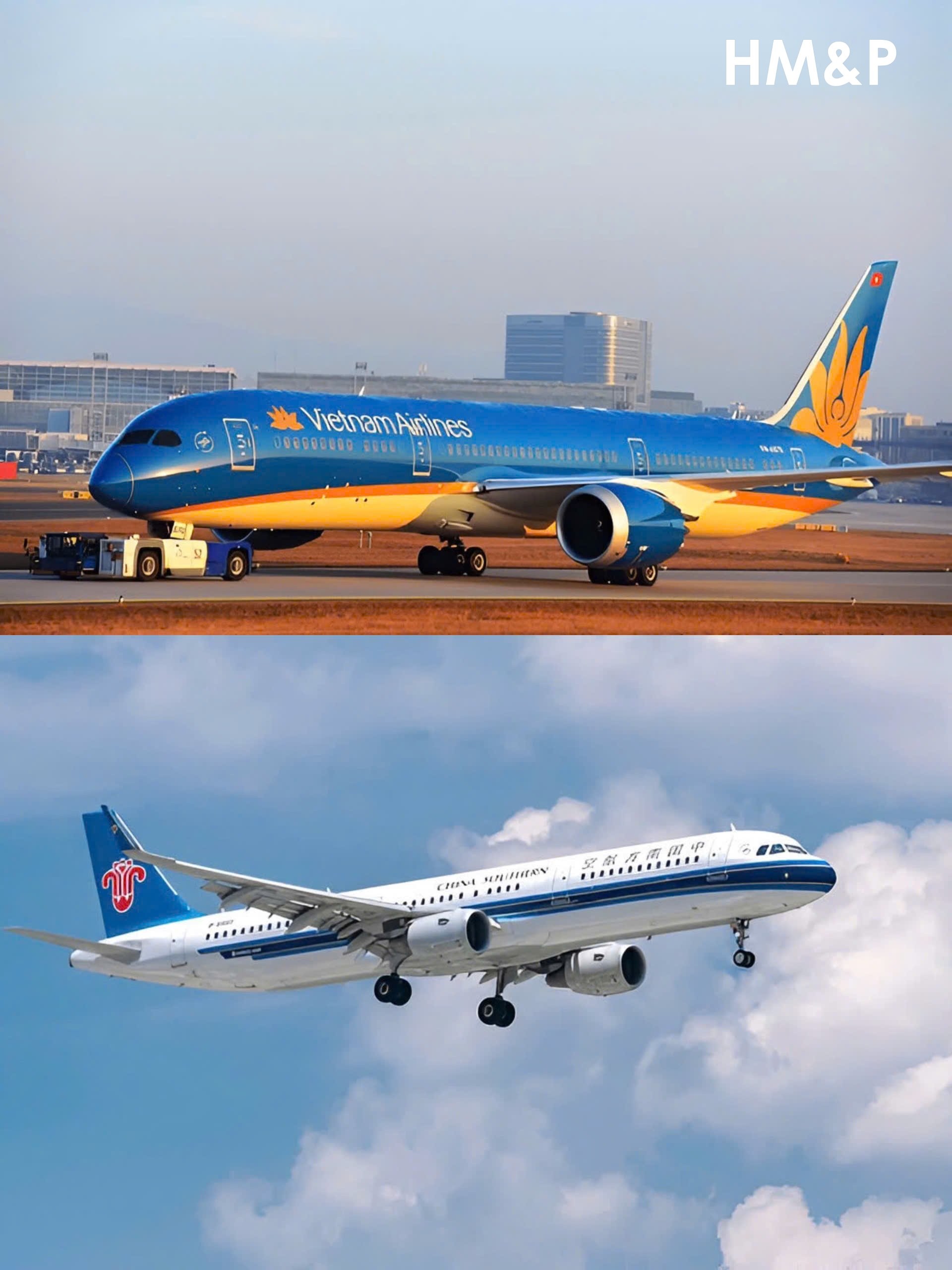
On April 17, 2025, the National Competition Commission (VCC) issued Decision No. 55/QD-CT, approving the exemption from the prohibited competition restriction agreement between Vietnam Airlines and China Southern Airlines[1] ("Decision 55"). The agreement between the parties relates to the coordination of pricing, market segmentation and provision of passenger transportation services on six international routes, which are within the scope of prohibited acts under the 2018 Competition Law. This exemption decision not only marks a step forward in the enforcement of competition law in Vietnam but also raises questions about how the National Commission balances protecting competition and promoting economic interests. In this article, we will analyze in detail the decision of the National Competition Commission from the perspective of Vietnam's current competition law.
1. Background and content of the agreement
The agreement between Vietnam Airlines and China Southern Airlines is part of a joint venture that focuses on routes connecting Hanoi and Ho Chi Minh City with Guangzhou, Shenzhen, and Shanghai[2]. Specifically, the agreement includes:
- Pricing coordination: The two airlines agree on a fare strategy on these routes, including revenue and price management.
- Market segmentation: Parties allocate market share and supply of passenger transportation services, in order to optimize operations on flight routes.
- Flight schedule coordination: An agreement to adjust flight schedules to enhance connectivity and reduce duplication, facilitating services such as code-sharing.
According to Article 11 of the 2018 Competition Law, acts such as fixing prices directly or indirectly, dividing the consumption market, or restricting the provision of services are prohibited because they are likely to reduce competition in the market. However, the National Competition Commission has approved the waiver of this agreement based on the provisions of Article 14 of the Competition Law 2018 which allows exemption to a prohibited non-compete agreement if the agreement brings significant benefits to consumers and promotes technical progress. technology or improve the quality of goods and services.
2. Legal basis of the exemption decision
The Competition Law 2018, together with Decree No. 35/2020/ND-CP, provides a detailed legal framework for the review and granting of exemptions to non-compete agreements. And these are the main legal bases for the National People's Committee to issue Decision 55 above.
Regulations on prohibited non-compete agreements
Article 11 of the Competition Law 2018 lists many types of prohibited competition restriction agreements. However, with regard to Decision 55, we can see this prohibited restriction agreement falling into the following three cases: (1) An agreement to fix the price of goods or services directly or indirectly; (2) Agreement on division of consumption market or supply of goods and services; (3) Agreements to limit or control the output and volume of goods and services.
The agreement between Vietnam Airlines and China Southern Airlines clearly falls within the scope of Article 11 of the Competition Law as it relates to the fixing of fares and market segmentation on specific routes. These acts, if not exempted, may be considered a violation of competition law and subject to severe sanctions, including fines and/or forced termination of agreements.
Regulations on exemption conditions
Clause 1, Article 14 of the Competition Law 2018 stipulates that prohibited non-compete agreements can be exempted if one of the following conditions is met.
Firstly, promoting technical and technological progress, improving the quality of goods and services.
Second, promote healthy competition in the market.
Third, bring significant benefits to consumers, such as discounts, improve service quality, or increase accessibility.[3]
In addition, Article 16 of Decree 35/2020/ND-CP also clarifies the criteria for assessing benefits, including:
- Improve service quality or reduce operating costs.
- Increase access to services for consumers.
- Apply new technology or improve operational efficiency.
In this case, the National People's Committee has determined that the agreement between the two airlines meets the above criteria, based on the application for exemption and the verification report dated April 11, 2025 of the relevant parties. Specifically, the non-compete agreement of Vietnam Airlines and China Southern Airlines is specifically evaluated through the criteria.
Operational efficiency. The parties coordinate flight schedules and revenue management to help reduce operating costs, optimize the use of aircraft, thereby providing more competitive fares.
Improve service quality. The joint venture allows for seamless services, such as shared tickets, unified baggage handling, and better flight connections, which are especially important on international routes.
Consumer benefits. The agreement between the parties will enhance access to flights on Vietnam-China routes, benefiting passengers, especially tourists and businessmen.
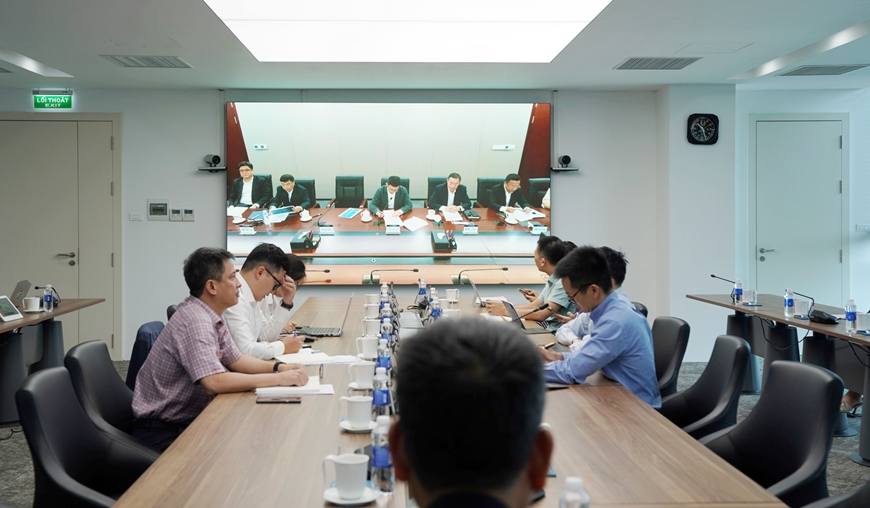
On September 14, Vietnam Airlines and China Southern Airlines held their first meeting to concretize the agreed-upon terms of the agreement. Source: People's Army Newspaper
3. Waiver review process
The Competition Law 2018 stipulates the process of reviewing exemption applications in a fairly specific way. Enterprises must submit detailed dossiers including applications for exemption from prohibited non-compete agreements and relevant supporting documents such as draft agreements, explanatory statements, financial statements as well as other supporting documents. The National People's Committee is responsible for verifying and assessing the impact of the agreement on the market and verifying the validity of documents and dossiers submitted to the National People's Committee. Decision No. 55/QD-CT shows that the National Committee has complied with this process. The National People's Committee has based on the application for exemption of Vietnam Airlines and China Southern Airlines. After that, this agency reported the results of the verification of the Competition Case Investigation Agency, which was completed on April 11, 2025. Finally, the National People's Committee made the proposal of the Head of the Investigation Agency, confirming that the agreement met the conditions for exemption.
This transparent process ensures that decisions are made based on legal and practical grounds, and reflects the regulator's increasingly professional and progressive work in competition law enforcement in Vietnam.
4. Conditions attached to the Exemption Decision
In order to ensure that the agreement does not cause serious harm to competition or consumer rights, the NLC has imposed a series of conditions and obligations in Article 3 of Decision 155. These conditions not only reflect the spirit of the Competition Law but also show the efforts of the National Competition Commission in controlling the negative impact of the agreement.
Scope of application of the Decision. This exemption is only valid in the territory of Vietnam. The activities of the two companies outside Vietnam must comply with the competition laws of the countries concerned, ensuring that the agreement does not violate international regulations.
Protecting fairness and competition in the Vietnamese market for the aviation sector. Specifically, according to the decision on the joint venture agreement and the combination of ticket prices.
(i) The two airlines must enter into interline agreements and Fare Combinability Agreements with other airlines on a non-discriminatory basis. This ensures that third parties, such as Vietjet or Air China, have the opportunity to enter the market on the relevant routes;
(ii) Prohibition of dumping. Airlines are not allowed to sell tickets below full price to eliminate competitors, a measure to maintain healthy competition;
(iii) Prohibition of unreasonable commercial conditions. The two companies must not apply discriminatory or non-contractual trade terms, in order to prevent other businesses from entering or expanding the market.
Consumer protection. The decision also requires the two airlines to publicly and transparently disclose information about fares, taxes, fees, applicable conditions, and promotions on their official websites. This requirement is intended to help consumers make informed decisions and avoid losses due to unclear information. At the same time, the Decision clearly states that acts that cause disadvantage or damage to customers, such as non-transparent price increases or reduced service quality, are prohibited.
These conditions reflect the EC's prudence in ensuring that the benefits of the agreement are not overwhelmed by the competitive risks it may bring. Decision 155 shows that the NCC has adopted a modern approach, similar to that of international competition bodies, in using behavioral remedies to control the agreement.
5. Significance of Decision 155 on the aviation market and competition law
The exemption decision of the National People's Committee is of great significance for both the aviation market and the enforcement of competition law in Vietnam.
Driving business efficiency and consumer benefits
The agreement allows Vietnam Airlines and China Southern Airlines to optimize operations, reduce costs and improve service quality. This could lead to more competitive fares and a better passenger experience, especially on Vietnam-China routes, which are important transportation corridors. Strengthening the connection between the two countries supports tourism, trade and economic integration, in line with Vietnam's economic development strategy.
Strengthening the position of Vietnam Airlines
In the context of fierce competition from low-cost airlines such as Vietjet and Bamboo Airways, this agreement helps Vietnam Airlines strengthen its position in the international market, especially routes to China. Cooperation with China Southern Airlines, one of the largest airlines in Asia, brings strategic advantages in size and route network to Vietnam Airline in the coming time.
A breakthrough decision of the National People's Committee
This decision represents the progress and approach to international standards of the National People's Committee in handling complex cases related to non-compete agreements. The application of transparent and strict conditions shows that the National People's Committee is approaching in a modern direction, in line with international practices. The thorough due diligence process, based on investigation records and reports, reflects transparency and professionalism in competition law enforcement.
Precedent for future cases
The decision lays the groundwork for the consideration of similar agreements in the aviation industry and other sectors, especially in the context of Vietnam's increasing integration into global supply chains. The monitoring and cancellation conditions also show that the NCC is willing to maintain control, ensuring that the exemptions are not abused.
6. Challenges and directions in the coming time
Despite the many benefits, this exemption decision also faces many challenges in terms of controlling unfair competition in Vietnam. In order to overcome these challenges, in our opinion, the National People's Committee should carefully consider and monitor the following aspects.
Compliance with the exemption condition. Vietnam Airlines and China Southern Airlines must strictly fulfill their obligations, such as non-discrimination and information transparency, and other conditions set forth in the decision. During the 5-year exemption period, the National People's Committee must always monitor, review and require the parties to comply with the conditions set out in Decision 155. We believe that the regulator not only relies on the reports of the relevant parties, but also needs to consult with customers and airlines who are competitors of the parties in this decision to have an objective and comprehensive view of the case.
Market monitoring. The NPC needs to develop an effective monitoring mechanism to ensure that the agreement does not lead to anti-competitive behaviors, such as price collusion or the elimination of competitors.
Balancing interests. The National People's Committee must continue to balance between encouraging business cooperation and protecting competition, especially in a fast-growing aviation market but still limited in the number of large "players" like Vietnam's aviation market. The National People's Committee needs to carefully consider and create conditions and spaces that are large and fair enough for potential competitors to easily and fairly enter this "playground".
In our view, the National Competition Commission (“NCC”) may face an increasing number of similar cases in the future, as businesses seek to collaborate in order to compete amid globalization and an increasingly complex and unpredictable global trade landscape. Learning from international practices, and adjusting to suit the characteristics of the Vietnamese market, will be the key for the National People's Committee to maintain a fair and healthy competitive environment.
The decision of the National Competition Commission to exempt the agreement between Vietnam Airlines and China Southern Airlines is a good example of how the Competition Law 2018 is applied to balance the promotion of business efficiency and the protection of the competitive business environment. Decision 155 not only supports the development and integration process of Vietnam Airlines but also affirms the role of the National People's Committee in shaping a modern and consumer-friendly competitive market. As Vietnam continues to integrate into the global economy, decisions like these will play an important role in promoting innovation and protecting the public interest, contributing to Vietnam's stronger development in the coming time.
Lawyer Nguyen Van Phuc
HM&P Law Firm
[1] In addition to this Decision, the National People's Committee also announced the decision to enjoy exemptions for the prohibited competition restriction agreement between Vietnam Airlines and Air France at: https://vcc.gov.vn/default.aspx?page=news&do=detail&category_id=e0904ba0-4694-4595-9f66-dc2df621842a&id=ca2a648f-bf59-46a4-93d5-f088c1cce36b
[2] https://vcc.gov.vn/default.aspx?page=news&do=detail&category_id=e0904ba0-4694-4595-9f66-dc2df621842a&id=74612469-e7ff-4a30-ac01-b7246f4b1459, accessed on 18/04/2025
[3] In addition, there are other reasons specifically stated in Clause 1 and Clause 2, Article 14 of the Competition Law 2018.


