- HM&P: Vietnam International Law Firm
- HM&P: Vietnam International Law Firm
- 02873080839
- https://hmplaw.vn/
Corporate
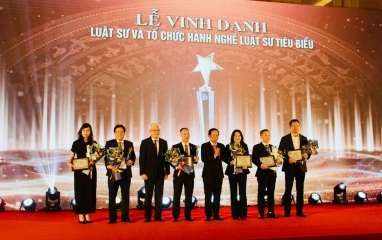
As a practical legal practitioner who has witnessed the development of the Vietnamese legal profession over the past 15 years, it is possible to make a subjective assessment that the legal profession in Vietnam has not yet developed commensurate with its potential. And what is the reason for this slow development, especially the development in depth and number of lawyers and professional law firms? Indeed, this question leaves the writer with a lot of thought.
In the legal industry, where credibility, quality, and trust play a core role, service pricing is an important strategic factor that directly affects the sustainable development of a law firm. Many law firms, especially those that are just starting up or looking to compete in the market, are often "tempted" by a low-pricing strategy to attract clients. However, the "law of proportionality" to achieve balance or fairness is something that many law firms overlook when pricing their services.
The international term "Big Law" refers to the largest law firms in the world, which is determined through one through total revenue, number of lawyers, and the scope of offices operated (number of offices). One of the standard measures in the legal community for identifying top law firms is American Lawyer Magazine's annual Am Law 100 list, which is considered the legal industry's equivalent of the Fortune 500.
Technology, especially artificial intelligence (AI), is rapidly changing the way many professions operate, and the law industry is not out of that spiral. The Lola case v. Skadden, Arps, Slate, Meagher & Flom LLP (Skaden), a U.S.-based law firm, marked an important turning point in redefining the concept of "practicing law," as the Second Circuit Court of Appeals ruled that tasks that can be performed entirely by machines are not considered practicing law. This ruling not only challenges the legal profession's monopoly in the United States, but also raises questions about how other countries, including Vietnam, should regulate the practice of law in the age of technology.
The Material Adverse Change Clause (MAC) in Mergers and Acquisitions (M&A) contracts serves as a mechanism to protect parties, especially the buyer, from material adverse changes that could reduce the value of an M&A. This is a regulation that is often used by parties involved in M&A transactions, especially transactions where one party is a foreign investor/organization. However, in case the parties to the transaction are entirely Vietnamese individuals and organizations and the contract does not contain this MAC clause, do the parties have the right to request the Court to settle when there are unfavorable changes for one party? The Cassation Decision No. 13/2024/KDTM-GDT of the Supreme People's Court (SPC) dated June 11, 2024 (Decision No. 13) has almost answeredthis question and at the same time provided an important perspective on how Vietnamese courts refer to and apply the law when the M&A contract between the parties does not exist a MAC clause.
Advertising and marketing activities of enterprises in Vietnam are facing a profound legal transformation, stipulated by Law No. 75/2025/QH15 of the National Assembly amending and supplementing a number of articles of the Advertising Law 2012 (Advertising Law amended 2025). This document is issued with the aim of modernizing the legal framework, which was established from the previous Advertising Law, to accommodate the explosive development of advertising in the online environment and forms of marketing through influencers (influencers, KOL/KOC). The amended Advertising Law 2025 will officially take effect from January 1, 2026.
The challenges and difficulties of law firms in complying with the Law on Prevention and Combat of Money Laundering No. 14/2022/QH15 dated November 15, 2022 of the National Assembly are not merely a matter of lack of awareness or resources, but also systemic and specialized obstacles of the industry. In this article, from practical compliance activities, we would like to contribute and propose regulatory agencies to issue detailed guiding documents so that law firms have a full basis and the best compliance direction in this new field for law practice organizations in Vietnam.
The Law on Enterprises 2020 allows limited liability companies (LLCs) and joint stock companies (JSCs) to have one or more legal representatives. This is a point of progress, helping businesses to be more flexible in management and administration. In addition, the law also requires enterprises to always have at least one legal representative residing in Vietnam. This is to ensure that at all times, businesses have an authorized person to represent them in legal transactions and procedures in Vietnam. However, when the law has more than one representative, many legal issues arise, causing a lot of confusion in the management and operation of the business, and even disputes between representatives. Within the scope of this article, the author will if problems arise and propose some solutions so that businesses can solve their problems.
The Government's Decree No. 75/2019/ND-CP dated September 26, 2019 on sanctioning administrative violations in the field of competition (Decree 75) is an important legal document, aiming to strengthen the effectiveness of competition law enforcement, protect a healthy business environment and promote the sustainable development of the socialist-oriented market economy. This Decree replaces Decree 185/2013/ND-CP, supplements and details the provisions of the Competition Law 2018, focusing on violations such as abuse of market dominant positions, agreements to restrict competition, unfair competition and other acts affecting the competition order.
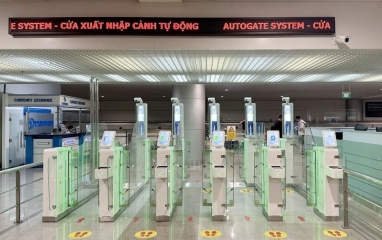
Recently, the Government has issued Decree 221/2025/ND-CP regulating visa exemption procedures for foreigners who are in need of special incentives to serve the goals of foreign affairs and socio-economic development, effective from August 15, 2025 ("Decree 221/2025/ND-CP"). Subsequently, the Ministry of Public Security recently issued Decision No. 7134/QD-BCA-QLXNC dated August 18, 2025 ("Decision No. 7134") detailing the order and procedures for issuing special visa exemption cards to foreigners according to Decree No. 221/2025/ND-CP. This article will provide detailed instructions on the order and procedures when applying for a special visa exemption card for foreigners according to the new regulations.
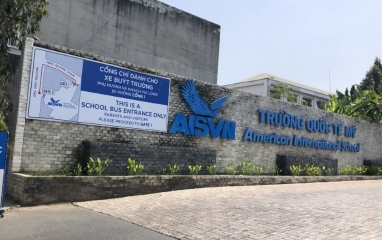
Vietnam's education system is increasingly witnessing the diversity of types of private educational institutions with different sizes and ways of operation. This development comes with a stricter requirement to comply with legal conditions in order to remain operational. Practice shows that when these conditions are ignored or not fully met, the legal consequences can be very serious, such as the case of the American International School Vietnam ("AISVN").
To complete the enterprise dissolution process, the company is required by law to carry out procedures for terminating all investment projects it is currently implementing. There are various methods to terminate an investment project during dissolution; however, within the scope of this article, we will address matters relating to the option of terminating an investment project through the investor’s voluntary termination.
-

-