- HM&P: Vietnam International Law Firm
- HM&P: Vietnam International Law Firm
- 02873080839
- https://hmplaw.vn/
Corporate
The Draft Amendment to Decree 09/2018/ND-CP proposed by the Ministry of Industry and Trade aims to update and complete regulations related to the purchase and sale of goods and activities directly related to the purchase and sale of goods of foreign service providers and foreign-invested economic organizations (FDI) in Vietnam (the "Draft Amendments"). The article analyzes in detail the main changes in the Draft Amendment to Decree 09/2018/ND-CP, focusing on legal aspects, administrative procedures, management decentralization, and requirements in line with international commitments.
Economic integration and the strong development of e-commerce, the protection of consumer rights is becoming increasingly important. In Vietnam, the Law on Protection of Consumer Rights 2023 (Law on Environmental Protection) and Decree No. 55/2024/ND-CP dated May 16, 2024, issued by the Government, set out specific regulations and requirements that businesses must strictly comply with to ensure the rights of consumers. This article will analyze in detail the responsibilities of businesses in accordance with the law, and emphasize the importance of complying with these regulations in building credibility and sustainable development.
Decree 09/2018/ND-CP, promulgated on 15/01/2018, is a document detailing the Commercial Law and the Law on Foreign Trade Management on goods purchase and sale activities and activities directly related to the purchase and sale of goods by foreign service providers and foreign-invested economic organizations (FDI) in Vietnam ("Decree 09/2018/ND-CP”). However, after more than seven years of implementation, the Ministry of Industry and Trade has noticed many inadequacies and limitations in the application of this decree, leading to the need to amend it to suit the new socio-economic context, international commitments, and administrative reform requirements. This article will analyze the main reasons why the Ministry of Industry and Trade proposed to amend Decree 09/2018/ND-CP this time.
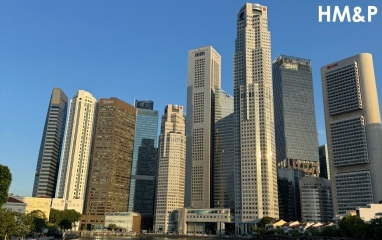
Singapore has risen to become one of the world's leading international financial centers, on par with New York, London and Hong Kong. According to the Global Financial Centres Index (GFCI) 34 in September 2023, Singapore ranks 3rd globally, leading Asia, surpassing Hong Kong thanks to its outstanding infrastructure, stable policy environment, and strong innovation ecosystem . This success is not a coincidence but the result of a series of fundamental factors: a transparent legal environment, preferential tax policies, advanced financial-technological infrastructure, high-quality human resources, political stability, and the ability to quickly adapt to new trends such as fintech and green finance. This article will analyze the key factors that make up Singapore's position, and compare it with other major financial centres to clarify its competitive advantages and key differences.
The amended and supplemented Law on Enterprises 2025, approved by the 15th National Assembly on June 17, 2025, has introduced many new regulations related to the identification, declaration, notification and storage of information about the beneficial owner of the enterprise. These regulations are intended to increase transparency in business operations, especially in identifying individuals or organizations that actually benefit from the business's operations. This article will analyze the points that businesses need to pay attention to to properly comply with the regulations on social security in accordance with the current enterprise law.
Vietnam, with a deepening international economic integration and the requirement of transparency in business activities becoming a global standard, has included the regulation on "beneficial owners" in the Law on Enterprises 2020. This regulation not only reflects Vietnam's commitment to comply with international standards on anti-money laundering and prevention of terrorist financing, but also an important step towards improving the investment environment, improving the efficiency of financial management, and promoting transparent corporate governance.
Digital transformation is taking place vigorously in the field of public administration, with the Government gradually digitizing all processes and services to enhance management efficiency. From July 1, 2025, all administrative procedures on the National Public Service Portal will only be carried out through an electronic identification account issued by the Ministry of Public Security. For enterprises, the registration of this account requires the legal representative to have a level 02 personal electronic identification account. This is a big challenge for businesses whose representatives are foreign individuals - a group of subjects who face many problems in the process of registration and identity verification in Vietnam. The following article will guide in detail how to e-identify businesses in this particular case.
The APEC Business Travel Card (ABTC) is expected to be a "golden visa" to help Vietnamese entrepreneurs make international trade more convenient. However, the reality shows that the journey of applying for an ABTC card is a "endurance test" for businesses, not because the regulations are too strict but because of the lack of transparency and consistency in the way of applying legal regulations on card issuance in each locality.
Vietnam's insurance market growing and fiercely competitive, insurers are constantly looking for ways to affirm their position and attract customers. However, not all competitive strategies are implemented in a transparent and law-abiding manner. The case of FWD Vietnam Life Insurance Co., Ltd. (FWD Vietnam) being sanctioned by the National Competition Commission (NAC) for unfair competition is a remarkable "case study" for Vietnamese businesses to prevent risks that may arise in the course of business activities. The case of FWD Vietnam shows the importance of compliance with competition law in the context of building a fair and healthy business environment among businesses.
The rapidly changing and increasingly complex legal environment in Vietnam, retainer services have become a popular and effective solution for businesses. Businesses can request professional retainer services from a law firm for ongoing legal support without having to maintain an in-house legal team. However, for this model to be successful, there needs to be a balance between the needs of clients and the interests of law firms.
As the world grapples with the growing threat of climate change, businesses are increasingly turning to environmental, social, and governance (ESG) principles as a cornerstone of sustainable development. For many, ESG still conjures images of sweeping strategies, global commitments, and data-driven reports. Yet, at the ESG Forum 2025 held in HCMC on June 15, a different perspective emerged. Participants were reminded that ESG is not limited to grand ambitions or policy documents; it also lives in the small, everyday choices we make. From how attendees traveled to the venue to the organizers’ efforts to eliminate single-use plastics, the forum underscored that ESG begins with intentional, practical actions.
The Ministry of Industry and Trade of Vietnam has proposed to amend Decree 31/2018/ND-CP, a document detailing the Law on Foreign Trade Management on the origin of goods, issued on March 8, 2018 (Decree). This Decree regulates the rules of origin for exports and imports, ensuring compliance with international trade agreements and domestic regulations. In draft 2, the Ministry of Industry and Trade emphasizes the amendment of the Decree to address new challenges in global trade, strengthen compliance with international commitments and promote measures to combat origin fraud.
-

-